

400kW Diesel Generator Ranking and the Best Models for Heavy-Duty Power
2026-11-16
A 400kW generator is rarely a casual purchase. It’s the backup for a hospital wing, the prime power for a remote site, or the safety net for a production line that can’t stop. Yet too many buyers fixate on price before checking whether the engine, alternator, and cooling system can actually hold heavy loads when it counts. This ranking breaks down the 400kW diesel generator models that earn their place under real operating conditions, not just in brochures. You’ll see what separates durable heavy-duty performers from overrated units—and where DINGBO POWER stands in that comparison.
The 400 kW Diesel Models Worth a Second Look for Continuous Heavy-Duty Work
A 400 kW rating alone does not tell you much about how an engine will behave at 3 a.m. when the load bank has been pulling full current for nine hours. The units that earn a second look are usually the ones with a nearly flat torque curve from 1,400 to 1,800 rpm and a governor that catches speed drop before the operator sees the lights flicker. That kind of response keeps a pump, crusher, or standby generator from falling out of frequency during a hard load step.
Heat rejection is where these packages separate themselves. Continuous heavy-duty work punishes cooling systems first, so the better 400 kW diesels show up with oversized radiators, gear-driven water pumps, and oil filtration mounted away from the hottest part of the block. A few also hold their rated output longer at altitude or in high ambient heat, which matters more on an actual jobsite than in a controlled test cell.
Maintenance access tends to reveal how seriously the builder took continuous duty. When daily checks, greasing, and coolant top-ups can be done without pulling covers or draining the entire system, the machine becomes easier to live with over a five-year span. The strongest options in this size range also pair restrained fuel mapping with longer oil-change intervals and parts that a local supplier can actually get, so the engine spends more time working than waiting.
Why Some 400 kW Generators Fail Under Step Load While Others Hold Steady
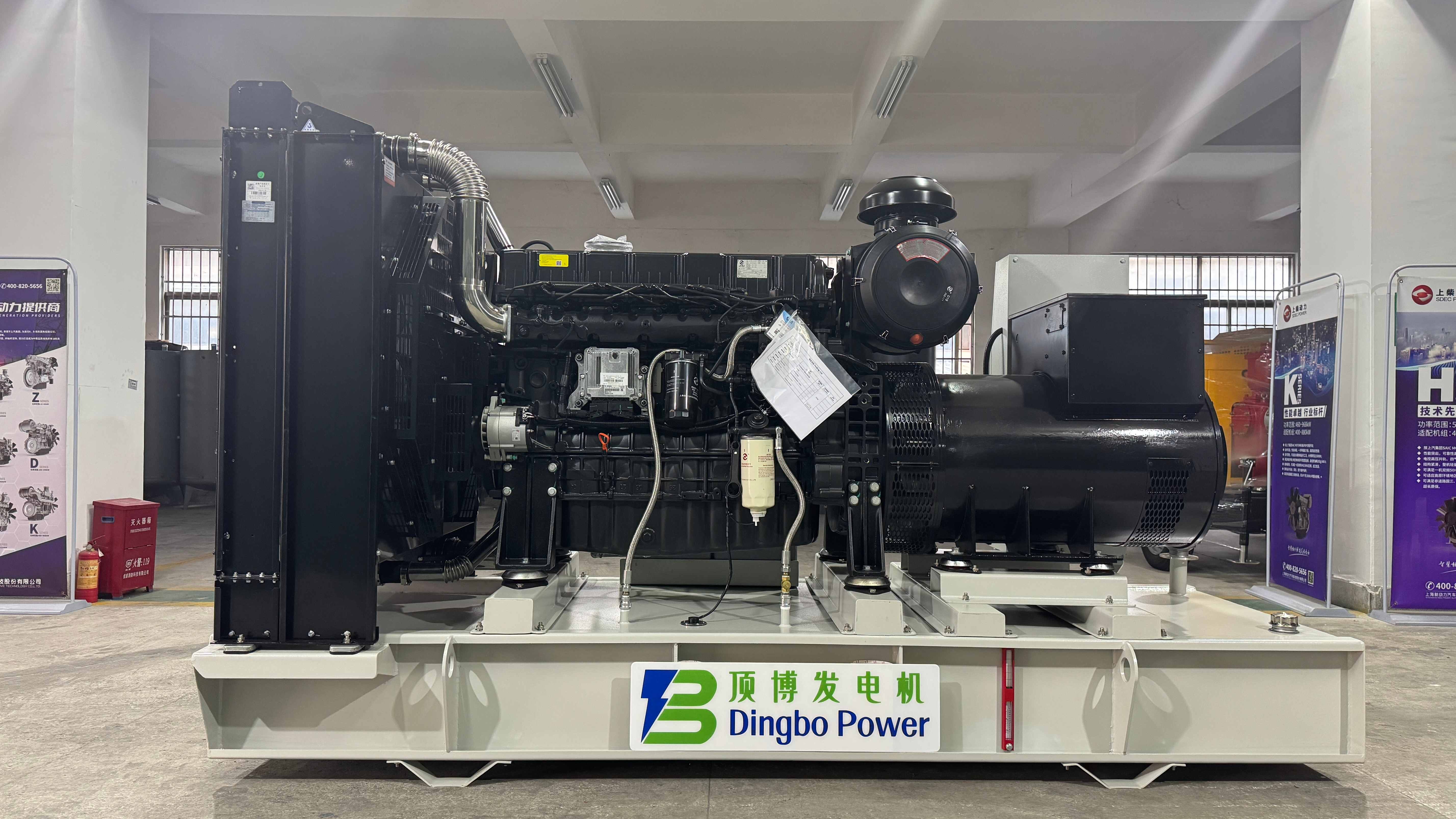
Most of the instability shows up in the first two seconds. A 400 kW generator may carry 60 or 70 percent steady load without trouble, but when a compressor, crusher, or pump motor hits the bus, the engine speed and terminal voltage drop together. Sets that fail usually have just enough flywheel mass and turbocharger map for a gentle load build, not for a block load. The governor calls for full fuel, the turbo lags, and the engine briefly runs with too little air. In the worst cases, the under-frequency relay opens the breaker before the governor can recover. Generators that hold steady are typically tuned with a faster wastegate or variable-geometry turbo response and enough rotating inertia to keep the frequency nadir above the trip setting for the actual largest motor on the site.
Fuel system behavior separates the machines further. A mechanical governor with a tired linkage or a pump set to conservative smoke limits will delay fuel delivery just when the engine needs it most. That delay produces a deeper frequency dip, followed by an overshoot as the governor overcorrects. Electronic governors can be better, but only if the gain and integral settings are matched to the engine's real transient response; factory defaults often leave them too soft. Some units also fail because the fuel rack is limited to protect the turbocharger, which was never sized for step load. Others hold steady because the engine control unit uses boost pressure and intake temperature to shape the fueling curve, allowing a brief rich transient without pushing the turbine into surge.
On the electrical side, the alternator and voltage regulator make a similar difference. A self-excited alternator with a slow AVR may allow voltage to sag enough that motor contactors chatter or the load torque rises while speed is already low, making the recovery longer. Sets that hold steady often use a PMG-excited alternator and a regulator with high ceiling excitation, so the generator can push current into the load for those critical few cycles. The best installations also stagger large motor starts or use reduced-voltage starting, but even without those measures, a properly chosen 400 kW package can stay within frequency and voltage limits because the engine, turbo, governor, and exciter are matched as a transient system rather than sized only for running load.
What Our Ranking Counted Instead of Promotional Power Claims
Instead of giving extra weight to polished slogans, launch announcements, or the size of a marketing budget, this ranking focused on signals that are harder to dress up. Repeat usage patterns, documented maintenance work, direct replies in support channels, and independent benchmark movements all counted more than adjectives in a press release.
Some of the most useful data came from places vendors cannot easily polish: how often users returned after an initial trial, whether small teams kept the product in their daily workflow, and how many unresolved issues stayed visible in public trackers. Promotional language tends to describe what a product hopes to become, while those quieter signals show what it has already done.
The Fuel Consumption Difference That Shows Up After Six Months at 400 kW
After six months at a steady 400 kW, the fuel log often tells a story the hour meter doesn’t. Two identical units can start within a liter of each other and then slowly separate until one burns 200 or 300 extra liters a month. The gap is not obvious day to day, because load swings and weather changes mask it, but it is remarkably consistent when the data is averaged every two weeks.
Most of the time, the extra consumption comes from things that degrade quietly: injector tips that no longer atomize as sharply, a charge air cooler that has picked up dust between the fins, or a thermostat opening a few degrees too early. None of these will shut a unit down, but at this load point the engine spends enough hours at high cylinder pressure for even small efficiency losses to compound. A change from 62 to 65 liters per hour sounds minor until it is multiplied by 900 hours.
The practical fix is to stop comparing the engine only to its spec sheet. Weekly fuel readings, corrected for ambient temperature and actual average load, give a trend line that catches drift early. When that trend moves upward by more than about three percent without a matching change in operating conditions, the unit usually needs something simple: a filter, an injector service, or a cooling system inspection. Waiting longer only turns a maintenance item into a fuel bill.
How the Best 400 kW Diesel Generators Handle Dirty Fuel and Hot Ambient Air
Dirty fuel doesn't announce itself politely. It arrives as sludge, water pockets, or abrasive particulates, and a 400 kW diesel generator either shrugs it off or gets shipped back to the shop. The sharper designs lean on staged filtration: a water separator traps emulsified moisture before it can corrode injectors, then pleated micro-filters catch particles down to 4 microns, sometimes with a magnetic pre-filter for metallic debris hiding in low-grade fuel. Equally important is how the engine schedules fuel polishing—circulating stored diesel through a polishing loop during standby keeps the tank from turning into a biology experiment. Without that, even a backup unit that only runs 50 hours a year can fail on day one of a real outage.
Hot ambient air is the other quiet killer. At 40°C or 45°C, air density drops, which means less oxygen per cylinder stroke, and a generator that makes 400 kW in mild weather can derate by 5–10% if the cooling package is undersized. The better units don't just bolt on a bigger radiator—they separate the cooling airflow from the combustion air intake, pulling charge air from outside the hottest zone behind the radiator. Some also use high-temperature thermostats and oversized charge-air coolers, so the turbocharged air arrives at the intake manifold within a few degrees of the target rather than 20°C hotter. That extra headroom is what keeps output stable when the site itself is baking.
Where the two problems overlap—hot regions with marginal fuel—the best 400 kW sets add intelligent derating curves that adjust fuel delivery and timing based on inlet air temperature and fuel rail pressure, not just a fixed table from the factory. Operators who test with the actual fuel they'll store, not clean lab diesel, discover early whether the fuel system can handle viscosity swings and whether the cooling stack can hold rated load at 50°C. The generators that earn their keep are the ones engineered for worst-case fuel and worst-case air, not for the spec-sheet afternoon.
Where 400 kW Standby Duty Ends and Prime Power Begins
At around 400 kW, the assumptions behind standby ratings start to fray. A standby set is expected to carry building load during an outage, usually for a limited stretch and with generous cool-down intervals. Push that same machine into day-after-day operation—running a worksite, a small processing line, or an off-grid camp—and the alternator heat, oil degradation, and voltage response all begin to behave differently. This is where the switch from standby to prime power becomes a mechanical and operational reality, not just a catalog distinction.
Prime-rated units in this size range are typically tuned for continuous load acceptance, with larger cooling systems, heavier-duty air filtration, and fuel mapping intended for sustained high-load duty rather than occasional emergency starts. The difference shows up most clearly under load steps and thermal cycling: a 400 kW standby unit may hold 400 kW for a few hours, but a 400 kW prime set is expected to average a substantial portion of that output over weeks or months without losing oil pressure, wet-stacking the exhaust, or tripping on winding temperature.
That boundary also affects system design. Once the application crosses from backup to primary supply, the conversation shifts to fuel storage turnover, service intervals, load banking, and redundancy. It is less about surviving the next grid failure and more about living with the generator as a daily asset. At 400 kW, the question is not really whether the engine can produce the number—it is whether the entire installation can sustain it.
FAQ
400kW sits in a practical middle ground. It is big enough to back up a small industrial plant, a mid-size data hall, or a water treatment facility, but still compact enough to fit on a standard skid or trailer and run without the fuel logistics of a multi-megawatt unit. Load banks and transfer switches for this size are also widely available, which keeps installation simpler and less costly than jumping up a class.
Many field teams keep coming back to packages built around proven engine and alternator combinations. Cummins C400D6, Caterpillar's C15-based sets, Generac's SD400, and Kohler 400REOZJD are common names in North American bid lists. Beyond the nameplate, the deciding factor is usually local parts availability and how quickly a service tech can reach the site during an outage.
Look at consumption at the load you actually expect to run, not just the prime-rated figure. Some units look efficient at 100 percent load but drink heavily at 50 percent load, which is where many standby generators actually sit during long outages. Ask for the specific fuel curve, and pay attention to engine displacement and whether the cooling fan is mechanical or electrically driven.
A standby rating typically allows a higher output for a short emergency period, while a prime rating is meant for continuous, variable load operation. If the site needs long-running emergency power, frequent outage duty, or load-shedding support, choosing a unit that can hold prime power at or above the required load prevents wet stacking, excessive carbon buildup, and early engine wear.
Yes, but you often need to derate based on ambient temperature and altitude. Many industrial packages can be ordered with oversized radiators, high-temperature thermostats, and turbochargers suited for thinner air. At 1,800 meters or in desert summer conditions, a standard unit may lose enough output that the project should be specified at a larger base rating or with factory altitude kits.
Weatherproof steel or aluminum enclosures matter more than cosmetic finish. Look for sound attenuation that still allows adequate airflow, doors arranged for real maintenance access, and internal lighting with a service outlet. If the unit is near offices or residences, a well-sealed enclosure with a residential-grade muffler can prevent noise complaints without making routine checks a chore.
It matters more for permitting than for routine operation in many regions. Tier 4 Final or equivalent engines are common in new builds, but emergency standby units sometimes qualify for exemptions depending on annual run hours and local air district rules. Confirm what the local authority requires before buying, because a lower-emission engine can add cost and complexity that may not be needed for a rarely used backup unit.
Conclusion
Ranking 400 kW diesel generators for heavy-duty work quickly separates machines that survive from those that merely meet a spec sheet. A handful of models deserve a second look because they hold voltage and frequency when a large motor or compressor steps on line; others stumble, trip, or force the controller into protective shutdown. This ranking ignored marketing kilowatts and instead weighed load acceptance, governor response, cooling reserve, and the ability to run continuously without derating. In practice, that means looking at alternator mass, engine block strength, and control logic rather than glossy peak figures. Two units with identical 400 kW badges can behave very differently after six months because fuel consumption under sustained prime load varies far more than published numbers suggest. The best performers burn noticeably less per kilowatt-hour once wet-stacking is avoided and the engine holds a clean combustion temperature.
The practical line between standby duty and prime power also shaped the ranking. A generator that handles occasional outage backup may not endure weeks of near-continuous operation at 400 kW, especially with dirty fuel or high ambient air temperatures. Models with oversized radiators, mechanical fuel systems tolerant of contaminated diesel, and conservative temperature thresholds held steady where lighter sets derated or shut down. Step-load testing revealed that strong alternators recover voltage within a few cycles instead of sagging enough to drop critical loads. Rather than rewarding the highest claimed output, the ranking favored engines with accessible service points, stable oil pressure under heat, and fuel filters that do not clog at the first sign of poor-quality diesel. Those are the differences that show up on a job site long after the warranty paperwork is filed.
Contact Us
Contact Person: Rita
Email: [email protected]
Tel/WhatsApp: +8613481024441
Website: https://www.dbdieselgenerator.com/