

Anodizing Equipment Manufacturer Explains How Advanced Rectifiers Improve Coating Quality
2026-10-11
Ask any finishing manager what ruins an anodizing run, and you'll hear about burning, uneven dye absorption, or soft patches—rarely do they point at the rectifier. That's a mistake. The rectifier is the hidden hand controlling how current reaches the part, and small fluctuations there become visible flaws in the final coating. Modern high-frequency rectifiers with advanced filtering and adjustable pulse profiles are quietly making older transformer-based units obsolete. Junda, an anodizing equipment manufacturer, has been refining these power systems to give coaters tighter control over thickness, hardness, and color consistency. Here's what actually changes when you upgrade your power supply—and why it might be the cheapest quality improvement you haven't made yet.
Cleaner DC Output Reduces Coating Voids
Residual ripple on a DC rectifier line often gets dismissed as a minor nuisance, but in precision coating work it acts like an invisible chisel. Every spike or sag in the output waveform nudges the deposition rate, creating microscopic turbulence at the cathode surface. Those tiny flux variations trap gas bubbles or leave starved zones that later show up as pinholes and voids under a microscope. Operators who ignore the actual ripple percentage—not the nameplate spec, but the real-time value under load—end up chasing defects that have nothing to do with bath chemistry.
Switching to a low-ripple supply, or adding a well-tuned output filter, changes the picture almost immediately. The current density evens out across complex part geometries, so the coating grows in smooth, continuous layers rather than patchy islands. One shop running reel-to-reel nickel plating saw void counts drop from double digits per square meter to under three after replacing an aging thyristor unit with a high-frequency switch-mode rectifier. They didn't alter the electrolyte or the line speed—only the cleanliness of the DC rail mattered.
The practical takeaway is to measure what your rectifier actually sends down the busbar, not what the manual promises. Use an oscilloscope with a differential probe at the tank terminals under full load. If you see more than a few percent ripple or any sharp transient edges, fix that before tweaking additives or levelers. A cleaner DC output doesn't just reduce voids—it makes every other process variable more forgiving, and that alone can save a lot of midnight troubleshooting.
Tailoring Ramp Rates for High-Strength Alloys
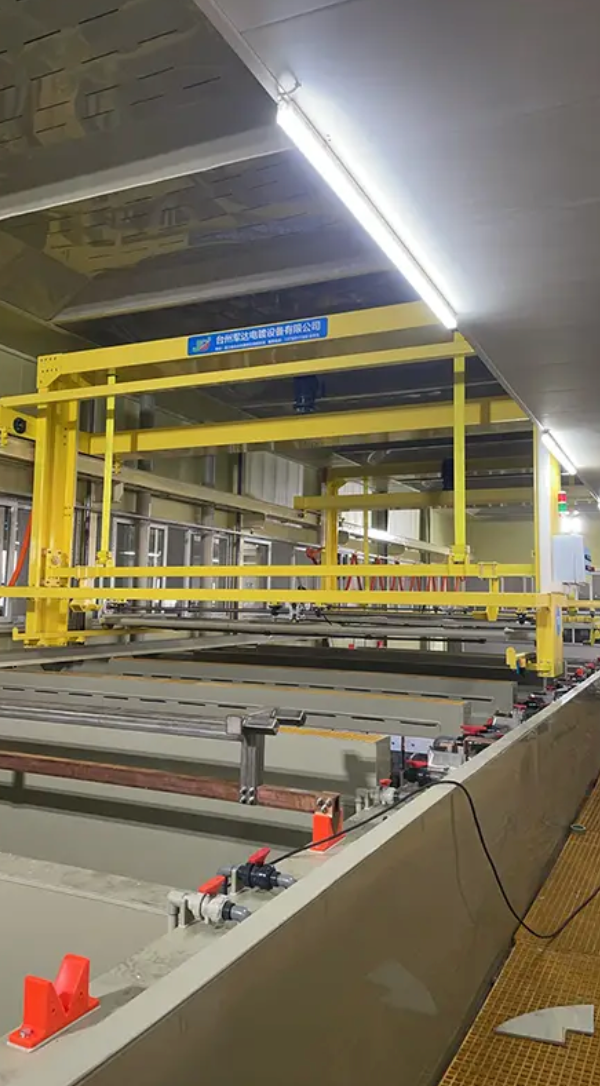
Ramp rates do more than move a furnace from one setpoint to the next; they shape how a high-strength alloy reacts before the actual soak begins. Precipitation-hardened nickel alloys, martensitic steels, and beta titanium all rely on narrow temperature bands for carbide dissolution, homogenization, or phase reversion. Push the ramp too hard and thick-to-thin transitions develop steep thermal gradients that can trigger distortion or quench cracking. Creep along too slowly, and the microstructure may over-age, letting grain boundary phases coarsen and reducing final mechanical properties.
A single linear profile rarely suits parts with uneven cross-sections or residual cold work. A more effective approach divides the ramp into zones: a restrained climb through the stress-relief range, a controlled pass through the transformation band, and a quicker rise once the material becomes more ductile. Short intermediate holds give slower-heating sections a chance to equalize without stalling the entire cycle.
Load configuration and furnace response also influence the real heating rate at the part surface and core. Dense racks or tight fixtures can flatten the effective ramp, meaning the controller setpoint may not reflect what the alloy actually sees. Placing calibrated thermocouples in representative or sacrificial locations, and adjusting the profile from that data, is often more valuable than relying on a fixed recipe. In production, a tailored ramp usually pays for itself by reducing rework from cracking and dimensional drift.
Why Pulse Rectification Builds Denser Oxide Layers
During conventional DC anodizing, the uninterrupted current keeps the surface in a state of constant electrochemical stress. Heat builds up unevenly, and the oxide grows in a rushed, disordered fashion. Pulse rectification interrupts this cycle with deliberate off periods. Those brief pauses let ions redistribute and allow localized hot spots to cool before the next surge of current arrives. As a result, each pulse contributes a thin, well-ordered layer instead of forcing rapid, defective deposition.
The off time in a pulse waveform also changes what happens at the interface between the metal and the electrolyte. Without a break, the area closest to the surface becomes depleted of the species needed for oxide formation, which leads to loose, porous structures. When the current is switched off, fresh electrolyte moves back into contact with the surface. Gases produced during the reaction have a chance to escape rather than becoming trapped inside the growing film. This repeated refreshment is what pushes the final oxide toward a denser, less void-filled matrix.
Frequency and duty cycle give operators direct control over this densification. Shorter pulses with higher peak currents tend to create a larger number of nucleation sites at the start of each growth step, so the oxide forms more uniformly across the surface. Longer off periods let internal stresses relax instead of accumulating into microcracks. The result is a layer that not only feels harder under a hardness tester but also resists corrosion better because there are fewer pathways for aggressive media to reach the base metal.
Dynamic Current Limits Prevent Edge Burning
In high-power charging and large-format display backlighting, a fixed current limit often leads to uneven distribution at the edges. The outermost cells or LEDs tend to receive more current than the center due to lower resistance paths or thermal gradients, creating hot spots that can scorch materials or degrade performance over time.
Dynamic current limiting solves this by continuously monitoring edge temperatures and local voltage drops. When sensors detect a rise near the periphery, the controller trims the current just to that region—or scales back the overall limit—without starving the rest of the system. This feedback loop reacts in milliseconds, so brief load spikes never linger long enough to cause damage.
The result is a noticeably cleaner thermal profile across the whole surface. Manufacturers can push closer to the physical limits of their components without risking burn-in at the edges, which translates into longer service life and fewer field failures in applications ranging from fast-charging battery packs to ultra-thin edge-lit panels.
Consistent Color and Thickness on Mixed Batches
Batch-to-batch shifts in pigment load or base resin viscosity can quietly erode visual uniformity. When several production runs are combined into one shipment, the human eye notices slight drift in hue or gauge far faster than a printed specification ever would. That is why incoming raw materials are screened against reference swatches and thickness coupons before they reach the main line.
Instead of depending on downstream sorting, the blending stage itself is tuned to normalize color strength and caliper. Small, measured adjustments to letdown ratios and roll pressure keep every batch inside a narrow band, so a carton taken from the top of the pallet matches one taken from the bottom. Operators record each adjustment against a master sample, which makes the next run start closer to the target.
The outcome is a mixed batch that looks intentional rather than accidental. Consistent color and thickness across different production dates mean installers spend less time double-checking, and end users never notice where one lot ended and another began.
Energy Savings Without Sacrificing Film Hardness
Many coating lines still run high-temperature cure cycles because of a persistent worry: lower the oven settings and film hardness will drop. That assumption rarely holds with modern resin chemistry. By reformulating for lower bake temperatures or faster cure at equivalent heat, plants can cut gas and electricity use while keeping pencil hardness, scratch resistance, and crosshatch adhesion within specification.
The real lever is not simply turning down the dial. It lies in catalyst choice, resin selection, and the way a formulation builds crosslink density during the cure window. A denser network can develop at 140°C just as well as at 180°C when the reactive system is tuned for it. Field trials show energy drops of 15-30% on the oven zone without measurable loss in film hardness, and often with better flexibility because less thermal stress is locked into the coating.
Maintenance and line speed also change the picture. Lower cure temperatures reduce burner cycling, heat losses through the oven shell, and cool-down time before handling. These savings accumulate even on lines that run mixed metal parts or heavier substrates. The hardness data stays flat on Konig and pencil tests, which means the decision to save energy no longer has to be a trade-off against durable film performance.
FAQ
Ripple causes uneven oxide growth and can leave the coating more porous. Advanced rectifiers keep ripple below 2%, so the current stays clean and the oxide layer forms with consistent density across the entire part.
It has a direct effect. Tight current control and selectable pulse patterns let you adjust the pore structure and hardness. With the right waveform you get a denser, harder film without changing the electrolyte.
Pulse output allows higher peak currents without overheating the surface. That speeds up film growth and reduces burning on sharp edges, especially on complex profiles.
It compensates for varying surface area and electrical resistance by dynamically adjusting voltage and current. The result is a uniform film even inside recesses and on parts with mixed geometry.
Many see a 10 to 20 percent reduction in energy consumption because modern switch-mode units waste less power as heat and run closer to the actual anodizing voltage, especially during ramp-up.
They usually simplify it. Built-in recipes and real-time monitoring let operators repeat successful cycles without manual adjustments, which reduces errors and improves batch-to-batch consistency.
Look for low ripple, programmable pulse profiles, remote monitoring, and overload protection. Also ask about ramp control because gentle voltage rise prevents initial burning and improves adhesion.
Conclusion
Anodizing equipment manufacturers point out that the latest rectifier designs do far more than simply supply current. A cleaner DC output, with minimal ripple, drastically reduces the chance of coating voids that weaken corrosion resistance. For high-strength alloys, engineers can now tailor ramp rates to match the metal's unique electrochemical response, preventing the sudden current spikes that cause uneven growth. Pulse rectification takes this further: by alternating between high and low current phases, it drives oxygen species deeper into the pore bases, building a denser oxide layer without overheating the surface.
On the production floor, these improvements translate into real consistency. Dynamic current limiting automatically adjusts output across complex rack geometries, so edges no longer burn while recessed areas still receive enough current. Mixed batches—different alloys, part sizes, and surface finishes—come out with matching color and thickness, eliminating costly rework. And advanced rectifiers achieve all this with energy savings, using switch-mode technology to deliver high efficiency and stable voltage, so film hardness remains uncompromised even as power bills drop. In short, the right rectifier turns anodizing from a craft into a controlled, repeatable process.
Contact Us
Contact Person: hayyr
Email: [email protected]
Tel/WhatsApp: 8613082110525
Website: https://www.jundaelectroplating.com