

Aromatic Carbonyl Intermediate CDMO Partner for Scalable High-Purity Synthesis
2026-09-19
When scaling aromatic carbonyl intermediates from lab to commercial volumes, purity and reproducibility are not negotiable. Most CDMOs promise capacity—few deliver the process chemistry depth to keep impurities below spec at every batch. That’s where DSL Chemicals changes the conversation. In this post, we’ll unpack what to look for in a true scale-up partner for high-purity aromatic carbonyl synthesis—and why the right CDMO choice can make or break your timeline.
Aromatic Carbonyls Aren't Simple Building Blocks
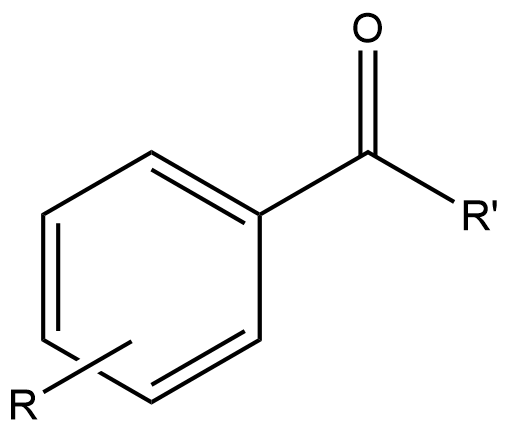
A glance at an aromatic carbonyl might suggest a straightforward functional group, but its reactivity tells a different story. The carbonyl carbon, attached to an electron-rich ring, often appears less electrophilic than an aliphatic ketone. That drop in reactivity, however, masks a subtle tug-of-war between resonance and inductive effects. The ring donates electron density through conjugation, while the electronegative oxygen pulls it back. This balance shifts dramatically with substitution, turning supposedly predictable reactions into puzzles that demand careful tuning of conditions.
Consider the challenge of selective reduction or nucleophilic addition. A simple aromatic aldehyde might seem eager to form an alcohol, yet competing pathways such as benzoin condensation or Cannizzaro disproportionation lurk when bases or catalysts enter the picture. Even with strong hydride donors, the ring's ability to delocalize charge can lead to over-reduction of the aromatic system itself, something rarely seen with non-aromatic counterparts. The same holds for Grignard additions: while the initial attack on the carbonyl is fast, the resulting alkoxide can trigger rearrangements or deprotonations that derail the intended product.
Synthetic chemists quickly learn that aromatic carbonyls are not just scaled-up versions of acetone. The ring's steric bulk, its influence on transition-state geometries, and its role in stabilizing or destabilizing intermediates all set these compounds apart. Friedel-Crafts acylation, for instance, often stops cleanly at the ketone stage precisely because the product deactivates the ring toward further electrophilic attack—a quirk that becomes an advantage in some routes but a trap in others. Recognizing these behaviors turns an ordinary functional group into a strategic pivot for building complex molecules.
The Scale-Up Gap Most Teams Underestimate
When a team of twelve triples to thirty-six, most founders brace for obvious friction: slower decisions, more meetings, diluted culture. But the gap that actually stalls scale-ups hides in the mundane choreography of daily work. It’s not the loud conflicts—it’s the quiet assumption that a process that worked for a dozen people will stretch to three dozen without snapping. Handoffs multiply faster than headcount, and the informal “just ask Dave” shortcuts become brittle the moment Dave isn’t in the room. Teams don’t fail because they lack ambition; they fail because they keep wiring new people into old circuits and wonder why the sparks fly.
The real underestimated gap is the cost of re-coordination. In a small team, alignment happens in a glance across a table. At thirty-six, that glance splits into six separate conversations, each with its own memory and interpretation. Tools get blamed, but the issue isn’t software—it’s the lingering belief that context will transfer itself. The best scale-up operators treat coordination as a product to be designed, not a byproduct of hiring. They map the paths where information dies, name the ambiguous ownership zones before they become radioactive, and ruthlessly kill rituals that only made sense when everyone still fit in one room.
What separates teams that scale smoothly isn’t more process—it’s the right grain of process. A daily sync that takes five minutes at ten people becomes a forty-minute theater at thirty. The underestimated skill is deciding what to stop doing before the pain forces the choice. Scale-up gaps rarely announce themselves with fanfare; they accumulate in the fifteen minutes before meetings start, in the Slack threads that loop back on themselves, in the polite silence after someone says “wait, who owns this?” Close that gap early, and growth feels like leverage. Ignore it, and growth feels like dragging a bigger anchor through the same shallow water.
Purity Targets That Actually Matter
Many brands lean on 99.9% purity as if the decimal places alone guarantee safety or performance. The impurities that actually matter are the ones with known toxicological or stability profiles—residual solvents in botanical extracts, heavy metals in mineral pigments, or unreacted monomers in polymers. A material can be 99% pure and still fail if the remaining 1% includes something that shouldn't be there.
For actives like niacinamide, retinol, or ascorbic acid, the meaningful purity targets are tied to specific byproducts from synthesis that can trigger irritation or shorten shelf life. Instead of chasing one more nine after the decimal, check whether the supplier identifies and limits the top three or four impurities by name. That level of disclosure separates genuine quality control from a marketing number.
Practical purity targets come from pharmacopeia monographs or safety assessments, not from a brand's desire to sound impressive. If a spec sheet only says "99% pure," ask which assay method was used and which impurities were tested. A solid answer means the manufacturer knows their chemistry; silence suggests the purity claim is mostly decorative.
A CDMO Model Built Around Your Timeline
Most CDMO partnerships quietly assume that your project will bend to their production calendar. Batch slots, tech transfer windows, and quality reviews are handed to you as fixed points, and any deviation triggers a cascade of rescheduling that costs weeks. This model inverts that logic. We start with your target dates and work backward, mapping every activity—raw material release, analytical method transfer, stability pulls, fill-finish campaigns—onto a timeline that treats your milestones as non-negotiable. If your clinical readout moves left or a regulatory submission shifts, the plan flexes without penalty, because the schedule is built from modular blocks rather than locked sequences.
The difference shows up in the details. Cross-trained manufacturing teams can be reassigned mid-campaign when a priority API arrives early. Quality control runs a rolling review queue instead of weekly batch release meetings, so a passed assay clears the next step the same afternoon. Capacity is deliberately kept in reserve—not as idle equipment, but as scheduled slack that absorbs the normal variability of development work. When a supplier shipment is delayed or a process scale-up reveals unexpected viscosity, the team already has a fallback column packed and a dry run completed. You won’t get a polite apology and a revised Gantt chart; you’ll get a phone call outlining the two recovery options and the latest decision point.
That kind of responsiveness doesn’t come from heroic effort. It comes from planning that assumes timelines will change, so the system is designed to absorb change without breaking. Project managers have authority to reallocate resources without escalating to a steering committee. Documentation is drafted in parallel with process development, not after the fact. And every client-facing dashboard shows live progress against your dates, not ours. The result is a CDMO relationship where “on time” isn’t a metric to be defended at quarterly business reviews—it’s the default setting, because your timeline has been the blueprint from the first conversation.
From Route Scouting to Repeatable Batches
Early route scouting rarely produces a process ready for repetition. Solvent choices, catalyst loadings, and workup sequences get tested in quick cycles, often with messy data and imperfect mass balance. The real transition starts when a promising route is frozen long enough to identify which variables actually move yield or impurity profiles. That means running the same reaction several times on purpose, not just once by accident.
Once those sensitive parameters are pinned down, the batch record stops being a loose collection of observations and becomes a set of boundary conditions. Cooling rates, addition order, hold times at intermediate temperatures—these details matter more than the initial discovery chemistry. Teams that treat this stage as a design problem rather than a documentation chore usually end up with fewer failed scale-ups.
Repeatable batches don't require perfect understanding of every mechanism. They require enough control to keep the outcome inside an accepted range, even when raw material lots or operator habits shift slightly. That's the difference between a route that worked once and a process that can be handed off without panic.
Why Trace Impurities Decide Project Success
Trace impurities rarely appear in project plans, yet they quietly shape outcomes more than any grand milestone. A few parts per billion of an unwanted metal can alter a catalyst's selectivity, pushing a chemical process from profitable to hazardous. In semiconductors, a single stray atom per billion silicon atoms decides whether a wafer yields functional chips or expensive scrap. These contaminants don't announce themselves; they hide in raw materials, equipment seals, cleaning solvents, and even the breath of operators. Ignoring them means trusting luck, and luck has a poor track record at scale.
The real challenge is that impurity tolerance changes with context. A pharmaceutical intermediate may handle 50 ppm of iron without issue, while the next synthetic step demands below 0.1 ppm to avoid side reactions that produce toxic byproducts. Teams that succeed treat impurity control as a dynamic specification, not a static checkbox. They map every material input against downstream sensitivity, and they verify with methods sensitive enough to see the problem before it sees the product. This often means investing in cleaner raw materials or adding purification steps that look wasteful on paper but prevent catastrophic batch failures later.
Projects fail not because impurities exist, but because nobody asked where they accumulate. A reactor cleaned with the wrong grade of water leaves chloride residues. A filter housing reused across campaigns sheds polymer particles. A new supplier offers a cheaper reagent with an unlisted heavy metal. Each decision seems minor until the final product fails stability, purity, or performance tests. Successful teams build an impurity ledger from day one: every material, every surface, every transfer. They treat trace contamination as a design parameter rather than an afterthought, and that shift in mindset is what ultimately separates a pilot trial from a reliable, scalable process.
FAQ
They handle the synthesis, scale-up, and purification of compounds where a carbonyl group is attached to an aromatic ring, such as benzaldehydes, acetophenones, or anthraquinone derivatives. A focused partner will take a route from the lab notebook through process development, impurity profiling, and then into multi-kilo or larger campaigns under GMP if needed.
Aromatic carbonyls often come with exothermic steps, oxygen-sensitive intermediates, or Friedel-Crafts chemistry that behaves differently at 20 liters versus 2000 liters. Heat transfer, mixing, and reagent equivalents need re-optimization. A CDMO that has run these reactions at scale knows where the failure points usually hide: acylation runaway, over-oxidation, or poor selectivity on substituted rings.
Purity is less about the final column and more about controlling the reaction profile early. That means strict raw material specs, in-process controls by HPLC or GC, removing metal catalysts below ICH limits, and designing crystallization or distillation steps that reject close-eluting impurities. A good partner will also map major impurities and show how each is purged.
Ask for examples with similar substrates such as halogenated aromatics, nitroaromatics, heterocycles, or electron-rich rings. Check if they have in-house capability for low-temperature lithiation, Vilsmeier-Haack formylation, or selective oxidation. Also verify analytical strength: can they quantify regioisomers and trace carbonyl by-products, not just the main peak?
Yes, but only if the site is built for both. Early route scouting needs fast turnaround, small parallel reactors, and flexibility to abandon a route. Later supply needs process robustness, change control, and regulatory documentation. A partner that does both without hand-over gaps is valuable, especially when the aromatic carbonyl intermediate has limited stability and a long transfer would cost yield.
HPLC with UV or CAD detection is common, but carbonyl-specific methods help: derivatization for aldehydes, GC for volatile methyl ketones, and LC-MS for non-volatile or thermally sensitive compounds. For chiral aromatic carbonyl intermediates, chiral HPLC or SFC is mandatory. X-ray or NMR should be available to confirm regiochemistry when substitution patterns are ambiguous.
Protect the carbonyl when it sits next to a nucleophile or under reducing conditions, but avoid adding protecting group steps unless needed because each step costs yield. For aldehyde intermediates, minimize exposure to air and light, and consider storing as the bisulfite adduct or acetal. For acid chlorides derived from aromatic carbonyls, keep moisture levels tightly controlled and qualify the stability window before running the next step.
General shops can run a carbonyl reaction, but a dedicated partner has likely encountered the tricky combinations such as ortho-substituted rings, sterically hindered ketones, or electron-poor aromatics that resist acylation. They have custom equipment for cryogenic or high-pressure carbonylation, deep knowledge of impurity patterns, and a reference library of starting materials that shortens route design. That usually shows up in fewer failed batches and a shorter path to release.
Conclusion
Aromatic carbonyl intermediates rarely behave like standard building blocks once you move beyond gram-scale. Their ring electronics and carbonyl reactivity invite side reactions that stay hidden in early screens but emerge under production heat loads, so sourcing a CDMO partner who understands this from route scouting onward changes the risk profile. Most teams underestimate the scale-up gap: a method that gives clean HPLC at 10 grams can generate stubborn dimers or regioisomers at 50 kilograms. A capable partner closes that gap by mapping thermal windows, mixing efficiency, and quenching profiles before the first pilot batch, and by treating purity as a set of actionable thresholds rather than a single percentage.
The targets that actually matter often sit below the usual monograph limits—trace aldehydes, isomeric ketones, or metal residues that later poison downstream couplings. Repeatable batches come from locking those limits into every unit operation, not from re-polishing material after the fact. A timeline-focused partner will run forced degradation and spike-and-recovery studies in parallel with scale-up so that release criteria reflect process reality. When aromatic carbonyl work is handled this way, the conversation shifts from 'can we make it?' to 'can we make it the same way three campaigns in a row?' That repeatability, not a single impressive lot, is what protects an API timeline.
Contact Us
Contact Person: Wei Zhang
Email: [email protected]
Tel/WhatsApp: 862163529955
Website: https://www.dslchem.com