

Best Check Valve Manufacturer: How to Choose Quality and Reliability
2026-05-14
When it comes to fluid control systems, the humble check valve plays a monumental role—preventing backflow, protecting equipment, and ensuring operational safety. But not all check valves are created equal. So, what separates a truly reliable manufacturer from the rest? In this guide, we strip away the marketing fluff and dive into the practical hallmarks of quality. From material integrity to real-world testing standards, you’ll discover how to spot a supplier that won’t let you down. And while you’re searching for peace of mind, keep an eye on manufacturers like ZMV, who consistently demonstrate the very principles we’re about to unpack.
Core Principles Behind Enduring Check Valve Performance
Enduring check valve performance starts with material choices that stand up to real-world conditions. Instead of relying on flashy features, the most reliable valves use alloys that resist pitting and crevice corrosion, even in aggressive media. A well-designed internals geometry keeps the disc or ball centered, reducing uneven wear on seats and preventing the kind of microfractures that lead to sudden failure.
Beyond materials, correct sizing and application play a huge role in how long a check valve lasts. A valve forced to work near its cracking pressure limit will chatter, hammering its own internals apart. Matching the valve type—swing, lift, or dual plate—to actual flow conditions eliminates constant flutter and keeps sealing surfaces tight over thousands of cycles without needing constant attention.
Daily operation demands designs that shrug off small solids and temperature swings without sticking. Field-replaceable elastomers and springs let maintenance teams refresh a valve in minutes rather than pulling entire piping sections. The best check valves often are the ones you never think about because they quietly keep flow in one direction year after year, with nothing more than a quick inspection now and then.
Material Selection and Its Impact on Long-Term Durability
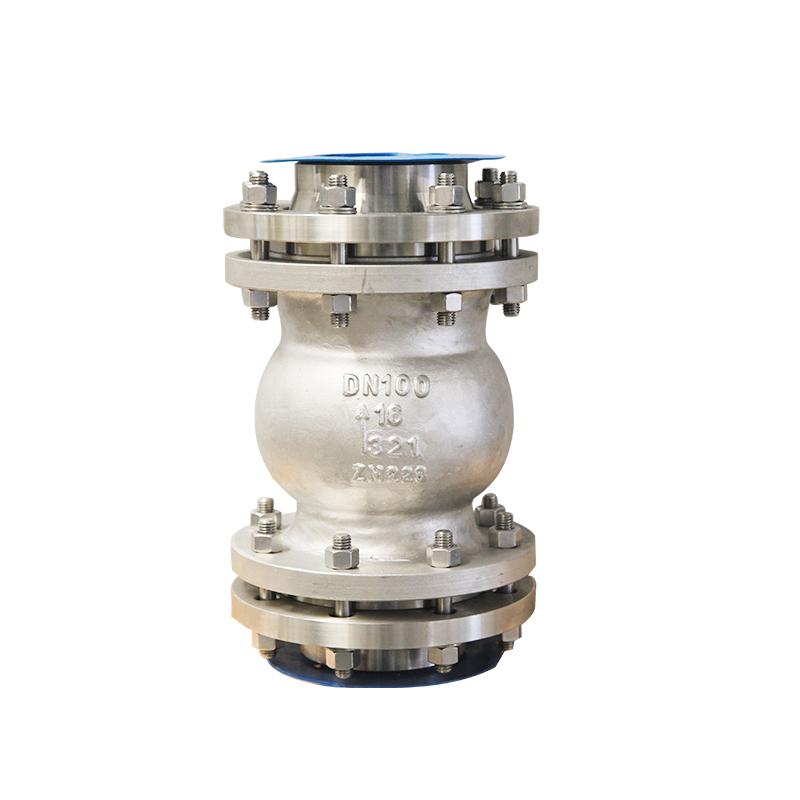
The longevity of any built structure or manufactured component hinges on a single, often underappreciated decision: what it's made from. Pick the wrong alloy for a marine environment, and salt-laden air will pit it within a few seasons. Choose a polymer that can’t handle thermal cycling, and you’ll watch it crack when the first cold snap hits. Durability isn't just about thickness or overengineering—it's a deliberate match between a material's inherent properties and the stresses it will inevitably face.
Beyond obvious threats like corrosion or UV breakdown, subtle interactions can quietly erode integrity. When two different metals sit together in the presence of moisture, galvanic reactions can turn a structural joint into a battery, eating away at the less noble side. Similarly, composites may look perfect until internal delamination spreads unseen between layers. Smart material selection accounts for these hidden battles, not just the headline loads.
What often gets overlooked is how material choices ripple out into maintenance cycles and whole-life costs. A slightly more resistant stainless steel might hike initial spending, but it can wipe years of inspection, recoating, or replacement from a project's future. In too many cases, shortsighted savings on materials snowball into rusted-out dreams and blown budgets a decade later. The real measure of durability is time, and the materials we pick decide whose side time is on.
Manufacturing Precision That Eliminates Leakage and Failure
Every joint, seal, and surface in a high-performance assembly must meet exacting standards to prevent leaks and unexpected breakdowns. By controlling tolerances down to the micron level, manufacturers can create interfaces that maintain integrity under extreme pressure, temperature, and vibration.
Precision machining and metrology work hand in hand to verify that components fit together with virtually zero deviation. Laser scanning, coordinate measuring machines, and automated optical inspection catch deviations early, ensuring that no flaw escapes into the final product. This level of scrutiny transforms raw materials into parts that behave predictably over decades of heavy use.
When every dimension is held to a narrow window, the risk of leakage or fatigue failure drops dramatically. Equipment stays in service longer, maintenance intervals extend, and safety records improve—all because the foundational manufacturing process left nothing to chance.
Testing Protocols That Separate Reliable Valves from the Rest
When it comes to industrial valves, the margin between a reliable component and a costly failure often lies in the testing protocols employed before installation. Too many manufacturers rely on generic pressure checks that barely scratch the surface of real-world demands. A rigorous testing sequence, however, pushes valves through extreme temperature swings, cyclic loading, and long-duration endurance runs that mimic years of field service in just a few weeks. This is where the truly robust designs distinguish themselves—surviving conditions that would crack a lesser body or shred an inferior seat material within hours.
The most revealing protocols go beyond standard API or ISO leak-rate verification. They incorporate helium mass spectrometry for micro-leak detection, partial stroke testing under full differential pressure, and vibration resonance sweeps that expose hidden structural weaknesses. Witnessing a valve hold a bubble-tight seal after thousands of cycles at maximum rated torque is far more telling than any glossy specification sheet. It’s this uncompromising battery of tests that separates valves destined for critical isolation service from those that may fail when it matters most.
Field data consistently supports the notion that valves subjected to such exhaustive qualification programs deliver lower total cost of ownership, even if their upfront price appears higher. The absence of unplanned shutdowns, fugitive emissions events, and emergency replacements justifies the investment. Smart operators now demand full test reports with raw data, not just pass/fail certificates, and they visit test facilities to witness the process firsthand. That cultural shift toward transparency in testing is quietly reshaping the supply chain—rewarding manufacturers who treat the test bench as a proving ground rather than a checkbox exercise.
Industry-Specific Adaptations That Ensure Optimal Fit
Generic tools fall short when the rubber meets the road. A platform built with your sector in mind does more than just bolt on a few themed templates; it reshapes the core workflow to mirror the rhythms and regulations you navigate daily. For a logistics firm, that means real-time fleet visibility embedded directly into the dashboard, not buried in a plug-in. For a healthcare provider, it’s about patient data handling that meets compliance standards before a file uploads, not as an afterthought.
The real magic happens in the layers of customization that go unnoticed until you rely on them. Consider how a manufacturing floor requires quality audit trails that tie directly to batch records, or how a legal practice benefits from automated conflict checks that speak the language of court dockets. These aren't broad strokes—they’re surgical enhancements to reduce friction. When the system’s default terminology swaps out generic labels for your industry’s vernacular, the daily grind feels less like wrestling a tool and more like collaborating with a specialist.
Achieving a natural fit also means the platform can flex as industry norms shift. Regulatory updates get folded into the core feature set, not left for you to configure manually. New compliance modules or reporting standards appear as curated options, keeping your operations aligned without a constant rebuild. This approach transforms software from a static utility into a living part of your practice, one that ages with your field rather than against it.
Vendor Evaluation Beyond Certifications and Claims
Relying solely on certifications often obscures the real picture of a vendor’s capabilities. A certificate indicates a snapshot of compliance at a given moment, but processes can degrade, and teams can change. True evaluation demands digging into how they handle exceptions, not just standard scenarios. Watch for operational resilience when plans go sideways—do they scramble or adapt smoothly? These insights rarely make it into glossy brochures.
Claims of cutting-edge technology or unmatched service are easy to make but require validation beyond marketing materials. Request unscripted demonstrations, talk to their engineers instead of sales reps, and observe how they troubleshoot real problems. Pay attention to their post-sales support rhythm: are they proactive or merely reactive? Vendors who prioritize long-term partnership over quick wins will show it in their daily interactions, not just their presentations.
Cultural alignment and ethical consistency often surface as decisive factors during deeper scrutiny. Assess whether their internal values translate into consistent behavior—from punctual deliveries to transparent communication during crises. A vendor that invests in continuous improvement initiatives without fanfare is often more reliable than one who merely collects accolades. Ultimately, the most meaningful evaluations emerge from ongoing collaboration, not checkbox audits.
FAQ
First, check their track record. A manufacturer with decades of experience usually has refined their designs and processes. Look for case studies or client testimonials that demonstrate performance in demanding applications. Also, confirm they do in-house testing—real-world cycle testing and pressure drop analysis—not just theoretical calculations.
Ask for material certifications and corrosion resistance data. Reputable manufacturers will freely provide chemical compatibility charts and even offer sample valves for in-plant testing. If they dodge detailed questions about elastomers or metal grades, that's a red flag. Your fluid's temperature, viscosity, and chemical makeup all matter—a generic 'works with water' isn't enough.
Yes, but don't just look for logos. API, ISO, WRAS—these matter because they signal a commitment to standardized quality management. More importantly, ask how recently they were audited and whether they've had any non-conformities. A fresh certificate is meaningless if the factory floor tells a different story. If possible, tour their facility or request a virtual walkthrough.
Short-term savings often lead to long-term pain. Cheaper valves may use substandard springs, poorly machined seats, or thinner walls that warp under moderate pressure. When a check valve fails, it's rarely just the valve that suffers—backflow can destroy pumps, contaminate systems, and shut down operations. The true cost includes maintenance labor and downtime, not just the part price.
Request a detailed quality plan. They should outline inspection points from raw material receipt to final assembly. Ask for sample reports—dimensional checks, pressure test logs, seat leakage results. Also, find out if they use statistical process control. A company that willingly shares data is confident in its product. If they hesitate, move on.
Absolutely. Sometimes the niche players outperform because they focus on a narrow range and obsess over every component. They often provide better service, faster customization, and more direct engineering support. Don't assume size equals quality. Verify their capabilities: do they design in-house? Can they handle your flow rates and pressure ratings? The best valve sometimes comes from a 50-person shop that's been perfecting one design for years.
When failure isn't an option. Think critical infrastructure, sterile processing, or high-cycling applications. Premium valves often feature tighter shutoff, lower cracking pressure, and longer maintenance intervals. If your process relies on consistent flow direction, the extra investment pays for itself in avoided unscheduled shutdowns and reduced energy costs from efficient internal geometry.
Conclusion
Selecting a check valve manufacturer who delivers consistent quality starts with understanding the engineering fundamentals that govern long-term performance. The core working principle of a check valve—allowing flow in one direction and preventing backflow—demands precision in the relationship between the sealing element and seat. Even minor deviations can lead to leakage, pressure loss, or premature wear. Therefore, a manufacturer’s design philosophy should prioritize internal geometries that minimize turbulence and fluid hammer, which are common causes of mechanical fatigue. Alongside design, material selection is pivotal: the choice of body and trim materials must be aligned with process media, temperature ranges, and pressure cycles. For instance, duplex stainless steels offer superior corrosion resistance in aggressive chemical environments, while hardened tool steels extend service life in abrasive slurries. Manufacturers with deep metallurgical knowledge can guide material pairings that prevent galvanic corrosion and ensure dimensional stability under thermal cycling. Beyond material specs, manufacturing precision is what separates a reliable valve from one that fails early. True quality is achieved through CNC machining accuracies measured in microns, rigorous in-process inspections, and surface finishing techniques that enhance seal integrity. A producer that invests in automated machining cells and strict quality gates eliminates the variability that causes leakage paths, ensuring every valve functions as intended from the first cycle to the hundred-thousandth.
Equally important is the manufacturer’s commitment to thorough testing protocols that go far beyond standard hydrostatic and pneumatic leak tests. Reliable suppliers conduct lifecycle testing that simulates real-world operating conditions, including rapid cycling, high-frequency actuation, and extreme temperature exposure. Cryogenic testing for valves used in LNG applications, or high-pressure gas testing for hydrogen service, demonstrates a readiness to validate performance under demanding scenarios. This testing transparency should be backed by detailed reports, not just general certificates. Another crucial factor is the manufacturer’s ability to tailor designs to industry-specific requirements. A check valve destined for a pharmaceutical sanitary line requires FDA-compliant materials, crevice-free interiors, and cleanable designs, whereas a valve for upstream oil and gas must withstand sand-laden flow and sour service. The best manufacturers employ application engineers who collaborate with clients to optimize valve selection, spring settings (if applicable), and connection types to match system dynamics. Finally, vendor evaluation must dig deeper than ISO 9001 credentials or glossy brochures. It means verifying production capacity, supply chain resilience, and aftermarket support. Site audits that observe actual manufacturing workflows, inventory management for critical spare parts, and the availability of engineering support for troubleshooting are far more telling than marketing claims. Ultimately, the partnership with a check valve manufacturer should be based on a proven track record of delivering solutions that minimize downtime, reduce maintenance costs, and maintain plant safety, reflecting a genuine engineering culture rather than just a transactional relationship.
Contact Us
Contact Person: Lucas Lin
Email: [email protected]
Tel/WhatsApp: 8613968913000
Website: https://www.zhengmaogroup.com