Best Hard-Seal Ball Valve Supplier: How to Identify Top-Quality Manufacturers and Avoid Costly Mistakes
2026-05-08
Selecting the right hard-seal ball valve supplier is more than just a purchase—it's a critical decision that impacts safety, efficiency, and long-term costs. With countless manufacturers claiming excellence, how do you separate genuine quality from clever marketing? This guide cuts through the noise, revealing practical steps to identify top-tier producers and sidestep expensive errors. Whether you're upgrading industrial systems or sourcing for demanding applications, understanding key evaluation criteria is essential. Discover why industry leaders like ZMV set the benchmark for reliability and performance, and learn how to make a confident, informed choice that protects your operations from hidden pitfalls.
What Separates Premium Hard-Seal Ball Valves from the Rest
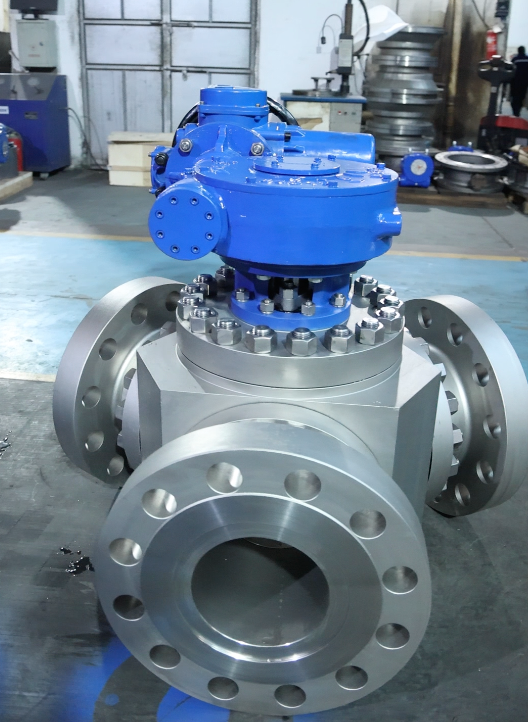
The core distinction lies in the engineering philosophy behind the sealing surfaces. Premium hard-seal ball valves employ advanced surfacing technologies—such as HVOF-applied tungsten carbide or chromium carbide coatings—on both the ball and seat rings. This creates a brutally durable interface that resists galling, erosion, and thermal distortion even under repeated cycling in abrasive slurries or high-temperature steam. Unlike commodity valves that rely on thin, inconsistent coatings or untreated stainless steel, the precision-lapped mating surfaces in a premium valve achieve near-perfect sphericity and light-tight contact, eliminating the microscopic leak paths that plague lesser designs.
Beyond raw materials, true premium valves earn their status through uncompromising testing and field-proven reliability. Every unit undergoes rigorous fugitive emission testing per ISO 15848 or equivalent, often with helium mass spectrometry to detect leakage down to parts-per-billion levels. Fire-safe certification (API 607/6FA) is standard, not an optional extra, ensuring the valve maintains seal integrity during and after a fire event. Real differentiation also shows in long-term performance: premium hard-seal ball valves routinely deliver tens of thousands of cycles without significant torque increase or packing wear, backed by detailed traceability records and material certifications that let operators trust the valve in critical isolation service where failure is not an option.
The Manufacturer Audit: Questions to Ask Before You Commit
Before you sign any agreement, digging into a manufacturer's operational reality is non-negotiable. Surface-level claims about capacity or quality mean little without firsthand verification. A proper audit goes beyond paperwork—it’s about observing workflows, speaking with floor staff, and understanding how the facility handles deviations. Without this, you’re essentially betting your product line on a brochure.
Ask pointed questions about their defect management system: how are non-conformances logged, investigated, and prevented from recurring? Request to see real-time quality data, not just summary reports. Equally critical is supply chain transparency—do they have a verified chain of custody for raw materials? If they can’t trace a component back to its source within hours, you may face compliance nightmares later. Also, delve into their equipment maintenance logs; neglected machinery often foreshadows inconsistent output.
Don’t overlook cultural alignment. Probe how they handle urgent changes or unexpected delays—do they communicate proactively or bury problems until it’s too late? A manufacturer that shares your commitment to continuous improvement will openly discuss past failures and the steps taken to fix them. Trust is built when both parties view the audit not as a checkpoint, but as a mutual exploration of how to build something durable.
Material Integrity: The Hidden Factor That Prevents Leaks
When we think about leaks, the mind often jumps to seals, gaskets, or installation errors. But beneath all that is something more fundamental: the material itself. Even a perfectly installed system will fail if the walls aren't sound. Microscopic flaws, inconsistent density, or chemical incompatibility can turn a seemingly solid pipe into a sieve over time. It's not always obvious at first—a tiny void here, a slight impurity there—but under pressure, temperature swings, or corrosive fluids, these hidden weaknesses expand into full-blown failures. The truth is, a leak rarely starts where you think it does; it starts in the raw integrity of the material you trusted.
Testing That Matters: From Pressure Checks to Cryogenic Trials
Real-world reliability isn’t built on assumptions—it’s earned by pushing components past their breaking points in ways that mimic the unexpected. Pressure checks catch the slow leaks and weak seals, the kind that never show up on a spec sheet but could strand a system mid-operation. We don’t just count cycles; we watch for the subtle shifts in behavior that signal a part is about to tell a story no one wants to hear.
Cryogenic trials take that scrutiny to the cold, unforgiving edge where materials contract, embrittle, and reveal their true character. It’s one thing to hold pressure at room temperature; it’s another to maintain it when metal shrinks and seals stiffen at -320°F. These aren’t just qualification steps—they’re the honest conversations we force between the design and the real world, long before anything leaves the shop floor.
Supplier Shortcuts That Could Cost You a Fortune
When a supplier offers a price that seems too good to be true, it often is. Many manufacturers cut costs by swapping specified materials for cheaper, substandard alternatives that look similar but fail under stress. For instance, a batch of fasteners might be stamped from low-grade steel instead of the hardened alloy your product requires. These substitutions are rarely documented, and you may not discover the weakness until a field failure triggers recalls, legal disputes, or damage to your brand’s reputation—costs that far outweigh the initial savings.
Another common shortcut involves bypassing or falsifying quality checks. A supplier might provide counterfeit certifications, skip essential testing phases, or rush production to meet a deadline without proper oversight. This can leave you with components that harbor hidden defects, inconsistent tolerances, or safety hazards. Without rigorous, independent verification, you're essentially betting your business on their word—and if something goes wrong, tracing the fault back to its source becomes a logistical nightmare that drains time and resources.
Beyond materials and testing, some suppliers manipulate shipping and logistics to shave off a few dollars. They might switch freight carriers to an unreliable service, reduce packaging standards so goods arrive damaged, or declare incorrect customs values that trigger fines and shipment delays. Each of these seemingly minor decisions can cascade into stockouts, emergency air freights, and strained customer relationships. In the end, the money you thought you were saving evaporates, leaving you to foot bills that could have been avoided with a little more diligence upfront.
Real-World Insights: How Smart Buyers Avoid Bad Investments
Smart buyers know that a glossy sales pitch rarely tells the full story. They dig into the nitty-gritty—construction quality, neighborhood trends, and actual rental yields—instead of relying on polished brochures. One investor we spoke with walked away from a "hot" downtown condo after discovering pending assessments that would have eroded returns for years.
Another common thread among successful buyers is their willingness to learn from others' stumbles. They network with people who've weathered downturns and listen closely when someone mentions how a "can't-miss" property turned sour. These real-world lessons often reveal patterns that raw data alone can hide, like over-leverage or emotional decision-making in a frenzy.
FAQ
A hard-seal ball valve uses metal-to-metal seating—typically stainless steel or tungsten carbide—instead of soft materials like PTFE. This design handles extreme temperatures, abrasive media, and high-pressure environments without deforming, making it ideal for industries like oil and gas, chemical processing, and power generation.
Look beyond flashy brochures. A dependable manufacturer will have a documented track record of supplying for critical applications, readily share material certifications, and offer to walk you through their production facility—whether in person or via video. They won't shy away from discussing failure rates or past project challenges.
One common blunder is prioritizing price over performance, leading to premature failures from subpar materials. Another is ignoring media compatibility—not all hard-seal valves handle every chemical equally. And skipping a factory audit or third-party inspection often results in receiving valves that don't live up to the specification sheet.
The seat and ball materials directly impact lifespan and leak rates. Cheaper stainless steels may lack the hardness for abrasive slurry, while the wrong coating can wear off in high-cycle applications. Always verify the exact alloy composition, not just the generic designation, and request test reports for hardness and corrosion resistance.
Insist on seeing their inspection procedures in action. Ask for statistical process control data from recent batches, not just final product certificates. A trustworthy supplier will have real-time traceability from raw material to finished valve and can provide documented rejection rates and corrective action reports.
Yes. Look for suppliers that perform API 598 or ISO 5208 seat leakage tests on every valve, not just type testing. For metal-seated valves, they should run thermal cycling and endurance tests beyond standard requirements. Ask for cycle life data under your specific pressure and temperature conditions—generic numbers are a red flag.
Build a direct relationship with the manufacturer, not just through intermediaries. Verify that the nameplate matches the paperwork and cross-check serial numbers with the factory. Unexpectedly audit shipments, and always retain samples for independent lab analysis. If a deal seems too good to be true, the metallurgy probably is.
Conclusion
Finding a truly dependable hard-seal ball valve supplier goes far beyond glossy brochures and competitive pricing. The core distinction begins with what separates a premium product from a commodity: rigorous design precision that handles extreme temperatures, aggressive chemicals, and relentless cycling without degrading. Premium manufacturers invest heavily in material integrity, using precisely forged or cast body alloys with genuine certifications, not just surface-level claims. They also perform mandatory testing that goes well beyond standard hydrostatic checks, incorporating cryogenic trials or high-cycle endurance runs that validate performance under actual service conditions. A transparent audit process is non‑negotiable; asking detailed questions about raw material sourcing, machining tolerances, and traceability records quickly reveals whether a supplier controls its supply chain or simply assembles parts from unknown origins.
Smart buyers learn to spot shortcuts that could translate into expensive downtime or safety failures. Common pitfalls include substituting inferior trim materials, skipping low‑emission fugitive emission testing, or relying on outdated sealing technology that can’t handle thermal expansion. In contrast, a trustworthy manufacturer will proactively discuss failure modes, offer documented independent lab reports, and share real‑world installation data from similar applications. They treat every audit as an opportunity to demonstrate engineering depth rather than a hurdle to overcome. The most insightful procurement decisions often come from studying cases where long‑term performance data replaced initial cost bias, revealing that a slightly higher upfront investment prevented repeated maintenance, leakage incidents, and regulatory fines. When a supplier openly connects you with existing customers for candid feedback and presents a comprehensive validation package without hesitation, you’ve likely found a partner committed to lasting value rather than a quick sale.
Contact Us
Contact Person: Lucas Lin
Email: [email protected]
Tel/WhatsApp: 8613968913000
Website: https://www.zhengmaogroup.com