

Best HDP PPGI for Long-Lasting Roofing and Wall Cladding
2026-10-15
If you're tired of replacing faded, rusting panels every few years, it's time to look at what actually goes into high-durability coated steel. LANYUN has quietly built a reputation for HDP PPGI that holds its color and resists corrosion far longer than standard products — but does it really live up to the claim? In this post, we'll break down the coating technology, real-world performance, and the key specs that make it a serious contender for roofing and wall cladding that needs to last.
Why HDP PPGI Films Survive Roofing and Wall Cladding Conditions Longer
High-durability polyester (HDP) PPGI films hold up under roof and wall cladding exposure because the resin system is formulated with a denser crosslink network than standard polyester. This restricts UV radiation from breaking the polymer chains that cause chalking and color fade. The coating also carries a blend of weather-stable pigments and passivating anti-corrosive fillers, which slow moisture and oxygen diffusion to the metal substrate even when the surface is constantly hit by rain, condensation, and temperature swings.
Adhesion is the other half of the story. Before the HDP topcoat goes on, the galvanized or zinc-aluminum base receives a conversion treatment and an epoxy or polyurethane primer that grips the metal and blocks underfilm corrosion at cut edges, fastener holes, and scratches. The topcoat is then baked to a cured film with enough flexibility to expand and contract with the steel without micro-cracking, yet hard enough to resist dirt pickup, bird droppings, and industrial fallout. That combination keeps the film intact long after conventional polyester would have dulled, cracked, or peeled.
Coating Layer Breakdowns That Cause Early Rust and How HDP Differs
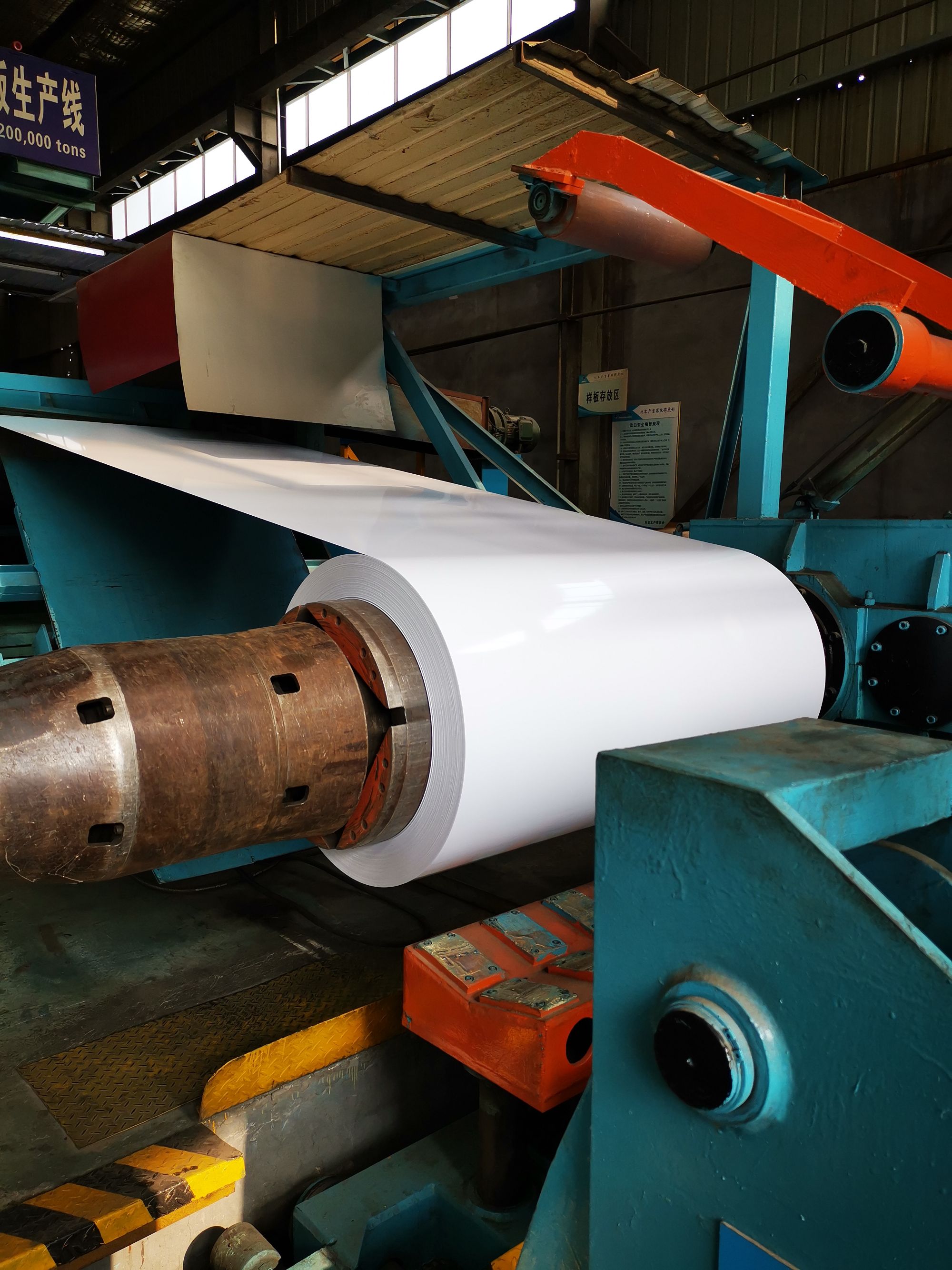
When a protective coating develops tiny cracks, scratches, or weak spots, moisture and oxygen slip through to the metal underneath. Even microscopic defects can start the corrosion cycle, because rust spreads laterally once it takes hold. Many failures trace back to poor edge coverage, uneven film thickness, or adhesion loss from surface contamination.
Traditional coatings often rely on a single barrier layer, so any breach means the substrate is fully exposed. Thermal cycling, UV exposure, and mechanical abrasion gradually widen those defects, and the coating may peel back like a scab, accelerating the damage. In humid or coastal environments, this leads to visible rust within months rather than years.
HDP approaches the problem differently by building a multi-stage defense. Its formulation penetrates surface irregularities and bonds tightly to the metal, leaving no weak boundary where moisture can creep. Even if the outer layer is scratched, the underlying treatment resists underfilm corrosion and slows rust creep, giving the part a much longer service life before any repair is needed.
What to Look for in HDP PPGI Thickness and Adhesion Before Buying
Don't settle for the thickness figure printed on the spec sheet. HDP coatings can vary by a few microns depending on where the coil was sampled, so ask your supplier to run a dry film thickness gauge across at least five points, including one near the edge. If the readings swing more than 10% from the average, that's a red flag for uneven curing or coating application. A consistent 20–25 micron layer tends to work well for exterior profiles, but the key is uniformity, not just the peak number.
Adhesion issues rarely show up in warehouse lighting, so push for a bend test on the actual batch you're buying. Fold a sample to 180 degrees or use a crosshatch cutter, then apply heavy-duty tape and pull it off cleanly. Any flaking or lifting along the cut lines means the pretreatment or primer bond is weak. Also check the zinc layer underneath—if it's too thin or poorly passivated, even a perfect HDP topcoat won't stay attached for long.
How Different Climates Test HDP PPGI Performance on Building Envelopes
Building envelopes face wildly different stressors depending on where they stand. In high-altitude or tropical regions, intense UV radiation and prolonged sun exposure push HDP PPGI to its limits. The polyester resin is modified for better cross-linking, which slows down chalking and color fade compared with standard polyester, but even so, a south-facing wall in a desert climate will lose gloss faster than the same panel in a temperate zone. Thermal cycling adds another layer: daytime heat expands the metal, nighttime cold contracts it, and if the coating lacks enough elasticity, micro-cracks start to appear at the ribs and fastener points.
Coastal and marine environments attack from a different angle. Salt spray, high humidity, and chloride ions work their way into any tiny scratch or cut edge. HDP PPGI relies on a well-bonded primer to stop underfilm corrosion, but the real test is at the panel edges and around penetrations. Constant wet-dry cycles in seaside air can cause edge creep if the substrate is not properly pre-treated or if installers damage the coating during fixing. In practice, you will see more blistering and filiform corrosion on hidden edges than on the exposed face, which is why detail design matters as much as the coating chemistry.
Industrial zones and cold climates bring their own challenges. Acidic pollutants such as sulfur dioxide can react with moisture to form weak acids on the surface, gradually etching the paint unless the topcoat has good chemical resistance. Freeze-thaw cycles test adhesion, because water trapped in micro-cracks expands when it turns to ice. HDP formulations with higher flexibility handle low-temperature contraction better than rigid coatings, reducing the chance of cracking when panels shrink. Yet thermal shock from sudden temperature swings—say, a cold rain hitting a sun-heated roof—can stress the interface between zinc layer, primer, and topcoat. Choosing lighter colors helps reduce surface temperature peaks, but the real key is matching the coating system to the specific climate load rather than assuming one HDP grade fits all.
The Maintenance Reality for HDP PPGI Panels After a Decade
After a decade of exposure, most HDP PPGI panels still hold their color better than standard polyester coatings, but the idea of "maintenance-free" starts to show cracks—literally. The high-durability polyester layer resists chalking and fading well, yet edges, cut ends, and fastener points quietly accumulate corrosion if they were never touched up during installation. A close inspection often reveals that the coating itself is intact while the protective patina around scratches has begun to lift, leaving small rust blooms that need immediate attention.
Owners who expected only an occasional rinse are usually surprised by what a decade actually demands. Beyond washing off accumulated dirt and bird droppings with plain water and a soft brush, the real maintenance lies in re-sealing joints and replacing degraded washers on screws. In coastal or industrial zones, salt and chemical fallout settle into overlaps and drip edges, so annual checks become non-negotiable. Ignoring these spots doesn't just shorten the panel's life; it invites under-film corrosion that travels invisibly beneath the paint.
The biggest lesson from ten-year-old installations is that touch-up paint matters more than most suppliers admit. Small scratches from hail, ladders, or wind-blown debris don't heal themselves, and once the zinc layer is breached, rust develops faster than on bare galvanized sheet because the surrounding coating holds moisture against the metal. A practical maintenance routine therefore includes a yearly walk-around with a matching touch-up pen, silicone sealant for any open lap, and immediate replacement of loose fasteners. Not glamorous work, but far cheaper than re-roofing at year twelve.
Comparing HDP PPGI with Other Pre-Painted Steel Options for Facades
When you line up HDP PPGI against standard pre-painted galvanized steel, the difference in surface durability shows up fast. Regular options often rely on a thin polyester coat that fades after a few years of direct sun, while HDP (high-durability polyester) builds in more resin and better pigments. That means the color holds longer without turning chalky, and the finish resists minor scratches from installation or wind-blown debris. For facades that face harsh weather or heavy urban grime, this gap becomes obvious in maintenance costs and visual consistency.
Another angle is how each material handles forming and cutting. Cheaper pre-painted steels sometimes crack at tight bends or leave exposed edges that rust quickly, especially near coastal areas. HDP PPGI tends to have a more flexible coating that stays intact through roll-forming and bending, reducing touch-up work on site. It also pairs well with common facade profiles like corrugated or trapezoidal sheets, so designers don't have to compromise on shape just to get better weather resistance.
Cost is the usual hesitation, and HDP PPGI does carry a premium over basic options. But if you factor in repainting cycles, early replacement of faded panels, or the risk of a patchy-looking building after three years, the upfront difference shrinks. Many project teams find that for medium-rise offices or retail facades where appearance drives tenant value, specifying HDP from the start avoids a costly retrofit later. It is not the only choice, but it often wins when the facade is meant to stay crisp without constant upkeep.
FAQ
It stands for High Durability Polyester. This coating system uses a modified resin that improves UV resistance, color retention, and flexibility compared to standard polyester, making it a solid match for metal roofing and wall panels exposed to harsh weather.
With proper installation and basic upkeep, you can realistically get 20 to 30 years of service. The exact lifespan depends on your local climate, the base steel's corrosion protection, and whether cut edges and fasteners are handled correctly.
It can be, especially if the steel underneath has a strong zinc or zinc-aluminum coating. Regular rinsing to remove salt deposits and avoiding direct contact with dissimilar metals will help you get the most out of it near the coast.
HDP offers a thicker, more flexible paint film that resists scratching and cracking during roll forming. It also tends to keep its original color and gloss longer, which matters on large vertical surfaces where fading is easy to spot.
Yes, it works across a wide range of projects, from warehouses and factories to homes, barns, and commercial buildings. Its balance of up-front cost and long-term durability makes it a practical choice for many different building types.
Avoid dragging panels across rough surfaces, use fasteners with compatible washers, seal any cut edges or field-cut holes, and make sure there is proper drainage and airflow behind the panels. These small steps go a long way toward preserving the coating.
A gentle wash with mild soap and water once or twice a year is usually enough. Stay away from abrasive scrubbers, pressure washers on high settings, or strong solvents, and inspect seams, flashings, and fasteners for any signs of damage.
Conclusion
HDP (high-durability polyester) PPGI earns its reputation on roofs and wall cladding by resisting the slow degradation that cheaper coatings invite. Where standard polyester films break down under UV exposure and thermal cycling, HDP’s tighter molecular structure keeps the paint film intact, preventing micro-cracks from opening a path to the zinc layer and steel core. This matters because early rust almost always starts at those small breaches—edge creep, scratch lines, or areas where the coating has thinned. To get that longevity, buyers should focus on measured dry film thickness (typically 20–25 microns for HDP) and reliable adhesion, since a thick coating that peels is worse than a thinner one that bonds. A simple cross-hatch or bend test at the supplier level can reveal whether the primer and topcoat will stay put through years of expansion and contraction.
Climate pushes HDP PPGI harder than most people expect. Coastal salt spray, high UV at altitude, and freeze-thaw swings all test the coating’s flexibility and corrosion resistance, yet HDP holds up because it was formulated to flex rather than crack under those conditions. After a decade, the maintenance reality is not "no upkeep" but far less than alternatives: occasional washing to remove accumulated grime and checking cut edges or fastener areas is usually enough. Compared to SMP or standard polyester, HDP offers better gloss retention and chalk resistance without the cost jump of PVDF. For facades where appearance and lifespan both matter, that balance makes HDP the practical choice—not over-engineered, but clearly a step above budget films.
Contact Us
Contact Person: Nia
Email: [email protected]
Tel/WhatsApp: +86 18954360337
Website: https://www.sdppgi.com