

Best Mold Steel Guide: Top Materials for High-Performance Molding
2026-01-28
In the precision-driven world of manufacturing, selecting the right mold steel can mean the difference between flawless production and costly downtime. Welcome to 'Best Mold Steel Guide: Top Materials for High-Performance Molding,' where we dive into the critical factors that define superior mold materials—from durability and heat resistance to surface finish and longevity. At Jiangsu Baowu New Materials, we understand these complexities firsthand, leveraging cutting-edge innovations to push the boundaries of what's possible in molding. Whether you're an engineer optimizing a high-volume production line or a designer crafting intricate components, this guide will equip you with insights to make informed choices. Get ready to explore the materials that are reshaping industries and discover how the right steel can transform your molding outcomes.
Essential Properties of Premium Mold Steels for Durability and Precision
When selecting mold steels for demanding applications like injection molding or die casting, durability and precision aren't just desirable—they're critical for consistent production. Premium mold steels achieve this by combining superior hardness and exceptional toughness. The right alloy composition, often featuring elements like chromium, molybdenum, and vanadium, provides wear resistance that extends tool life, reducing downtime for maintenance. Moreover, these steels maintain dimensional stability under thermal cycling, ensuring parts meet tight tolerances batch after batch, which is vital in high-precision industries like automotive or medical device manufacturing.
Beyond material composition, advanced heat treatment processes play a pivotal role in enhancing these essential properties. Techniques like vacuum hardening and tempering optimize the steel's microstructure, balancing hardness with ductility to prevent cracking under stress. This results in molds that withstand high-pressure environments without deforming, contributing directly to production efficiency and cost savings over the long term. In contrast to standard grades, premium steels often undergo rigorous testing for inclusions and uniformity, ensuring fewer defects that could compromise precision in intricate mold designs.
Ultimately, the choice of premium mold steel impacts overall performance in subtle yet significant ways. For instance, better thermal conductivity can improve cooling rates in molds, speeding up cycle times without sacrificing accuracy. By focusing on these core properties, manufacturers can minimize scrap rates and achieve smoother surface finishes on final products, giving them a competitive edge in markets where quality is paramount. It's this attention to detail in material science that transforms a good mold into a reliable, high-performing asset for precision-driven operations.
Comparing P20 vs. H13: Key Differences in Mold Steel Applications
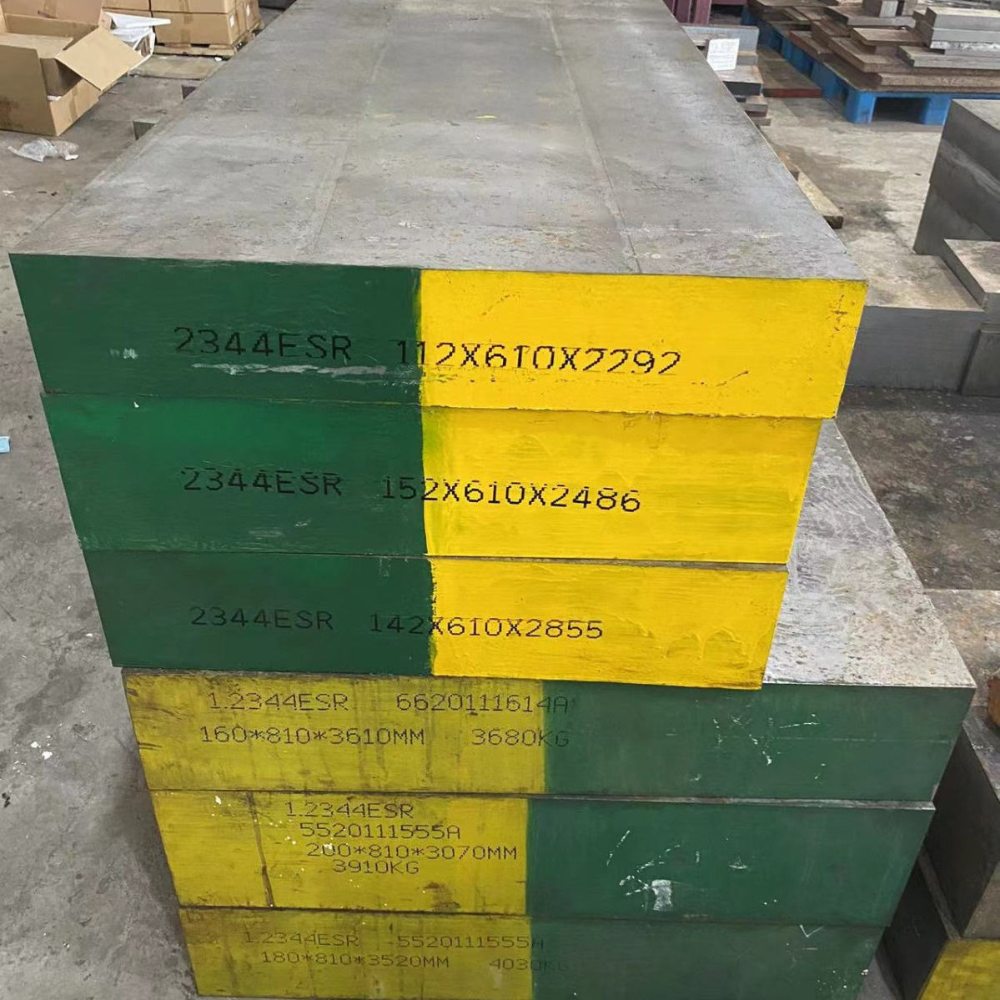
When selecting mold steel for specific applications, the choice between P20 and H13 often hinges on their distinct characteristics and intended uses. P20 steel, known for its good machinability and polishability, is commonly employed in plastic injection molds for producing high-volume parts like consumer goods and automotive components. In contrast, H13, a hot-work tool steel, excels in applications requiring high thermal resistance, such as die-casting molds for aluminum and magnesium alloys, where it withstands extreme temperatures and abrasion. This fundamental difference in heat tolerance shapes their roles in various manufacturing processes.
Beyond thermal properties, P20 and H13 differ significantly in hardness and toughness. P20 typically has a lower hardness range, around 28-32 HRC, making it easier to machine and polish but less durable under high-stress conditions. H13, on the other hand, can be hardened to higher levels (often 40-52 HRC), providing superior wear resistance and toughness, which is crucial for molds subjected to repeated thermal cycling and mechanical loads. This contrast influences not only performance but also maintenance needs and lifespan in demanding industrial settings.
Cost and availability also play roles in the P20 vs. H13 decision. P20 is generally more affordable and widely available, making it a popular choice for projects with tight budgets or where rapid mold production is essential. H13, while more expensive, offers long-term savings in high-temperature applications by reducing downtime and replacement costs due to its enhanced durability. Ultimately, understanding these key differences helps manufacturers optimize tooling investments and achieve better outcomes in mold-based production.
Advanced Heat Treatment Techniques to Enhance Mold Steel Performance
When it comes to pushing mold steel to its limits, advanced heat treatment methods have transformed possibilities in durability and performance. By precisely controlling heating and cooling cycles, these techniques refine the microstructure of the steel, targeting enhanced toughness and wear resistance. Innovations like vacuum heat treating prevent surface oxidation, ensuring cleaner, more uniform results that are critical for high-precision molds in industries such as automotive and aerospace.
The integration of cryogenic processing, where steel is cooled to temperatures well below zero, can lead to remarkable improvements. This process converts residual austenite into martensite, boosting hardness and dimensional stability. It's particularly effective for extending the lifespan of molds subjected to repeated thermal stresses, making it a favorite for applications involving plastics or metals that demand consistent, high-tolerance outputs.
Another cutting-edge approach, tempering with advanced atmospheres like nitrogen, allows for fine-tuning surface properties without compromising core strength. This method can be tailored to specific mold requirements, such as reducing friction or enhancing corrosion resistance. By combining these treatments with traditional methods, manufacturers achieve a balanced performance profile that stands out in demanding environments, offering a competitive edge in mold longevity and reliability.
Surface Finishing Options for Reducing Wear and Improving Part Quality
When it comes to extending the lifespan and boosting the performance of precision components, surface finishing plays a pivotal role. Techniques such as polishing, grinding, and lapping smooth out rough textures, minimizing friction that leads to wear. This not only keeps parts running longer but also enhances their overall functionality, making them more reliable in demanding applications.
Beyond just smoothing surfaces, advanced methods like anodizing and electroplating add protective layers that shield against corrosion and abrasion. By creating a tougher exterior, these finishes reduce material loss over time, ensuring parts maintain their dimensional accuracy and structural integrity. The result is a noticeable uptick in quality, with fewer defects and a consistent fit in assemblies.
Selecting the right finishing option depends on factors like material type and operational conditions. For instance, shot peening can introduce compressive stresses to resist cracking, while coatings like Teflon might be chosen for low-friction environments. Tailoring these processes helps achieve optimal wear resistance and part quality, driving efficiency in industries from aerospace to manufacturing.
Cost-Effective Mold Steel Selection for High-Volume Production Runs
When it comes to high-volume production runs, choosing the right mold steel isn't just about durability—it's a strategic move for cost control. For manufacturers cranking out millions of parts, even minor savings per unit can add up to a huge financial win. That's why savvy production managers look beyond the initial price tag, considering factors like wear resistance, machinability, and maintenance needs.
One often overlooked aspect is how mold steel interacts with specific molding processes. For instance, in injection molding, steels with excellent thermal conductivity can reduce cycle times, meaning you get more parts per hour without extra energy costs. It's like having a hidden efficiency booster built right into your tooling, helping you meet tight deadlines without blowing the budget.
Don't forget the long-term view: a premium steel might seem pricey upfront, but if it lasts through 500,000 cycles versus 200,000 for a cheaper option, the per-part cost drops dramatically. Pair that with steel that's easy to polish and repair, and you've got a setup that keeps downtime low and profits high, making every production run smoother and more economical. Balancing these elements is key to smart, cost-effective mold selection.
Innovations in Alloy Compositions for Longevity in Demanding Molding Environments
In the realm of high-stress molding operations, where components face extreme temperatures, corrosive agents, and relentless mechanical forces, the pursuit of durable alloy compositions has become a focal point of material science. Recent breakthroughs have shifted from traditional nickel-based or cobalt superalloys toward innovative multi-phase systems incorporating rare-earth elements and refractory metals. These advanced alloys leverage computational modeling to predict microstructural behavior, enabling tailored compositions that resist creep, thermal fatigue, and oxidation degradation over prolonged cycles. By optimizing grain boundaries and precipitate distributions, researchers have crafted materials that maintain integrity in environments exceeding 1000°C, offering a leap in longevity for industries like aerospace and power generation.
A key innovation lies in the development of functionally graded alloys, where composition varies strategically across the component to meet localized demands. For instance, surfaces exposed to abrasive wear or chemical attack are fortified with higher concentrations of chromium or tungsten, while the core retains ductility and toughness through balanced alloying elements like molybdenum and tantalum. This gradient approach minimizes stress concentrations and enhances overall part life, proving especially effective in injection molding dies and extrusion equipment subjected to cyclic loading. Field tests in automotive and semiconductor manufacturing have shown a 30-50% increase in tool lifespan compared to conventional homogeneous alloys, underscoring the practical impact of these compositional strategies.
Looking ahead, sustainability and cost-efficiency are driving further alloy innovations, with efforts to reduce reliance on scarce or expensive elements. Bio-inspired designs, mimicking natural structures like nacre or bone, are being explored to create lightweight yet resilient composites through additive manufacturing techniques. By integrating nano-scale reinforcements such as carbides or nitrides within a metallic matrix, these next-generation alloys achieve unprecedented wear resistance without sacrificing machinability. As industries push for greener and more economical solutions, these advancements promise not only extended service life in harsh molding environments but also a reduced environmental footprint through lower material waste and energy consumption.
FAQ
P20, H13, S7, and 420 stainless steel are among the most acclaimed for their balance of hardness, wear resistance, and machinability.
H13 offers superior heat resistance and toughness at high temperatures, making it ideal for high-volume production, while P20 is better for lower-volume runs due to its ease of machining and polishing.
It contains high chromium content, which forms a protective oxide layer, preventing rust and pitting in humid or corrosive environments.
Prioritize hardness, thermal conductivity, and toughness based on the mold's expected production volume, operating temperatures, and material being molded.
Pre-hardened steels like P20 come ready for machining, eliminating the need for additional heat treatment steps, thus speeding up the mold-making process.
S7 provides excellent shock resistance and maintains good hardness, making it suitable for molds subjected to sudden stresses or heavy loads.
Higher-grade steels like H13 or S7 ensure dimensional stability and reduce wear over time, leading to consistent part quality and extended mold life.
Conclusion
In selecting top materials for high-performance molding, premium mold steels must possess essential properties such as high hardness, toughness, and thermal conductivity to ensure durability and precision in demanding environments. Innovations in alloy compositions have further enhanced these characteristics, enabling longevity even under extreme conditions, which sets them apart in the competitive molding industry. By focusing on these advanced materials, manufacturers can significantly improve mold performance and reduce downtime, making them a smart investment for high-stakes applications.
When comparing popular options like P20 and H13, understanding their key differences in applications helps in making informed choices tailored to specific needs. Advanced heat treatment techniques and surface finishing options play crucial roles in enhancing performance, reducing wear, and improving part quality, thereby boosting overall efficiency. For high-volume production runs, cost-effective selection strategies ensure optimal balance between performance and budget, highlighting the importance of a comprehensive guide in navigating the complexities of mold steel to achieve superior results and stand out in the market.
Contact Us
Contact Person: Zoe Liang
Email: [email protected]
Tel/WhatsApp: 86 189 2128 6299
Website: https://www.baowuchina.com