

China Rubber Tire Tread Cooling Production Line: What Buyers Should Know Before Investing
2026-11-18
China’s rubber tire tread cooling production lines are no longer a simple choice between low price and high output—today the real risk is paying for features you cannot use, or missing the few specs that keep a line stable at full speed. Before you lock in a supplier, it pays to look beyond the glossy spec sheet and understand how cooling capacity, control logic, and maintenance access affect daily production. AUGU AUTOMATION approaches these lines from the plant floor up, and the following guide highlights what buyers should verify before investing.
The Cooling Window That Decides Tread Reject Rates
On most extrusion lines, the cooling window is where good tread quietly becomes scrap. The issue is rarely the drop in temperature itself; it is the shape of the curve. A dwell that runs a few degrees too warm or a spray section that cools the surface faster than the core will leave faint ripples and stiff edges that only show up after the tread is cut and handled. Those defects do not always fail inspection immediately, but they tend to cluster in the same sizes and compounds once the shift starts pushing line speed.
The real trouble begins when the cooling profile stops being stable from start to finish. Early production warms the water jacket, mid-shift adjustments chase a drifting setpoint, and by the final hour the profile is nothing like the one that passed first-article checks. In that drift, traction edges curl, thickness varies across the width, and splice joints lose their clean bite. A cooling window that looks acceptable on a chart can still produce enough variation to lift the reject rate from background noise to something the lab flags every day.
Bringing the window under control is less about finding one perfect temperature and more about protecting the rate of change across the full length. Teams that monitor the return water temperature, line pause count, and fan cycling together tend to catch trouble before the rejects stack up. When those signals are treated as a single condition rather than separate setpoints, the cooling window stops being a guess and starts working as a dependable cutoff between sellable tread and waste.
Line Speed Claims Meet the Curing Room, Usually Badly
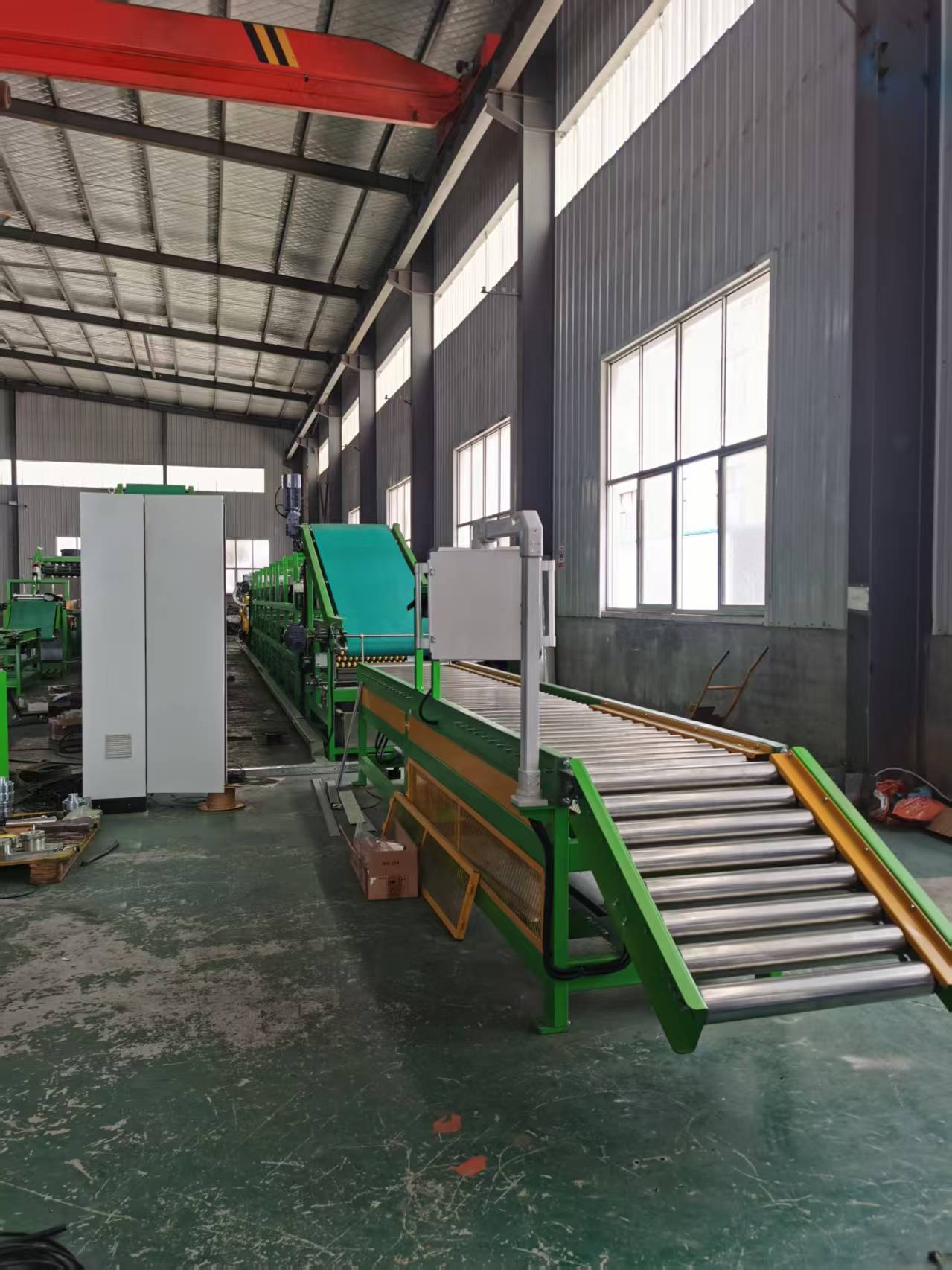
The marketing sheet says the line can hit 240 meters per minute. What it doesn't mention is that those numbers come from a clean, empty machine running a single profile on a cool day with a fresh belt. Push that same line into a cramped, humid curing room and the story changes fast.
Operators learn to watch the little things: a slight wobble in the infeed, the way extrusion slows for a half-second when the die swaps out, the way humidity makes the quench tank behave like a different piece of equipment entirely. Those small losses stack up. The line that claimed 240 ends up closer to 180, not because anyone lied, but because the claim didn't live in the same world the line actually works in.
It's rarely a single catastrophic failure. More often it's a thousand small frictions, each one shaving a few meters off the hour, until the shift report looks like a compromise nobody signed up for.
Similar Chinese Lines, Very Different Price Tags
Walk into any Chinese supermarket and you will spot them side by side: two bottles of soy sauce with nearly identical labels, both claiming traditional brewing methods and a rich umami finish. One costs a dollar fifty, the other twelve. The ingredients list reads almost the same—water, soybeans, wheat, salt—yet the gap in price suggests something more than just branding. Often it comes down to fermentation time, the ratio of whole beans to defatted meal, and whether the brewery still uses clay pots or switched to stainless steel tanks decades ago. None of that shows up on the front of the bottle.
The same story plays out with vinegar, cooking wine, and chili paste. A bottle of aged black vinegar from a small workshop in Shanxi can sit on the shelf next to a mass-produced version that looks nearly identical in color and weight. Tilt both bottles and watch how the liquid clings to the glass. The slower, denser one usually carries the higher price, and that viscosity is not an accident of packaging—it reflects a longer natural aging process, often two to five years. The cheaper version may be diluted or blended to hit a target acidity, which works fine for quick stir-fries but falls flat in a dipping sauce.
Price tags in a Chinese pantry can also reflect where the product was bottled rather than where the ingredients came from. A premium soy sauce exported from Japan or Taiwan might use the exact same black bean and wheat base as a domestic Chinese brand, yet command three to four times the price simply because of stricter export inspection or a longer shelf-life guarantee. For home cooks, the practical difference may be small. But for anyone who grew up tasting the real thing at a family table, the gap between a cheap bottle and an expensive one is rarely just marketing—it is the distance between a quick weekday meal and a flavor that lingers after the bowl is empty.
The Post-Installation Costs Missing From Early Quotes
A quote can look complete on paper while still leaving out the costs that arrive after the panels are mounted or the unit is wired in. Reinforcing a wall, running extra conduit, replacing an aging breaker box, or paying a second technician to handle software setup might not appear until the crew is already on site.
Then there are the quieter follow-ups: a first-year calibration, a filter replacement schedule, battery backups, inspections, and small labor charges for adjustments that were never listed as line items. None of them are optional in practice if the equipment is expected to last, but they rarely show up in the original estimate.
The workaround is to treat the initial quote as a partial picture. Ask for a written list of excluded tasks, common post-installation fees, and the expected maintenance cycle before comparing numbers. That way the lower bid doesn't quietly become the more expensive one a few months later.
Custom Features That Slow Delivery Without Better Cooling
A custom front panel might look distinctive, but if it uses a tighter mesh or adds a solid trim piece, it can increase lead time while reducing the airflow the original chassis was designed around. In many builds, these features are signed off on appearance alone, and the thermal penalty only shows up after the system has been running under load for an hour.
The same pattern appears with extra drive cages, relocated I/O, or bespoke cable routing plates. They add assembly steps and often push the ship date out, yet they rarely move CPU or GPU temperatures by more than a degree. Without added radiator area, larger fans, or a less obstructed intake path, the cooling performance stays essentially unchanged.
If a custom option cannot be tied to a repeatable thermal improvement, it should be treated as a convenience or cosmetic choice. Otherwise, you are paying with both money and delivery time for a feature that makes the build slower to receive but no easier to keep cool.
Turning Support Promises Into Binding Contract Language
Support promises often live in sales decks and onboarding emails, where phrases like “priority assistance” or “fast response” sound reassuring but mean almost nothing once a dispute arises. Turning them into binding language starts with replacing adjectives with measurable obligations. A commitment to “respond quickly” becomes a duty to acknowledge a ticket within two business hours, while “dedicated support” is tied to a named account team or a defined escalation path. Without this conversion, the customer is left holding a promise that cannot be enforced.
The binding effect also depends on attaching real consequences to missed standards. If a vendor promises 99.9% uptime or a four-hour resolution window, the contract should state what happens when those targets are not met: service credits, a fee reduction, or a right to terminate after repeated failures. These remedies make the language more than decorative. Where possible, avoid relying on vague qualifiers like “reasonable efforts,” and instead list the specific resources, staffing levels, or monitoring systems the provider will use to meet the commitment.
Finally, the most durable support clauses are built with input from the people who actually run support operations. Sales and legal teams may agree to ambitious wording that the support desk cannot deliver, so internal review helps align contract terms with daily capacity. Including an operations manual, support tier definitions, or an escalation matrix as an appendix can also turn high-level promises into practical routines. When the contract describes who does what, within which time frame, and with what fallback, a support promise stops being marketing language and starts functioning as a binding operational standard.
FAQ
For a standard single-strand line, plan on roughly 18 to 30 meters in length and 3 to 5 meters in width, not counting access aisles or material staging. Multi-strand lines used in high-output plants can exceed 40 meters, so confirm the supplier layout drawing before pouring foundations.
Spray or immersion cooling usually removes heat faster for thick, high-viscosity tread, while forced-air is cleaner but slower. Many plants use a combined air-and-water section to balance tack retention with throughput.
Depending on recirculation design, expect 8 to 20 cubic meters per hour for a single-strand line. Closed-loop systems with chillers cut makeup water sharply but raise electrical load, so compare both before selecting.
Get written confirmation for remote commissioning support, exact mechanical anchor details, utility connection points, and a day-by-day startup checklist. If the supplier offers on-site supervisors, confirm their daily rate, travel terms, and maximum stay in advance.
Nozzles, water pumps, drive belts, and temperature sensors tend to wear out first. Keep at least one full set of nozzles, two pump seal kits, and calibrated sensors on hand from the first production week.
Yes, if the line has adjustable guide rails, variable-speed conveyors, and quick-change nozzle banks. Still, expect 20 to 40 minutes for a full width and spray pattern changeover on most mid-range systems.
Most lines need 380V/50Hz three-phase power, clean compressed air at 0.6 to 0.8 MPa, and stable water pressure between 0.2 and 0.4 MPa at the inlet. Verify motor ratings and control voltage because some suppliers default to 220V control circuits unless stated otherwise.
Foundation work, water treatment, chiller capacity upgrades, import duties, and local electrical compliance often get missed. Set aside 15 to 25 percent above the line price for site preparation, auxiliary systems, and first-fill consumables.
Conclusion
Cooling performance is rarely about total line length. A tread that leaves the spray zone warm in the center will shrink and stick after cutting, and reject rates climb even when the machine looks well built. Buyers should ask for temperature readings at the discharge end under full load, not just the water temperature or fan count. At the same time, line speed figures from suppliers often fall apart in the curing room because tread compound, thickness, and ambient humidity change how fast heat actually leaves the rubber. Two lines from different Chinese factories can carry similar spec sheets but very different price tags, with the gap usually hidden in frame steel thickness, roll balance, electrical component brands, and insulation quality rather than visible features.
Beyond the initial quote, installation costs for foundations, water supply upgrades, spare rollers, and energy consumption tend to appear only after signing. Custom features often extend delivery times without improving cooling, so buyers should challenge any modification that cannot be tied to a measurable drop in tread surface temperature. Support promises also need legal weight: response times, spare part availability, and acceptance test criteria belong in the contract, not in a sales conversation. The safer approach is to benchmark a standard module against real production conditions before paying for extras that sound useful but add little to the actual cooling window.
Contact Us
Contact Person: Lareina
Email: [email protected]
Tel/WhatsApp: +86 17561696737
Website: https://www.auguauto.com/