

Chinese Rapid Transfer Port: The Complete Guide to Features and Applications
2026-10-08
Data bottlenecks are the silent productivity killers in modern workflows—and the Chinese Rapid Transfer Port is the answer that finally catches up with need. From high-volume manufacturing to real-time media editing, this port technology is turning heads for its raw speed and robustness. In this piece, we break down what makes it tick and where it shines, with AVM leading the charge in reliable implementations.
Why Chinese Rapid Transfer Ports Are Built Differently Than You Expect
Most people assume a rapid transfer port is just a box with two doors, but Chinese manufacturers treat it as a critical control point for contamination risk. Instead of bolting together standard parts, they often start from the specific workflow — how operators move materials between cleanrooms of different grades, where particles tend to accumulate, and what happens during a power failure. That leads to design choices like angled bottoms that guide debris away from seals, or interlock mechanisms that refuse to open both doors at once even if someone forces the handle. You won't see these details in a glossy brochure, but they're the reason Chinese ports hold up better under constant use.
Another surprise is the material flexibility. European and American designs lean heavily on stainless steel, which looks impressive but adds weight and cost. Chinese fabricators, especially those serving pharmaceutical and semiconductor clients, increasingly use reinforced polymer composites for the non-contact surfaces. These materials resist the same cleaning agents without corroding, and they can be molded into smoother radii that eliminate the tiny crevices where microbes hide. Some ports even feature replaceable wear strips along the door tracks — a five-minute fix instead of a full teardown.
The biggest difference, though, is in the documentation and testing approach. Rather than simply listing compliance certificates, Chinese suppliers often provide in-house test data showing exactly how the port behaves under negative pressure, how many cycles the gaskets survive, and how quickly the airlock recovers after a transfer. That level of transparency forces design teams to solve real problems instead of copying a legacy layout. The result isn't always the cheapest option on paper, but it tends to be the one that maintenance crews don't curse at two years later.
The Sealing Principle Behind Reliable Sterile Transfers
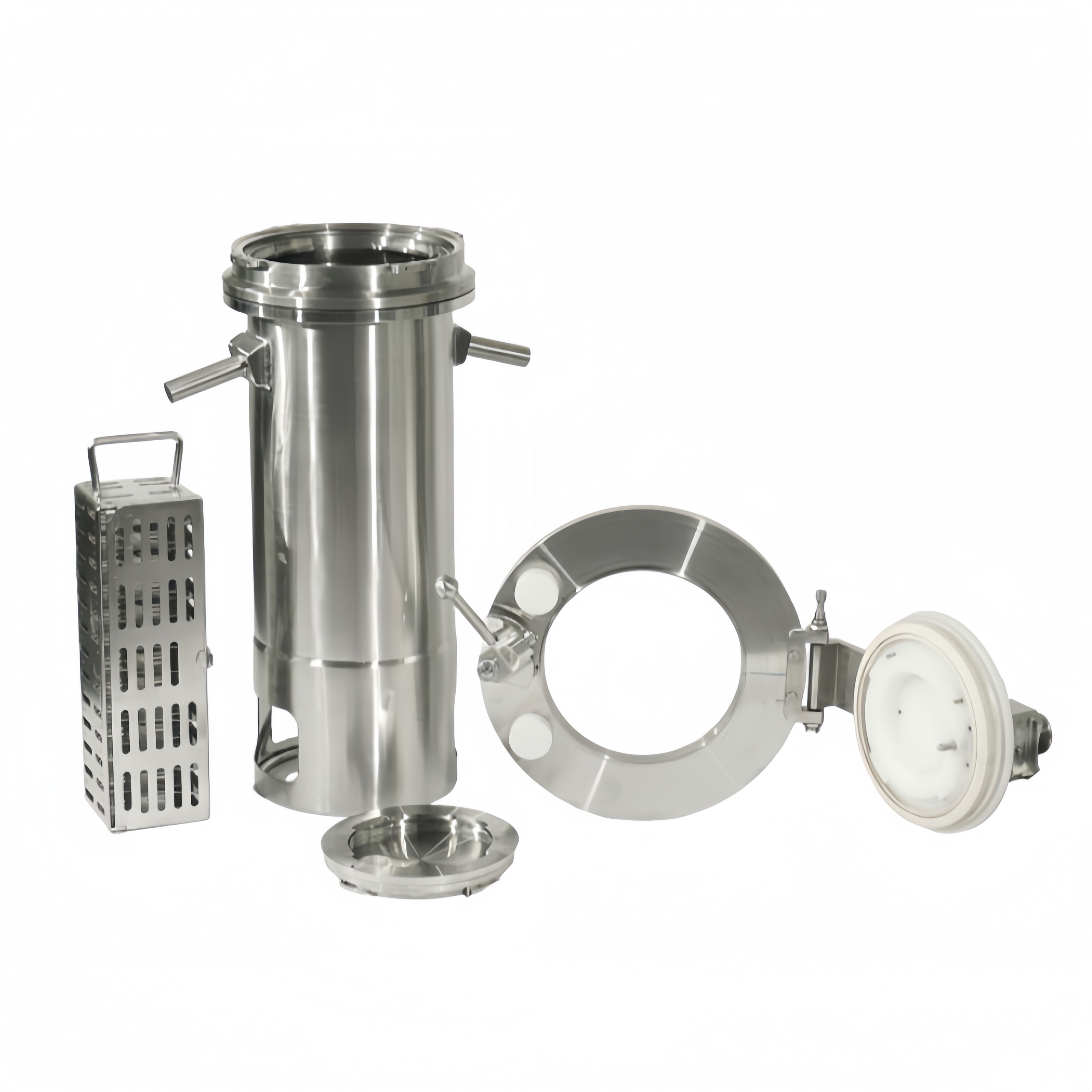
A dependable sterile transfer doesn't come from a single thick gasket or an oversized clamp. It relies on the seal interface being able to close off micro-leak paths that form along machining marks, embedded particles, or subtle surface waviness. The contact pressure at the sealing line must push the softer material into those tiny valleys while still allowing enough elastic recovery to follow thermal movement.
Heat sterilization and repeated coupling cycles work against that recovery. Most seal failures happen not because the elastomer tears, but because compression set slowly steals the residual force needed to keep the interface tight. Transfer ports built for long service often use a spring-energized lip or a dual-contact geometry, so even after autoclave temperatures relax the polymer, a metallic or high-rebound element continues to press the sealing faces together.
Verification has to go beyond a simple pressure hold. A meaningful test introduces a biological challenge or a sensitive pressure decay measurement across the closed port after multiple steam cycles, confirming that the sealing line still blocks spore-sized pathways. That's where surface finish, closure force, and material compatibility have to work as one system rather than as separate design choices.
Common Materials and Finishes That Impact Longevity
When it comes to how long a product can hold up under daily wear, the conversation often starts with the base material. Solid brass, stainless steel, and high-grade aluminum tend to outlast their cheaper counterparts because they resist corrosion, denting, and warping. Plated plastics or thin-gauge alloys might look identical at first glance, but they usually show their weaknesses within a year or two—especially in humid or high-touch environments.
Finishes are just as decisive. A powder-coated or PVD (physical vapor deposition) finish bonds at a molecular level, creating a barrier that shrugs off scratches, UV fading, and chemical exposure. Traditional electroplating can be durable too, but the thickness and undercoating matter more than the shiny top layer. Matte and brushed textures often hide minor blemishes better than high-polish surfaces, which makes them a smarter pick for anything handled frequently.
The real longevity trick is pairing the right material with the right finish for the setting. For outdoor hardware, a stainless steel base with a marine-grade powder coat will easily outlive untreated steel. Indoors, a solid brass fixture with a clear lacquer might age gracefully for decades, while a zinc alloy piece with a thin chrome layer could start pitting in months. Paying attention to these combinations upfront saves both money and the hassle of early replacement.
Real Applications in Injectable Drug Production
Injectable drug production lines rely on advanced aseptic processing to keep pace with demanding sterility assurance levels. In many facilities, robotic arms handle vial filling and stoppering inside closed restricted access barrier systems, cutting human intervention to near zero. This setup minimizes particulate contamination while allowing real-time environmental monitoring to trigger immediate line adjustments if microbial counts drift upward.
Freeze-drying remains a cornerstone for injectables that are unstable in liquid form, such as certain vaccines and biologics. Production teams tune lyophilization cycles to match each molecule's thermal characteristics, often running pilot batches to map collapse temperatures before scaling up. A poorly designed cycle can ruin an entire lot, so engineers rely on differential scanning calorimetry data and residual moisture analysis to lock in robust parameters.
The shift toward pre-filled syringes and auto-injectors has pushed manufacturers to rethink filling accuracy and closure integrity. Silicone oil levels inside glass barrels must stay within tight ranges to ensure smooth plunger movement without contaminating the drug. Some lines now integrate high-speed vision systems that inspect every unit for cracks, bubbles, and plunger position, rejecting defects before secondary packaging.
Avoiding Leakage Failures During High-Frequency Use
High-frequency operation puts unusual stress on seals, gaskets, and connection interfaces. Rapid pressure cycling and thermal expansion can open micro-gaps that remain invisible during static testing. The most direct way to avoid leakage is to match the sealing material to the actual vibration spectrum rather than relying on generic hardness ratings. Silicone and fluorocarbon blends, for instance, often outperform standard nitrile when the frequency exceeds a few hundred hertz, because they retain elasticity under repeated micro-deformation. Torque relaxation also becomes significant: fasteners that hold a perfect seal at low speed may gradually lose preload, so re-torquing schedules or the use of locking washers and thread adhesives should be considered part of the sealing strategy.
A common mistake is assuming that a higher clamping force always fixes high-frequency leaks. Over-compression distorts the seal cross-section and accelerates fatigue cracking, especially at sharp corners or around ports. Instead, focus on distributing the load evenly. Machined grooves with controlled depth, metal-to-metal stops, and bossed flanges prevent the seal from being crushed while still limiting extrusion. For dynamic applications, a slightly softer element with a larger contact footprint can absorb more vibratory energy without separating. This approach reduces the chance of cavitation-induced erosion and keeps the interface consistently closed.
Finally, short test cycles on the bench rarely reproduce the cumulative damage of real high-frequency exposure. Leakage often appears only after millions of cycles, so accelerated testing should include frequency sweeps and temperature interlocks that mimic actual operating modes. Monitoring for small pressure decay or trace fluid at the joint during early run-in can reveal a marginal design before it fails in the field. In practice, pairing a well-chosen seal geometry with a maintenance plan that includes periodic preload checks is more reliable than chasing higher-spec materials alone.
A Practical Selection Checklist for Cleanroom Setups
Start by confirming the actual ISO classification you need, not the one that sounds safest. Too many cleanrooms are over-specified with ISO 5 air change rates when ISO 7 would handle the process without straining the HVAC budget. Match wall panel finish, floor coating, and pass-through materials to the chemicals and cleaning agents used in the space. Check for crevices, ledges, and exposed fasteners that turn into particle traps. Equipment heat load matters just as much as room volume for airflow calculations, so get real power draw numbers before finalizing fan and chiller capacity.
Walk the intended flow for people and materials separately. Gowning, staging, transfer, and waste removal all need distinct space or the room will fight itself during operation. Look at air return placement and verify that no bench or cart sits directly under a supply diffuser where it can disrupt laminar patterns. Pressure cascade indicators should be readable from outside the room, and door interlocks need to be tested with actual cycle timing rather than assumed. Every surface inside the room should have a rounding or coved edge, and any item brought into the cleanroom should have a documented wipe-down or sterilization path.
Finally, include future-proofing in the checklist. Spare ports for particle counters, extra pass-through knockouts, and access clearance for HEPA filter changes save expensive retrofits later. During commissioning, don't accept a verbal sign-off—require duct leakage tests, filter integrity scans, and a measured room recovery rate after a particle challenge. Record all deviations from the original design, because undocumented field changes often explain mysterious cleanroom failures months down the line.
FAQ
A rapid transfer port in China is a designated customs supervision site where cargo can be moved between different transport modes or re-exported with minimal dwell time. Instead of going through full import clearance, goods enter under a simplified transit procedure, get consolidated or deconsolidated, and leave for their final destination. The customs system tracks everything electronically, so physical inspection is selective rather than routine.
Time-sensitive shipments like e-commerce parcels, perishables, high-value electronics, and consolidated freight benefit the most. Goods that don't require complex licensing or quarantine checks can flow through quickly, while items needing special approvals still use regular channels.
Three elements stand out: pre-arrival data submission allows risk assessment before the truck or vessel reaches the gate; dedicated lanes and automated scanning reduce queuing; and customs brokers can handle multiple consignments under a single manifest, cutting paperwork.
Many rapid transfer ports sit near rail hubs, airports, or sea terminals linked to Belt and Road routes. For example, a port in Chongqing might receive goods from Europe by rail, break bulk, and forward them to Southeast Asia by truck or ship without triggering full import duties because the goods never enter China's domestic market.
The biggest hurdle is data accuracy. If the manifest, invoice, or HS codes don't match the physical cargo, the system flags the shipment for manual inspection, which erases the speed advantage. Another issue is that not all local customs offices interpret the rapid transfer rules the same way, so brokers need to stay updated on regional practices.
Yes, some facilities have dedicated zones for returned parcels. Instead of treating a return as a new import, the port can process it under a simplified re-export or destruction procedure. This helps overseas sellers avoid paying duty twice and keeps return cycle times short.
A free trade zone offers broader benefits like tax incentives, manufacturing, and domestic sales after duty payment. A rapid transfer port is narrower in scope: its main job is to move goods through quickly, often without changing their customs status. Many free trade zones contain rapid transfer functions, but not all rapid transfer ports are inside free trade zones.
Look at two factors: the final destination and the customs value of the goods. If the cargo is only transiting China or being re-exported to a nearby country, and the value isn't high enough to justify bonded warehousing, a rapid transfer port can cut transit time by 1-3 days compared to standard ports. But if the goods eventually need to enter China's domestic market, a bonded zone or direct import might be simpler.
Conclusion
What often surprises engineers first about Chinese rapid transfer ports is how deliberately they depart from the generic alpha-beta port designs still common elsewhere. The docking collar, door interlock, and transfer ring are machined as a matched set rather than assembled from interchangeable off-the-shelf hardware, which gives a tighter mechanical resonance during autoclave cycles and repeated sanitization. Instead of relying only on a single peripheral gasket, many units pair a radial silicone seal with a secondary axial lip that energizes as the port closes, creating a compression profile closer to a syringe plunger than a flat flange. This dual-seal approach matters because it tolerates micro-misalignment from floor vibration or operator handling without losing barrier integrity. On the finish side, the best examples use low-sulfur 316L stainless with an electropolished wetted surface around Ra 0.4 µm or better, combined with PEEK or PTFE contact parts in the locking cam. That combination resists the chloride pitting and rouge formation that shorten the life of cheaper ports in cleanroom washdown areas.
In injectable production lines, these ports prove their worth at the boundary between a grade C filling suite and a grade A isolator or RABS, where stoppers, tubing, and sterilized tools move through several times per shift. A common failure pattern is not catastrophic cracking but slow vacuum decay after hundreds of open-close cycles, often traced to flattened O-rings or worn cam followers. To avoid that, operators should track cycle counts per port and replace the dynamic seal set at intervals tied to observed leak rates rather than a fixed calendar. A practical selection checklist goes beyond diameter and flange pattern: verify that the port maintains an ISO 10648-2 Class 3 leakage rate after the manufacturer’s stated endurance test, confirm that the door can be operated with one gloved hand without contacting the sterile flange face, and ask for material certificates covering both the body and elastomers. Ports with a visible alignment witness mark and a tool-free removable door also reduce the chance of user error during high-frequency transfers, which is where most leakage problems actually begin.
Contact Us
Contact Person: Ananda
Email: [email protected]
Tel/WhatsApp: 8619016718200
Website: https://www.wzaomi.com