
Continuous Still Manufacturer Guide: Key Factors for Selecting a Trusted Partner
2026-10-20
Choosing a continuous still manufacturer is about more than steel and copper—it's about trust. A single design flaw or weak support can stall your entire production line. This guide cuts through the noise to highlight the factors that actually matter, from thermal efficiency to long-term service. With DYE, you're not just buying equipment; you're securing a partner that prioritizes your output and uptime.
Pin Down Your Distillation Goals Before Talking to Any Builder
It's tempting to start browsing equipment brochures the moment you decide to invest in a still, but that's a fast track to wasted phone calls and mismatched quotes. Before you reach out to any fabricator, sit down with a notepad and get brutally specific about what you actually need to produce. Are you after a high-proof neutral spirit for gin, a flavorful whiskey distillate, or something entirely different like essential oils or fuel ethanol? The answer changes everything from column design to condenser sizing, and a builder who doesn't know your target will either oversell you on features you'll never use or deliver a rig that fights you on every run.
Think through the daily realities, not just the dream batch. How many liters do you expect to push through per week once you're up and running? Do you need hands-on control for recipe development, or will you want automated cuts and temperature logging to keep labor costs down? Space matters too — a pot still with a tall column won't fit under a low ceiling, and a steam-jacketed kettle needs a boiler room you may not have. Write down your feedstock, your desired final proof, and any local regulations that dictate materials or safety features. These details feel tedious now but they're the difference between a quote that's ready to sign and one that starts another round of clarification emails.
Once you've got that list locked down, the conversation with a builder shifts from vague sales chatter to a focused engineering discussion. You'll be able to ask pointed questions about vapor speed, dephlegmator sizing, or whether a gin basket can be added later without cutting into the column. That's when quotes get accurate, lead times get honest, and you stop paying for someone else's guesswork. A builder can only design around what you tell them — so tell them everything you've pinned down, and leave the surprises for your first tasting.
Questions That Reveal Whether a Still Will Age Gracefully
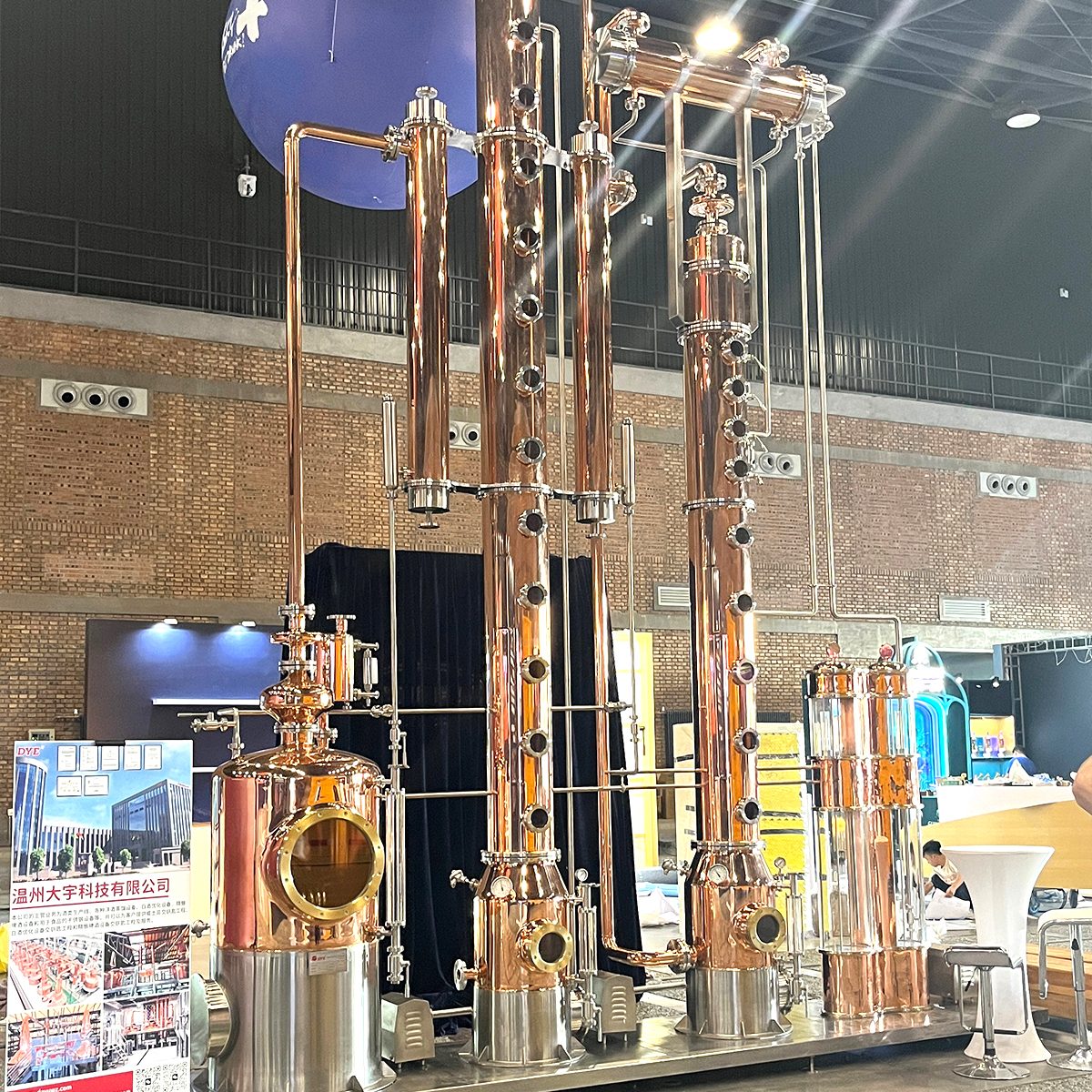
A still that's built to last isn't just about thick metal—it's about how the thing handles the daily grind of heating, cooling, and getting scrubbed down. Ask whether the copper has any thin spots near the seams, because that's where fatigue cracks love to start after a few hundred runs. Look at the welds: were they stress-relieved or just slapped together? A joint that hasn't been annealed will telegraph its misery through tiny fractures long before you notice a drop in spirit quality.
Then there's the question of drainage. Does the pot have a dead leg where wash can pool and turn acidic between distillations? Even a small pocket of standing liquid will eat through copper over time, and by the time you see the green patina, you're already chasing leaks. Also worth asking: how easy is it to pull the lyne arm off for inspection? If the design forces you to wrestle with seized bolts every time, you'll skip maintenance—and that's when graceful aging turns into a slow, expensive breakdown.
The Custom Engineering Details Most Buyers Overlook
Most buyers fixate on horsepower figures or material thickness, but the actual difference often lives in how a part is constrained. A flange that flexes under load, a bracket welded without accounting for thermal expansion, or a bolt pattern that forces awkward access during maintenance—these small geometry decisions determine whether a custom component lasts five years or fifteen. When reviewing drawings, ask about weld sequencing, tolerance stack across mating surfaces, and whether the engineer has considered how the part will be installed, not just how it will function on a test bench.
Another overlooked area is surface treatment at interfaces. Anodizing or powder coat looks good on a spec sheet, but if it chips at a bolt hole or prevents proper electrical grounding, the whole assembly can fail early. Pay attention to edge breaks, drain holes, and sealing surfaces that don't show up in renderings but matter in the field.
Finally, look at how the custom part interacts with existing hardware. A perfectly machined adapter can still cause problems if it increases vibration, blocks a grease fitting, or assumes a torque sequence that technicians won't follow. Real engineering value shows up in details like captive fasteners, alignment features, and service loops that make the part easier to live with.
After the Sale: What a Real Support Relationship Looks Like
Most companies treat post-purchase support like a ticket queue: you file a request, wait three days, and get a canned answer that misses half your question. A real support relationship starts the moment you buy, but it has nothing to do with chatbots or 24/7 hotlines. It looks more like someone remembering that you run a small bakery, not a tech startup, and adjusting their advice around your odd hours and limited counter space. That kind of support isn’t scalable in the usual sense—it’s built on a handful of actual humans who read your previous emails, check your setup before replying, and occasionally call just to ask if the last fix held up.
The difference shows up in quiet ways. Instead of sending you a link to a knowledge base article, a support person might say, “I saw you enabled the inventory sync last month—let’s turn that off first and see if your daily report loads faster.” They don’t make you re-explain your problem five times. More importantly, they treat every interaction as a continuation, not a fresh case number. You end up with a short list of names you actually trust, and when something breaks on a Friday evening, you know the reply will come from someone who understands why it matters to you—not from a script.
Reading the Fine Print on Materials, Welds, and Compliance
A mill test report might list yield strength as 345 MPa, but the fine print often reveals a tolerance band that allows values as low as 335 MPa after re-testing. If your design assumed the higher figure without accounting for that lower bound, a beam that passed initial checks could fail under sustained load. Many engineers overlook the note about reduced strength for thicknesses above 40 mm, which quietly shifts the safety factor.
Welding procedure specifications frequently reference preheat temperatures, yet the accompanying notes sometimes state that the listed value applies only to the first pass. Subsequent passes may drop below that threshold without violating the spec, but the resulting microstructure in the heat-affected zone becomes unpredictable. A shop that follows the letter of the document while ignoring this nuance can produce joints that look perfect on radiographs but crack months later in service.
Third-party inspection reports often carry small disclaimers near the bottom, such as "visual examination only" or "thickness measurements taken at accessible locations." These clauses mean the inspector did not verify internal soundness or coverage on hidden surfaces. When a compliance audit cites such a report as proof of fitness, the fine print effectively narrows the scope so much that the document offers far less assurance than the title suggests.
Digging Into a Manufacturer’s Reputation Beyond the Testimonials
Most buyers start with testimonials, but those are curated. A manufacturer's real reputation shows up in warranty claim rates and how quickly they admit a batch flaw. One useful trick is to ask for references who stopped buying from them, not just happy customers. The silence around discontinued product lines or unresolved complaints often says more than a five-star review.
Another layer is watching how a factory handles stress. If they've survived raw material shortages without ghosting clients, or if they've kept the same core engineering team through a downturn, that's a stronger signal than any marketing page. Check trade credit reports and whether they pay their own suppliers on time. A manufacturer that squeezes its suppliers will eventually squeeze you.
Also look at the small stuff: do they send updated specs without being asked, do they own up to a shipping delay before you notice the tracking hasn't moved, do they keep spare parts in stock for older models? Those habits aren't captured in testimonials, but they tell you how the next five years will go.
FAQ
Beyond verified installation lists, you want a partner who asks about your feedstock variability, target cut points, and energy costs before quoting. The best ones discuss vapor speed and column hydraulics with you, not just capacity numbers.
A lot, but not in the way many assume. Customization should mean adjusting plate spacing, reflux control, and condenser sizing to your spirits, not just adding your logo to a standard skid. If the vendor starts from an existing reference design and explains exactly which sections they'll modify, that's a good sign.
Look for copper only where it earns its place—vapor paths and rectification zones—and 316L stainless elsewhere. Ask about passivation, weld finishing, and whether any gaskets or seals are rated for continuous high-proof ethanol contact. These details affect flavor carryover and maintenance cycles.
Get a list of units running at or above your intended throughput for more than two years. Then ask those operators about unplanned downtime, column flooding frequency, and how easy it is to source replacement parts. A trustworthy supplier will give you names without hesitation.
The control package should let you set a target proof and have the still hold it across shifts with minimal manual intervention. Look for data logging that captures feed rate, temps, pressures, and reflux ratio. If the vendor can't walk you through alarm logic or sensor calibration during the sales process, expect problems later.
Ask about response time guarantees, whether they stock critical spare parts, and if they offer remote diagnostics. Better yet, request a service level agreement that includes commissioning, operator training, and a defined escalation path. Talk to at least two past clients about how they were treated six months after install.
Watch for quotes that exclude essential instrumentation, piping insulation, or shipping. Also be wary of significantly lower-cost options that use thinner plates, fewer manways, or undersized condensers. Force every bidder to itemize the same scope so you're comparing like for like.
Ask about the gap between promised and actual energy consumption, how often the reflux control needed replacing, and whether the manufacturer was responsive when something broke. Also ask if they'd buy the same system again—hesitation tells you more than a scripted yes.
Conclusion
Before you spend a dime on a continuous still, get brutally clear about what you actually need to produce. Are you chasing a specific spirit style, targeting a daily output, or planning to expand into new product lines within a couple of years? If you skip this step, even a well-built still can become an expensive mismatch. Once you know your goals, press manufacturers on the details that matter when equipment runs day in and day out. Ask how they handle thermal stress on column joints, what happens to thin-film evaporation surfaces over 5,000 hours, and whether their copper or stainless components resist pitting under high-acid washes. The answers will tell you more than any glossy brochure.
Custom engineering often hides in plain sight: drain placements that actually allow full emptying, sight glass angles you can read without crouching, and vapor paths that don't trap fusel oils. After installation, a real support partner won't vanish. You want someone who tracks your serial number, keeps critical spare parts on hand, and answers a process question on a Friday afternoon without routing you through three sales reps. Finally, read the fine print on material certifications, weld maps, and pressure code compliance. Then go beyond testimonials—call a distillery that has run the same model for five years and ask what broke, what leaked, and what they wish they had changed. That kind of honest dirt is worth more than any polished case study.
Contact Us
Contact Person: Ada Xu
Email: [email protected]
Tel/WhatsApp: 0577-86806088
Website: https://www.dayuwz.com/