

Custom Idler Roller Company in China: A Practical Guide to Quality, Materials, and Lead Times
2026-11-17
Ask ten suppliers for a custom idler roller quote in China and you will get ten different answers on material, quality, and lead time. That spread is exactly where conveyor downtime and budget overruns hide. XAN takes a more transparent approach, and this guide highlights the checks that separate a dependable roller from a short-term fix.
What to check on a sample idler roller before approving production
A quick dimensional check usually reveals the most obvious problems before anything else. Measure the shell OD at several points along the face and compare the readings against the drawing, paying particular attention to total indicated runout near the centre and at both ends. If the tube is within tolerance, check the bearing seats and shaft ends with a bore gauge or micrometer rather than relying on calipers alone. Even minor undersize conditions on the seat will show up later as fit problems on the frame, so these numbers need to be recorded, not just eyeballed.
The next area to inspect is how the roller behaves under hand rotation. A sample that spins with a rough, gritty feel or has noticeable axial float usually points to poorly seated bearings, insufficient grease, or a housing that was machined slightly out of square. Mount the roller on centres or place it in a simple fixture and rotate it slowly while listening for intermittent contact. It is also worth checking the weld seam where the shell meets the end disc; a lack of fusion here may pass a static visual check but fail after a few hundred hours of load.
Finally, confirm the surface finish and protective coating against the specified requirement. Look for pitting, deep scratches, paint runs, or areas where the coating is thin enough to show substrate. On rubber-lagged or polyurethane-covered rollers, check the bond at the edges by trying to lift the material with a dull blade. If the sample is meant for food, chemical, or washdown duty, make sure the selected seal and lubrication are actually stated on the inspection report, because substitution at this stage often goes unnoticed until a field failure occurs.
Steel thickness, rubber hardness, and bearing fits that decide roller lifespan
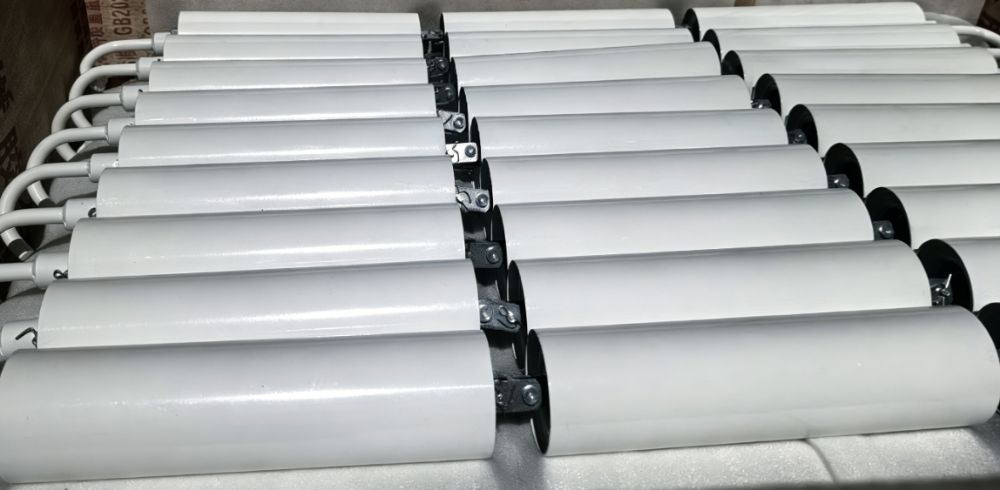
Steel thickness is not a case of more always being better. A heavier shell resists denting from sharp or heavy material, and that matters because a dent becomes a stress riser that forces the bearing to run against an uneven load. But extra wall thickness also adds rotating mass, which increases inertia and can push drive components and shaft journals into fatigue earlier than expected. The sweet spot shifts with the application: a quarry conveyor roller may need a thick-walled tube to survive constant impact, while a food-grade line often runs longer on thin stainless shells simply because the loading is light and the reduced mass keeps bearing temperatures down. Localized deformation is the real killer, not uniform wear.
Rubber hardness controls the contact patch between the roller and whatever rides on it. If the compound is too soft, it tears at the edges, traps grit, and loses chunks before it has a chance to wear evenly. If it is too hard, it stops cushioning impacts and starts slipping, which produces surface burns and delamination at the bond line. The correct range depends on particle size, line speed, temperature, and chemical exposure. A Shore A 55 to 65 compound works for many medium-impact applications, but that same rubber can become brittle in cold storage or swell in oily environments. Hardness drift from aging is just as dangerous as picking the wrong initial spec because it changes grip and load distribution without any obvious visual warning.
Bearing fit is the quiet variable that often decides whether a roller dies at 3,000 hours or 30,000. Too much interference and the inner ring expands until internal clearance disappears, creating hot spots and early spalling. Too little and the shaft begins fretting inside the bore, opening a gap that lets the roller run eccentric and hammer the raceway. The right fit has to account for operating temperature, shaft material, and housing stiffness rather than relying on a generic tolerance table. Even a mid-range bearing in a correct fit will routinely outlast a premium bearing pressed into a sloppy or over-tight seat, because the fit determines how much vibration reaches the rolling elements and how well the lubricant film survives.
Why a factory lead time often shifts after the first quote
A first quote is usually built around a snapshot: current material costs, an open slot on the line, and an assumption that nothing changes between sample approval and production. The moment the order actually moves forward, that snapshot starts to age. Metal prices drift, a sub-supplier pushes its own delivery date out by ten days, or the plating shop closes for a local holiday no one had flagged in the original plan. None of this is dramatic on its own, but it is enough to shift the date.
The second common cause sits inside the product itself. Early quotes are often based on drawings that still carry open questions, a tolerance that looked fine on paper, or a surface finish that has not been tested at production speed. Once engineering feedback comes back, even a small change means re-cutting a fixture, ordering a different grade of raw material, or adding an extra inspection step. That work has to be absorbed somewhere, and lead time is usually where it shows up.
Then there is the less obvious factor: the factory's own scheduling. A quote tends to promise a clear window, but real production is a queue shared by several customers. If another job overruns, or a machine goes down for maintenance, your slot gets pushed. The factory rarely communicates every small adjustment because at the time of quoting, those variables are simply unknown. The lead time after the first quote is not a broken promise as much as a revised forecast once more information is on the table.
Inspection points that catch defects before a shipment leaves the workshop
Before anything gets crated, every assembly passes through a short but deliberate checkpoint between final torque and packaging. The person doing the inspection checks that witness marks on critical fasteners still line up, confirms thread engagement on adjusted rods and fittings, and runs a brief hold test on any sealed cavity that is supposed to stay dry or pressurized. Anything that fails goes straight back to the bench with a note, not a waiver.
A second pass focuses on the issues that rarely show up on a drawing but cause real returns: sharp edges left after deburring, scratches across seal faces, loose harness clips, and swarf hiding in internal passages. The last step is a paperwork-to-hardware check against the serial plate, valve tags, and the customer's packing list, with photos taken before the lid goes on. If the numbers do not match or the photos look wrong, the shipment stays in the shop.
How to compare idler roller quotes that look similar at first glance
Most idler roller quotes list a similar diameter, length, and shell thickness, so the real differences sit in the details that rarely appear in the first line. Instead of stopping at the unit price, pull the bearing make and seal arrangement out of each quote. A quote showing “bearing by SKF/NSK or equivalent” is not the same as a quote with an unbranded bearing and a single lip seal. Ask the supplier to name the exact bearing designation and seal type, then compare those line by line. If a vendor will not commit to that level of detail, treat the lower price with caution.
Look next at shaft tolerance, shell runout, and how the roller is protected before it leaves the factory. Two quotes can both say “C45 steel shaft” but differ in straightness, surface finish, or the galvanizing thickness on the shell. Request the relevant inspection or test data rather than a verbal promise. Even a simple table showing allowed runout, coating thickness, and weld inspection standard will expose which quote is engineered to a tighter standard and which one is simply copying typical dimensions.
Finally, put the commercial terms side by side: packing, freight, lead time, and warranty are part of the real cost. A cheap roller that arrives in a thin carton with no end caps may cost more after transit damage is counted. Also clarify whether the quote covers replacement for premature bearing failure or only manufacturing defects. When the technical and commercial details are aligned, the quotes that looked identical often separate quickly.
Order terms that protect you when testing a new Chinese supplier
Keep the first order small, but make the paperwork heavier than the cartons. A 30% deposit with the balance due only after a third-party inspection report is one of the simplest ways to keep leverage on your side. If the inspection fails, the supplier fixes the issue or refunds the deposit; if they walk away, you are not chasing a full prepayment across borders.
Spell out the exact material, thickness, finish, packaging, and tolerance ranges instead of relying on a sample photo. Add a clause that lets you refuse a shipment with more than a set defect rate, and require replacement or credit within an agreed number of days. For custom tooling or molds, state who owns the tool, where it stays, and what happens to it if the relationship ends.
Use payment milestones tied to verifiable steps such as pre-production sample approval, mass production, inspection, and shipment. Avoid vague phrases like “high quality” or “standard export packing,” because they give the supplier room to interpret. Also set a response window for defects and a clear cap on liability, so a problem at month two does not become a six-month email thread.
FAQ
Ask for a live video walkthrough of the roller assembly area and the bearing-press station. Request the serial numbers from a recent order and ask about their tolerance records for shell roundness and runout. Trading companies often hesitate on these details; a direct factory can usually share them within a day.
Solid carbon steel shells with a minimum wall thickness of 4 to 5 mm are common, but for abrasive slurries many buyers move to rubber-coated or polyurethane-coated rollers. Bearings matter just as much: deep groove ball bearings with labyrinth or triple-lip seals tend to outlast open bearings in dusty environments.
Standard sizes often ship in 15 to 25 days. Custom diameters, special coatings, or non-stock bearing seats can push that to 35 to 45 days. The two biggest delays are waiting for bearing supply and reworking the first article after inspection. Confirm the exact bearing brand and coating cure time before accepting a lead time.
Shell diameter and wall thickness, overall length including shaft ends, bearing type and seal arrangement, shaft diameter and tolerance, any crown or coating requirement, and the running load. If you only send a diameter and length, the factory will make assumptions about the bearing seats and seals, and those assumptions are often where quality slips.
Yes, and it is worth paying for them. Ask for two or three sample rollers made with the actual tooling and materials, not hand-finished copies. Check the weld, bearing fit, seal contact, and runout. Expect a sample lead time of one to two weeks plus freight.
Poor bearing seating is the most common: either too tight, too loose, or machined out of round. Next is inconsistent welding that leaves pinholes or distortion. Coating adhesion failures and soft shaft material also appear. Request incoming inspection records for the shaft material and a sample cut-up before the main run starts.
Focus on the bearing and seal specification rather than shaving shell thickness. A slightly thicker shell with a mid-range domestic or Japanese bearing can be cheaper over two years than a thin shell with the cheapest bearing. Lock the bearing brand and seal type in the purchase order, and ask for a first article approval before they batch the rest.
Use steel pallets or heavy timber crates, not loose cartons. Shaft ends should be wrapped and the rollers secured with steel strapping so they cannot rotate or rub against each other. For sea freight, add VCI paper or a light rust-preventive oil on machined surfaces. A few extra dollars per pallet avoids a shipment full of rusted or dented rollers.
Conclusion
Approving a sample from a Chinese idler roller supplier goes far beyond checking the outside diameter and groove profile. You need to pull a bearing seat dimension, measure actual steel wall thickness at several points around the shell, and confirm the rubber or polyurethane hardness matches the data sheet rather than a salesman’s memory. Two rollers can look alike in a photograph yet differ badly in service if one uses a lighter tube or an undersized bearing. When prices sit close together, ask for a detailed bill of material: steel grade, bearing brand and clearance, shaft tolerance, and curing method for rubber lagging. A slightly higher quote often reflects a thicker shell or a better bearing that will not fail after a few thousand hours. That is why sample approval should include cutting one roller open or at least checking wall thickness with an ultrasonic gauge, not just spinning the roller by hand.
Lead time promises usually start out optimistic because the sales office quotes standard delivery before checking raw material availability, bearing stock, and machining capacity. Once a deposit lands, the real schedule appears. To keep that from hurting your project, agree on a revised ship date after drawings are approved, not before. Before the rollers leave the workshop, have someone check bearing seating, weld finish, shell runout, lagging adhesion, and packaging. Paint scratches and loose end caps are common but preventable. Finally, structure the first order with a partial deposit, clear acceptance criteria, and a holdback until rollers pass inspection. This gives you leverage if the factory cuts corners on the trial run. The real value in a custom idler roller supplier is not just the unit price; it is how the factory handles dimensional details, material substitutions, and schedule changes before and after you pay.
Contact Us
Contact Person: Anna Lu
Email: [email protected]
Tel/WhatsApp: 8618561668850
Website: https://www.x-conveyor.com