

Custom Natural Preservatives That Keep Products Fresh Longer
2026-11-28
Preservation is rarely about a single hero ingredient. A plant extract that protects a cream at pH 5 can fail in a toner at pH 6, and a blend that survives a water-based formula may not hold up in an emulsion. That is why ZIPIN builds custom natural preservative systems around your product's specific chemistry, packaging, and shelf-life goals. If you want products that stay fresh longer without synthetic trade-offs, the difference is in the design—not just the ingredient list.
Matching Natural Preservative Blends to Your Ingredients, Not the Other Way Around
Formulators often start at the wrong end with natural preservative blends. A preservative gets chosen for its ingredient story first, then the pH, viscosity, and emulsifier package are adjusted to keep it working. That approach quietly drains the texture and can leave you chasing stability issues for weeks. It makes more sense to let the formula set the constraints, then pick a preservative blend that fits the existing puzzle.
Every ingredient changes the microbial picture. A gum-rich gel or a protein-heavy emulsion is far more welcoming to bacteria and yeast than a high-glycol serum or an alcohol-based mist. Natural blends also shift behavior with pH, oil phase, chelating agents, and even packaging, so a combination that holds up in one base can fail in another. Matching the blend to that specific environment keeps preservation from turning into a compromise.
In practice, that means reading the full formula before narrowing down options: water activity, pH band, jar or pump, and whether the base contains known microbial feeders like aloe juice, xanthan gum, or oat extract. It also means running challenge tests in the real product instead of leaning on supplier data from a simple broth. When the preservative blend is chosen as a response to the ingredients, the finished formula feels more stable, more elegant, and far less fragile.
The Limits of Single Extracts and How Synergy Changes Shelf Life
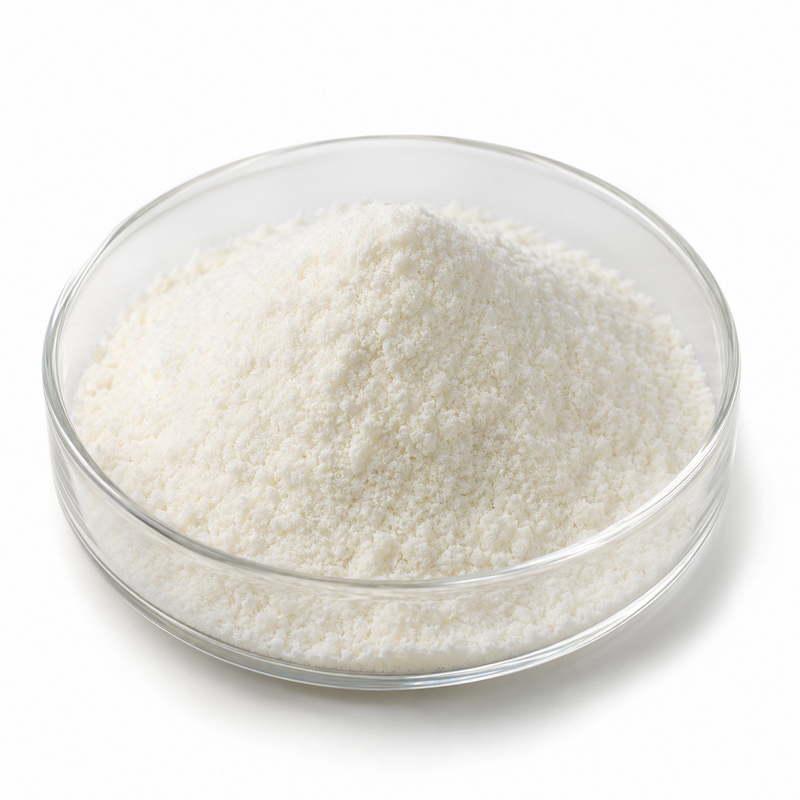
A single botanical extract, no matter how carefully prepared, carries a fixed chemical profile. Its antioxidants, antimicrobial compounds, and pH stabilizers exist in relative isolation, meaning they can deplete at predictable rates once exposed to air, light, or temperature shifts. Rosemary extract alone, for instance, offers strong radical scavenging early on but tends to lose its edge in high-moisture emulsions, leaving a formula vulnerable weeks before the printed expiration date suggests. The assumption that one hero ingredient can shoulder the entire preservation burden is where many shelf-life failures begin.
When extracts are paired with an understanding of their complementary mechanisms, the picture shifts. Green tea catechins might slow lipid oxidation while a citrus bioflavonoid fraction chelates trace metals that would otherwise accelerate spoilage. Neither one is dramatically better alone, but their overlap creates a buffering effect: when one pathway weakens, the other still holds. This is not about stacking more preservatives but about letting compounds interact in ways that smooth out the degradation curve over months instead of weeks.
Synergy also changes how a product ages on the shelf because it reduces the load on any single active. A rosemary and tocopherol blend, for example, often keeps a cream fresher than doubling the rosemary dose would. The extract no longer has to fight oxidation, microbial pressure, and color drift all at once. As a result, the same raw materials can deliver a longer stable window, with sensory qualities that fade gradually rather than collapsing at a single tipping point.
Ferments, Cultures, and Other Living Preservation Routes
Long before refrigeration reshaped the kitchen, fermentation was less a technique than a quiet collaboration. A crock of cabbage left to its own devices slowly turns into sauerkraut, not because we command it, but because invisible communities of bacteria and yeast find a home in the brine. The salt draws out water, the water becomes a shield, and what follows is a slow, patient transformation. This is preservation as a living process: the food doesn't simply wait in stasis; it continues to breathe, shift, and deepen in flavor while stored on a cool shelf.
Cultures—both the microbial kind and the human traditions that carry them—offer a different kind of durability. A spoonful of yogurt saved from the last batch, a glug of kombucha from a friend's jar, a piece of kefir grain passed across generations: these are not sealed-off techniques but inherited companions. Each carries a particular regional fingerprint, a strain shaped by local air, temperature, and the hands that tended it. Unlike the uniform products of industrial canning, these ferments are never quite the same twice, which is precisely why they feel alive on the tongue and in memory.
Other living routes push preservation into stranger, more ambient territory. Root cellars that rely on humidity and darkness, burying vegetables in sand or wrapping them in newspaper, curing fish with wind and smoke, aging cheese in caves where molds paint the rind—all share a willingness to let the environment participate. These methods don't aim to halt time so much as to negotiate with it. What emerges is food with a story still unfolding, a shelf life measured not in expiration dates but in the slow arc of ripening, mellowing, and becoming more itself.
Why Water Activity and pH Decide Which Preservative Works
The real gatekeeper in preservation isn’t total moisture; it’s how much of that moisture is freely available to take part in microbial growth. Water activity (aw) measures that availability. When aw falls below roughly 0.85 for most bacteria, or below about 0.70 for molds, many cells can no longer pull in enough water to keep their internal processes running. Preservatives don’t stop working in dry systems, but their movement changes. A weak acid preservative still needs a thin film of free water to travel toward the cell surface, so diffusion slows as aw drops. The result can be inhibition rather than outright kill, which is why marginal aw values often lead to shelf-life surprises.
pH matters because many common preservatives are weak acids, and their active form is the uncharged molecule. At lower pH, sorbic, benzoic, and propionic acids remain largely undissociated. That neutral form slips through the lipid membrane more easily, then releases protons inside the cell and disrupts metabolism. Once the product pH climbs closer to or above the preservative’s pKa, the molecule becomes ionized and stays in the aqueous phase, where it contributes little antimicrobial effect. This is why potassium sorbate performs well in a pH 3.8 vinaigrette but adds almost nothing in a pH 6.2 sauce.
In practice, water activity and pH work as a pair. A low pH weakens microbial defenses, while low aw limits the water cells need for repair and reproduction. When one variable drifts, the other can either rescue or sabotage the system. For example, a formula with borderline aw may still hold if the pH stays low and the preservative remains in its active form; raise the pH just a few tenths, and the same preservative can lose its edge. That interdependence is why preservation work is less about a single ingredient and more about mapping the whole environment a product creates.
Testing Stability in Real Storage Conditions Instead of Lab Assumptions
Most stability charts look tidy on paper, but a jar left in a humid pantry or a bottle that rides through summer heat in a delivery van tells a different story. We stopped relying only on fixed-temperature chambers and started logging what actually happens inside homes, warehouses, and transit boxes. That means tracking swings from 18°C to 34°C, condensation after nighttime cooling, and UV exposure near a window—not just idealized 25°C/60% RH curves.
The shift changed how we set shelf life. Instead of assuming one controlled climate, we map several real profiles: a steamy bathroom, a sunlit kitchen shelf, a cold garage floor. Samples are opened, partially used, reclosed, and left for days. We watch for texture separation, color drift, odor changes, and loss of actives under those uneven conditions, because that is where most stability failures actually surface.
Lab assumptions still have a place for early screening, but they are no longer the final word. If a formula survives an accelerated test but separates in a delivery truck that sits in the sun, the lab result does not matter much. Real storage data is messier and slower to collect, yet it gives us shelf-life claims we can stand behind without quietly hoping the real world behaves like the lab.
Scaling Up Without Diluting Protection or Flavor
Moving from a kitchen-scale batch to full production usually means longer cook times, larger mixing vessels, and more exposure to heat and air. Those shifts can quietly strip away the sharpness of a citrus note or flatten the warmth of a spice blend. Keeping the original character intact often comes down to adjusting the order of additions rather than simply multiplying every ingredient. A small change, like blooming aromatics in oil at a lower temperature before the base liquid goes in, can preserve the layers that made the first small batch worth scaling.
Protection demands the same attention. When volume rises, a preservative or active ingredient that worked at one concentration may behave differently once pressure, pH, and headspace change. Testing with the actual production equipment—not just a benchtop simulation—reveals where the formula starts to drift. In practice, this often means reserving a percentage of the delicate components and adding them late, after the bulk has cooled or settled, so they survive the journey from kettle to package.
There is also a human side. The person running the larger batch needs clear markers for texture, gloss, aroma, or coating thickness instead of vague instructions like "mix until done." With those checkpoints in place, a contract manufacturer can reproduce a founder's original intent without leaning on constant oversight. Scaling becomes less about compromise and more about translating the small batch's personality into a different set of tools.
FAQ
It means the preservation system is built around one specific formula instead of being pulled from a generic catalog. Developers look at water activity, pH, oil phase, packaging, and even the way customers use the product, then blend plant extracts, fermentation metabolites, or food-grade acids to match those conditions.
Rosemary extract and tocopherols are common for fighting oxidation, while cultured dextrose, fermented sugar extracts, and citric acid often handle microbial control. Things like grapefruit seed extract, cinnamon bark oil, or oregano oil sometimes appear in smaller amounts when the formula can tolerate their scent and taste.
You don't rely on guesswork. A decent development process includes accelerated shelf-life testing and challenge testing with bacteria, yeast, and mold. The blend gets adjusted until it passes those tests in the finished product, not just in a lab flask.
In many cases they can, but it depends on the product. High-water formulas and those stored in warm, humid bathrooms are trickier. A well-designed natural system might reach twelve to eighteen months, while a poorly matched one can fail in weeks, so the formulation work matters more than the label.
Skincare emulsions, cream-based hair treatments, liquid makeup, and food products like dips, sauces, or fresh-packed meals tend to gain the most. Products with unusual pH levels or sensitive active ingredients usually need that tailored approach because a one-size-fits-all preservative won't cover their weak points.
Yes. Natural preservation can affect color, scent, or viscosity, especially when essential oils are involved. Cost per unit is often higher, and the supply chain can shift with harvest seasons. The payoff is a cleaner label and a system that holds up without relying on harsher chemistry.
It usually starts with a sample of the unpreserved base and details about target shelf life, packaging, and consumer use. The lab runs a few candidate blends, sends back preserved samples, and then refines based on stability data and sensory feedback. It's more of a back-and-forth than simply adding a drop-in preservative.
Keep finished samples in the actual packaging and store them at room temperature, elevated heat, and sometimes in light-exposure conditions. Check pH, viscosity, color, scent, and microbial load at intervals. If the product passes challenge testing and stays physically stable through the intended shelf life, it's ready for a real launch.
Conclusion
Crafting a preservative system around a product's actual chemistry works better than forcing a popular extract into a formula. A rosemary or citrus extract that performs well in isolation often falls short once it meets proteins, fats, and emulsions, where polyphenols bind to other ingredients or lose activity. Blending two or three mild players—say, a fermented sugar, a chelating acid, and a spice extract—can create a broader hurdle against yeast, mold, and oxidation than any single component. Ferments and cultures add another layer because their organic acids and bacteriocins continue to shift the environment in ways a static extract cannot. The useful question is not which preservative is strongest, but which combination matches the product's water activity, pH, and ingredient list.
That match only proves itself under real storage conditions, not just in a lab challenge test. Temperature swings, light exposure, headspace oxygen, and separation in the jar can all weaken a natural system that looked stable on paper. Pilot batches often reveal that a preservative works in a beaker but fades after a few weeks in packaging, especially when the formula changes during scale-up. Mixing order, pH drift after fermentation, and uneven distribution in larger tanks can dilute both protection and flavor. Testing in the final package and adjusting the carrier or addition point usually matters more than raising the dose. A well-chosen natural blend should keep the product clean without shouting over the taste, and that balance is easier to hold when preservation is treated as part of the recipe rather than a last-minute fix.
Contact Us
Contact Person: TANG JUN
Email: [email protected]
Tel/WhatsApp: +86-523-87608619
Website: https://www.zipinbiotech.com