

Large Capacity Centrifugal Compressors: Cutting Operational Costs Effectively
2026-07-26
Rising energy costs and relentless production demands can squeeze your margins dry. What if your compressor did more than just supply air? Large capacity centrifugal compressors are rewriting the rules of operational efficiency, and Seize Air is leading the charge with innovations that slash power consumption without compromising output. Dive in to see how smarter compression turns cost centers into profit drivers.
The Hidden Economics of Centrifugal Compressor Scale
Scaling up centrifugal compressors doesn’t just mean larger rotors and casings; it reshapes the entire cost structure in ways that aren’t immediately obvious. While the capital expenditure per unit of flow tends to decrease with size, the real hidden economics surface in peripheral systems—foundations, piping, and even the power supply architecture. A single large machine can eliminate the need for parallel trains, reducing complexity but introducing single-point failure risks that must be carefully weighed against the savings.
The operating economics are equally nuanced. Larger compressors often achieve higher isentropic efficiencies, but these gains are tempered by part-load penalties if demand fluctuates. The hidden cost lies in the mismatch: oversizing can lead to chronic recycle or throttling losses that quietly erode margins over a decade of operation. Smart operators game this by evaluating total lifecycle energy consumption against process variability, sometimes choosing two smaller units over one giant to stay closer to the efficiency sweet spot.
Maintenance and downtime economics flip the scale logic on its head. A massive compressor may boast lower cost per cubic meter, but when it goes down, the entire process halts—a hidden penalty that dwarfs the initial savings. The spare parts inventory, specialized rigging gear, and longer repair lead times for oversized internals add layers of carrying cost that never make the brochure. In petrochemical complexes, this often drives the decision to duplicate capacity, not because one machine can’t handle the flow, but because the hidden economics of reliability outweigh the seduction of sheer scale.
Rethinking Energy Recovery in Large Compressor Networks
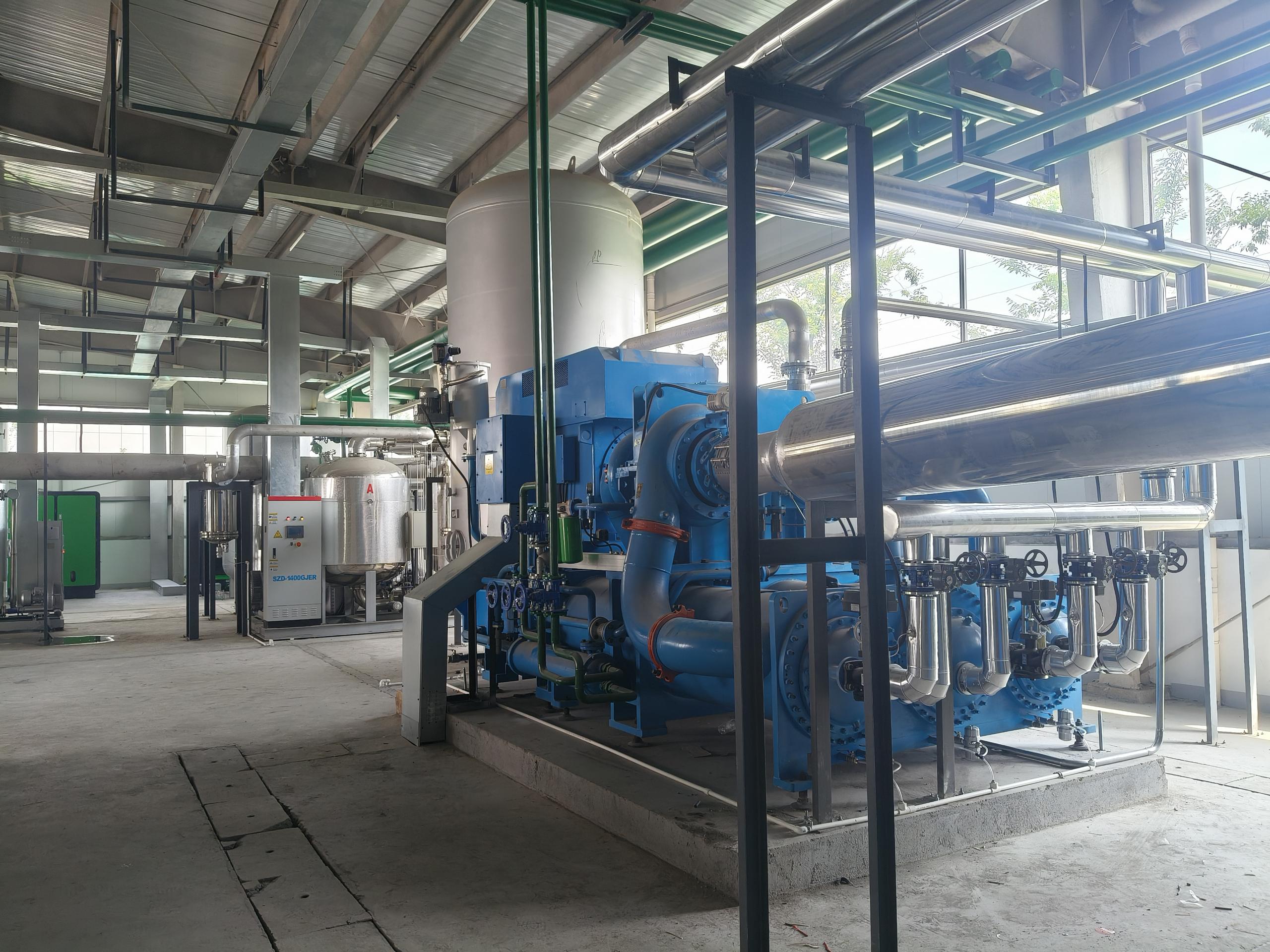
Large compressor networks often discard significant thermal energy through cooling systems, yet this waste heat can be captured and repurposed. By integrating heat exchangers, the recovered energy can preheat process fluids or supply building heating, directly cutting fuel consumption. The challenge lies in the intermittent and variable nature of compressor operations, which demands flexible recovery systems that adapt without compromising compressor performance.
Conventional approaches fixate on recovering heat from high-temperature discharge streams, ignoring lower-grade sources like intercooler and aftercooler flows. A holistic strategy evaluates the entire network’s thermal profile, matching recovery opportunities with site-specific heating demands. For instance, cascading heat from multiple cooling circuits to a common thermal storage buffer stabilizes supply, making recovery viable even during partial-load conditions.
Economic viability hinges on more than simple payback; it requires accounting for avoided cooling costs, reduced water treatment, and extended equipment life due to lower thermal stresses. Modern monitoring and predictive analytics enable dynamic control, shifting recovery loads based on real-time energy prices and demand forecasts. This transforms waste heat from a liability into a distributed energy resource, reshaping the economics of industrial compression.
How Operational Profiles Dictate Real-World Compressor Efficiency
Compressors rarely operate at a single, fixed point. Instead, they navigate a landscape of varying demand, pressure swings, and thermal cycles that collectively define the operational profile. This profile is the true choreographer of efficiency, far more than any nameplate rating suggests. A machine tuned for steady-state full load can lose significant ground when forced into transient, part-load duty, where frequent starts, stops, and unloaded running bleed energy. The result is a real-world performance that often diverges sharply from idealized curves, simply because the application's rhythm dictates a different dance.
Consider how storage, piping, and control strategy interact with the profile. A system with minimal receiver volume and tight pressure bands will subject the compressor to rapid cycling, multiplying losses from blowdown, motor inrush, and prolonged unloaded power draw. Conversely, a profile characterized by steady base load with intermittent peaks might allow efficient base machines to handle the routine, with a smaller VSD unit trimming the peaks—but only if the control setup integrates them without conflict. The profile doesn't just decide how hard the compressor works; it dictates when, how often, and under what thermal conditions, all of which cascade into lubrication regimes, volumetric efficiency, and mechanical wear that reshape the efficiency map over time.
Environment adds another layer. Altitude, ambient temperature, and cooling medium properties shift the achievable mass flow and specific power in ways that stationary lab tests miss. A profile heavy in high-humidity, high-temperature afternoons will see a different efficiency reality than one running cool nights. Thus, optimizing real-world compressor efficiency demands moving beyond the datasheet to model the actual duty cycle, acknowledging that every stop-start, every pressure excursion, and every ambient swing writes its own performance script. The machines that deliver genuine savings are those whose design and control logic are matched not to a single point, but to the unique, dynamic signature of their operational profile.
Maintenance Strategies That Alter the Cost Equation
Rethinking maintenance as a cost center misses the bigger picture—it’s actually a lever for reshaping the financial dynamics of operations. By shifting from reactive fixes to proactive strategies, organizations can dramatically lower long-term spending. Predictive and condition-based approaches, for example, pinpoint issues before they escalate, avoiding the steep expenses of emergency repairs and production downtime. This not only smooths out budget volatility but also extends asset life, turning maintenance from an unavoidable expense into a calculated investment that steadily improves the bottom line.
Another game-changer is the integration of data-driven decision-making. When maintenance teams harness real-time asset performance data, they can optimize parts inventory, reduce unnecessary routine tasks, and schedule interventions during natural downtime. This precision slashes both labor and material waste. Moreover, reliability-centered strategies often reveal design flaws or operational inefficiencies that, once addressed, reduce the overall maintenance burden. Over time, these insights compound, lowering the total cost of ownership and freeing up capital for innovation rather than just keeping things running.
Finally, aligning maintenance with broader business goals transforms it into a competitive advantage. Consider strategies that focus on energy efficiency: well-maintained equipment consumes less power, directly cutting utility bills. Or take the impact on product quality—consistent asset performance yields fewer defects and less rework. These gains rarely appear in maintenance line items but significantly shift the full cost equation, proving that smart maintenance is not about spending less on upkeep, but about engineering a more profitable operation overall.
When Bigger Actually Means Lower Total Ownership Cost
It might seem counterintuitive, but opting for a larger unit often spreads the initial investment over more capacity, driving down the per-unit cost. Think of a commercial-grade printer designed for high volumes—its upfront price tag is higher, yet the cost per page plummets because the expensive components are built to last through hundreds of thousands of cycles. That durability means fewer repairs and less downtime, which quietly eats away at the total cost in smaller, cheaper models that need frequent replacements.
Beyond the hardware itself, larger systems typically bring smarter resource management. A bigger chiller for a building, for instance, operates more efficiently at partial loads than multiple small units cycling on and off. This efficiency translates into lower energy bills month after month. Plus, maintenance doesn't scale in a straight line—servicing one large machine often takes less time and fewer parts than juggling several smaller ones, reducing labor costs over the equipment's life.
Intelligent Controls Beyond Standard Automation
Modern manufacturing landscapes demand more than just repetitive task execution. Intelligent control systems are now capable of adaptive decision-making, leveraging real-time data to adjust operations on the fly. This shift moves beyond fixed automation sequences, allowing machines to handle variability without constant human reprogramming. The result is a production line that can self-correct for tool wear, material inconsistencies, or sudden order changes—reducing downtime and scrap rates significantly.
What sets these controls apart is their ability to learn from historical patterns and sensor feedback. Instead of relying on rigid if-then logic, they use advanced algorithms to predict equipment behavior and optimize throughput. A packaging line, for instance, can automatically fine-tune fill levels based on ambient temperature or product viscosity, achieving consistency that manual tuning could never match. This cognitive layer transforms static machinery into responsive partners in production.
The real breakthrough lies in seamless integration across previously isolated subsystems. Intelligent controls bridge gaps between robotics, vision inspection, and logistics, creating a cohesive ecosystem where decisions ripple intelligently across the entire workflow. When a vision system detects a slight misalignment, downstream grippers adjust their pickup angle autonomously—no central controller needed. This distributed intelligence not only speeds reaction times but also unlocks new levels of flexibility, enabling mass customization without sacrificing efficiency.
FAQ
They use high-speed rotating impellers to accelerate air or gas, then convert the velocity to pressure in a diffuser. This design handles massive flow rates with fewer moving parts, leading to lower maintenance and smoother operation at scale.
Their efficiency at full load minimizes energy consumption, which is the biggest operating cost. They also have longer intervals between overhauls, reducing labor and parts expenses. Plus, they can run unloaded without wasting as much power as reciprocating units.
They're essential in petrochemical processing, air separation, large-scale refrigeration, and natural gas transmission. Any facility requiring thousands of CFM at moderate to high pressures will see rapid payback.
With only one major rotating assembly and no contacting seals or valves, routine service is simpler. Condition monitoring with vibration and temperature sensors helps predict issues before they cause downtime, avoiding expensive emergency repairs.
Yes. Modern units use inlet guide vanes or variable frequency drives to adjust output while keeping efficiency high. Unlike fixed-speed machines, they don't waste energy throttling or bypassing flow.
The upfront price is higher than for screw or reciprocating compressors, but for continuous duty at large volumes, the total lifecycle cost is much lower. Many plants recover the difference in under two years through energy savings alone.
It's not unusual to see 25–30 years of service with major overhauls every 5–7 years. The bearings and seals are the main wear items, but they're designed for easy replacement without re-building the entire machine.
Conclusion
The true cost advantage of large centrifugal compressors becomes apparent only when examining the hidden economics of scale. Beyond the obvious reduction in upfront capital per unit of flow, these systems unlock substantial savings through reduced installation complexity and minimized footprint. In large networks, rethinking energy recovery transforms waste into valuable resources—integrated interstage cooling and heat recovery loops can supply plant heating or preheat process streams, slashing external energy demand. Furthermore, the operational profile of a facility dictates real-world efficiency; a compressor sized for wide turndown with variable geometry diffusors avoids wasteful throttling across diverse load conditions, maintaining high polytropic efficiency where smaller units would surge or choke.
Maintenance strategies fundamentally alter the lifetime cost equation when coupled with large-frame machines. Their inherently lower speed operation reduces bearing and seal wear, while centralized oil systems and split casing designs enable rapid overhauls without major disassembly. This directly challenges the assumption that bigger equipment means higher upkeep—in practice, when reliability translates to avoided process downtime, total ownership cost drops significantly. Intelligent controls further distance modern large compressors from standard automation; predictive algorithms analyze vibration and process data to adjust setpoints not just for surge avoidance but for optimal power consumption, learning seasonal patterns to preemptively trim interstage pressure ratios. All these factors converge to a clear truth: in demanding applications, larger capacity proved to be the economical choice, systematically driving down operational expenditure in ways legacy approaches cannot match.
Contact Us
Contact Person: Mia
Email: [email protected]
Tel/WhatsApp: +86 19821985894
Website: https://www.seize-air.com