

Lost Foam Casting Supplier: How to Choose the Right Partner for Complex Components
2026-10-15
Lost foam casting for complex components leaves little room for error—undercuts, internal cavities, and fine surface details can expose a supplier’s true capability in the first batch. Choosing the right partner isn’t just about price or lead time; it’s about who understands how to control pattern shrinkage, coating permeability, and metal flow before you ever cut a tool. At Zhaoyuqi, that’s the standard we hold for every job, from pump housings to multi-core hydraulic manifolds. Here’s what to look for when you need more than a generic casting source.
Demand Casting Simulations Before You Send a Single CAD File
Foundries often receive CAD files that are geometrically perfect but metallurgically doomed. The real problems — shrinkage porosity, trapped gas, hot tears — only appear after tooling is cut and first shots are poured. That's why you should demand a casting simulation before any pattern work begins. It's not a nice-to-have; it's the cheapest insurance you can buy against a scrap bin full of expensive mistakes.
A good simulation shows you exactly where the metal will freeze last, where air will get trapped, and what your fill time actually looks like under real gating. If a foundry pushes back or says "we've always done it this way," that's a red flag. Simulation software is standard now, and any shop serious about quality will run one as part of the quoting process — not as a billable extra after you've already committed.
So before you hit send on that STEP or IGES file, ask for the simulation results. Compare fill sequence, solidification fronts, and predicted defect locations across suppliers. The foundry that gives you this data up front is the one that actually understands your part — not just the one that can machine a mold the fastest.
Thin Walls and Deep Pockets Separate Real Suppliers from Pretenders
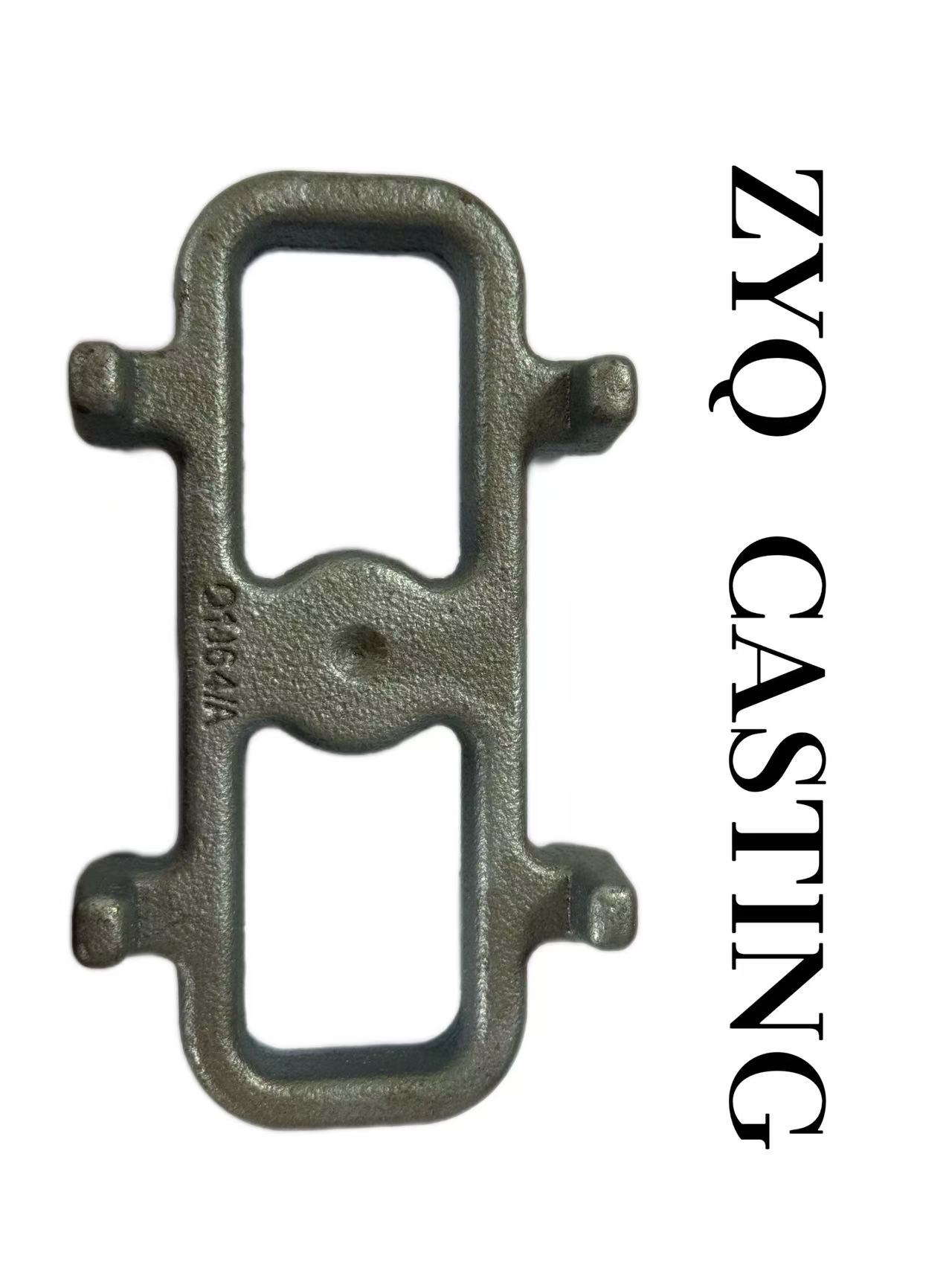
A supplier who lets you wander past the production floor without a scheduled tour is already telling you more than any audit summary. Thin walls mean the quarantine cage, the rework bench, and the raw material racks sit within sight of the main aisle. When a vendor hides everything behind conference rooms and laminated flowcharts, the distance is rarely accidental. Deep pockets are less glamorous: they show up as extra tooling that no contract required, a buffer stock of critical resin, and a maintenance crew that fixes a press overnight instead of waiting for an outside contractor.
Pretenders can rent a warehouse for a day and borrow a customer list. What they cannot fake is the unglamorous resilience of having capital committed to backup suppliers, alternate freight lanes, and people who can rework a rejected batch without blaming the drawing. Ask to see the quarantine area, not the showroom. Ask what happens when a container is turned away at the port. A real supplier will give you names, timelines, and dollar figures. A pretender will give you optimism.
Over time, those thin walls become a management habit, not a stage set. Deep pockets show when a supplier quietly absorbs a tariff change, funds a mold repair before you notice the flash, or keeps a second shift cross-trained on your part for no immediate order. Those details never fit on a supplier scorecard, but they are exactly what separate a partner from a middleman.
Ask Which Alloys They Actually Pour Every Week
When you're comparing foundries, a capability list is almost worthless on its own. Lots of shops will say they can pour stainless steel, aluminum bronze, or nickel alloys because they've done it once or twice. The question that actually matters is what hits the furnace floor on a regular schedule. Ask them to walk you through their last two weeks of pour logs. If a material shows up daily or weekly, the crews know its quirks—shrinkage, gas pickup, pouring temperature windows. If it only appears once a quarter, you're paying for their learning curve.
There's a big difference between "we have poured" and "we pour every Tuesday." Alloys that run frequently have established gating practices, shell systems, and scrap rates that are already dialed in. You can feel it in how the foundry answers your questions. Instead of vague assurances, they'll mention specific pattern modifications for Monel, or how they adjust deoxidizers for silicon bronze. That kind of detail doesn't come from a brochure; it comes from repetition.
So before you send an RFQ, pin them down on frequency. Ask which alloys account for at least half of their monthly melt weight. If your part calls for something they pour only occasionally, you may still be fine—but at least you'll know the real risk. Better to find a foundry that treats your alloy as daily bread, not a special project.
Walk Through Their Pattern and Tooling Strategy Before Quoting
Before you ever put a number on the table, ask the shop to walk you through how they plan to make the part. Not in a vague “we CNC it” way, but step by step: which machine, which setup, what order of operations, where they’ll hold the material, what tooling gets swapped in. This conversation alone separates the shops that think from the shops that just quote. A shop that can tell you why they’d rough with a corncob end mill before switching to a finisher on the second op is a shop that has actually built similar parts before. If they can’t describe the pattern—or worse, they shrug and say they’ll figure it out on the floor—that quote is a guess, not a plan.
Tooling strategy matters just as much as machine time. Ask whether they already own the cutters, or if special tooling will be baked into the price. A shop that runs common sizes and keeps a stocked crib will quote differently than one that has to order a custom form tool and pass that cost straight to you. Also listen for how they handle tool wear. Do they mention checking inserts after a set number of parts? Do they talk about keeping a roughing tool separate from the finishing tool so a dull edge doesn’t kill your surface finish? These are not esoteric details—they show whether the shop controls cost and quality through discipline, not hope.
Finally, ask what happens when the pattern fails. Even the best plan hits a chatter issue or a surprise hard spot. A shop that walks you through their contingency—maybe they’ll adjust the stepover, change to a different coating, or re-order two operations—has thought beyond the spreadsheet. That honesty saves you from a quote that looks cheap on paper but blows up in rework. Get them to commit to the pattern and tooling before you sign anything. It turns a price quote into a process commitment, and that’s what you’re really buying.
Inspection Reports Should Tell a Story, Not Just List Numbers
Most inspection reports read like spreadsheets with a signature block. They dump measurements, codes, and checkboxes without ever explaining what those numbers mean for the people who will use the building, operate the equipment, or make a repair decision. A story-driven report flips that. It starts with the most critical finding, explains why it matters in plain terms, and connects the dots between observations, risk, and recommended action. The reader shouldn't have to hunt through tables to learn that a corroded beam is load-bearing.
That doesn't mean numbers disappear. They simply stop doing all the heavy lifting. A good report uses measurements as evidence within a narrative: the vibration reading isn't just 4.7 mm/s; it's 4.7 mm/s at the motor bearing, up from 1.2 last quarter, which suggests alignment drift and needs correction before the next scheduled shutdown. When you turn isolated data into a sequence of cause, condition, and consequence, the report stops being a list and starts being a tool for decisions.
Calculate Total Cost With Secondary Machining in the Room
When secondary machining happens in the same room as the primary process, the cost picture shifts in ways that aren't always obvious at first glance. You're not just adding another operation—you're layering labor, tooling, and spindle time into a single workflow. The total cost includes the obvious items like machine hourly rates and operator wages, but also the less visible ones: extra setup time, coordination between stations, and the occasional wait when one machine finishes before the other is ready. These small delays accumulate, and if you only look at the per-part cycle time of each machine individually, you'll miss them entirely.
To get a realistic number, start by mapping the material as it moves from the primary cut to the secondary drill, tap, or deburr step. Measure how long the part actually sits between operations—not the ideal time, but the real time on the floor. Include the cost of fixtures that have to be swapped or recalibrated mid-batch, and factor in the extra programming needed to keep both machines aligned. Many shops also forget to add the burden of quality checks that happen after secondary work: a part that was good after the first op might fail after the second, and that scrap rate needs to be priced in.
A practical approach is to treat the room as one system, not two separate machines. Calculate the combined throughput per hour, then divide your total overhead—rent, utilities, maintenance, supervision—by that number. Add material cost and any outside processing, then apply a margin that accounts for the fact that secondary machining in the same room often creates bottlenecks you didn't plan for. The result won't be a neat round number, but it will reflect what actually happens on a Tuesday afternoon when both spindles are running and the operator is trying to keep up with both.
FAQ
Focus on their ability to produce and remove complex foam patterns without distortion. Ask for examples of parts with thin walls, deep cavities, or hidden channels. A strong supplier will explain how they control bead fusion, pattern density, and coating permeability, because these factors directly affect whether molten metal fills every internal void without leaving residue or gas defects.
Request a portfolio of past jobs with similar complexity—look for undercuts, varying wall thickness, or integrated features that would be difficult in sand casting. Have them walk you through a specific challenge, such as a part with a long unsupported core or a tight bend, and describe their pattern assembly method. Real expertise shows when they discuss parting lines, gating placement, and riser design around intricate shapes.
Ask how they store and age the foam beads, what density they use for your part size, and how they verify pattern dimensions before coating. A thorough supplier will mention checking bead fusion with a microscope or measuring dimensional stability over time. Also ask about their coating recipe and drying cycle—variations here can cause burn-on or collapse. If they can't explain these details, they likely lack deep process control.
Inspect their measurement and inspection setup, not just their machine list. A capable supplier will talk about fixture-based CMM checks, tooling compensation for foam shrinkage, and post-casting straightening when needed. They should also share tolerance capability data by size and feature type. If they promise tight tolerances without discussing pattern shrinkage and cooling distortion, be cautious.
Prototyping reveals how the supplier handles design iteration and material behavior. Ask for a prototype run that mimics production conditions—same foam density, coating, and pouring temperature. A good partner will use the prototype to identify hot spots, adjust gating, and refine pattern assembly. If they treat prototyping as a quick sample without process documentation, they won't help you scale up reliably.
Look at their tooling approach and changeover flexibility. A supplier suited to low volume will use CNC-machined foam patterns or modular tooling instead of expensive dedicated molds. Ask how they manage pattern storage for repeat orders and whether they can adjust designs quickly. Also check their willingness to run small batches without huge minimum order penalties—this often signals a process built for flexibility rather than mass production.
A knowledgeable supplier will openly discuss constraints like minimum wall thickness for pattern strength, maximum depth-to-diameter ratio for internal cavities, and the need for venting on deep recesses. They won't promise impossible drafts or zero porosity. Instead, they'll propose design modifications—adding ribs, adjusting radii, or splitting a complex part into two castings joined later. This honest, solution-oriented dialogue is more valuable than marketing claims.
Conclusion
Before you share any CAD geometry, ask the supplier to run casting simulations and walk you through the predicted fill patterns, shrinkage risks, and venting. This single step exposes who actually understands lost foam and who is just quoting. Then push them on thin walls and deep pockets—these are the features that force real process control. A shop that hesitates or says 'we can try' is not your partner. Dig into their weekly alloy pour list, not a brochure. If they only occasionally run the grade you need, reject them. Finally, go through their pattern and tooling strategy line by line before any price lands on the table. Foam density, coating build, gate placement, and tool wear all shape the final part far more than the casting price alone.
Inspection reports need to read like a narrative of the pour, the coating, and the cooling cycle, not a table of pass/fail marks. Ask for CMM data tied to specific features, surface finish maps, and X-ray or dye-penetrant evidence where it matters. Then bring secondary machining into the room when you calculate total cost. A cheap casting that needs oversized stock, extra setups, or frequent tool changes will destroy your margin downstream. The right lost foam supplier will already know your machining plan and quote accordingly, rather than hiding behind a low piece price.
Contact Us
Contact Person: Nico Yin
Email: [email protected]
Tel/WhatsApp: 8618561567088
Website: https://www.ductileironparts.com/