

Natural Preservative Exporter Vetting Checklist for Clean Label Manufacturers
2026-11-25
Clean-label brands face a quiet but costly dilemma: preserving shelf life without compromising ingredient transparency. As demand for natural preservatives grows, so does the risk of choosing an unproven supplier. This guide walks you through a practical vetting checklist designed for manufacturers who refuse to trade safety for simplicity—and why ZIPIN has become a trusted name in reliable, cleaner preservation solutions.
Raw material traceability past the certificate of analysis
A certificate of analysis offers a snapshot, not a chain of custody. It confirms how a sample performed in one laboratory at one point in time, but it rarely reveals whether that sample represents the full lot, how the material was handled between processing and shipment, or whether the supplier's own upstream data has gaps. Traceability past the CoA means treating the document as one checkpoint among many: matching lot numbers against production logs, reviewing retained samples, and checking for unexplained gaps in dates, quantities, or transport records.
In practice, this often involves walking a batch backward through the supplier's process rather than accepting the final paperwork. We look at where the raw material was sourced, whether it was blended or reprocessed, and how segregation was maintained at each transfer point. Small inconsistencies matter more than broad assurances. A missing scale ticket, a sanitized batch record, or a carrier that cannot confirm temperature logs can raise more questions than a clean CoA can answer.
Building that depth of visibility usually depends on structured supplier communication and occasional on-site verification. Digital records help, but they work best when paired with physical evidence: photographed labels, sealed reference samples, and direct conversations with the people who handled the material. The goal is not to collect more paper for the file, but to reach a point where any lot can be reconstructed from origin to receipt, including the messy intermediate steps that a certificate never shows.
Challenge testing matched to your product's pH, water activity, and packaging
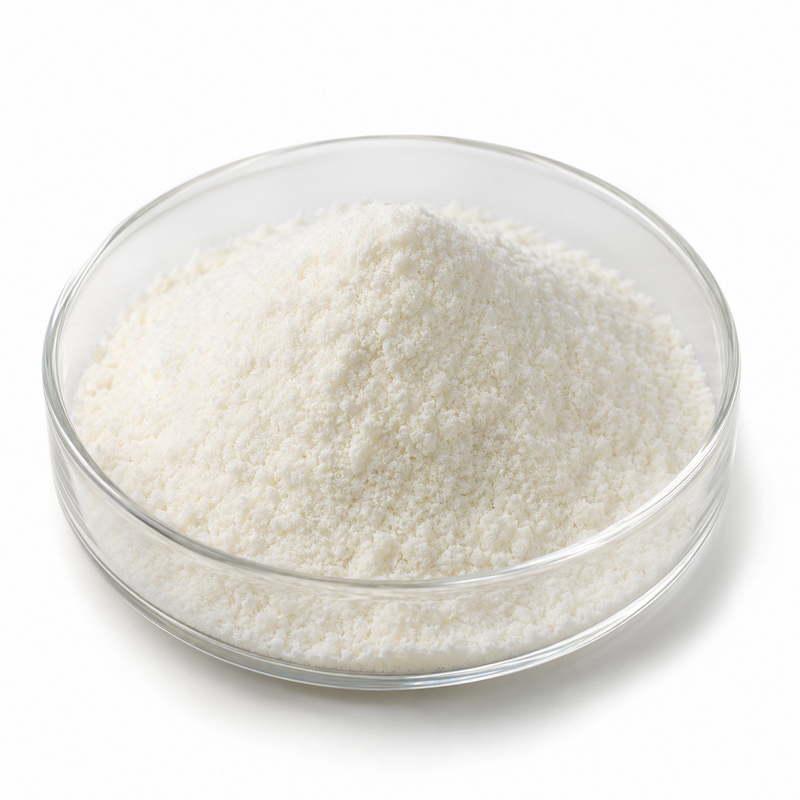
Challenge testing works only when the test mirrors the product's actual conditions. pH and water activity set the baseline for which microorganisms can survive or multiply, so the selection of strains and the preparation of inocula need to follow those values instead of a fixed list. Packaging then adds another layer: a vacuum pack, a modified atmosphere, or a breathable film changes oxygen availability and moisture exchange over time, and the test should reproduce that environment rather than relying on an open-plate assumption.
A low-pH sauce may need acid-tolerant yeasts and lactic acid bacteria, while a dry powder with low water activity may call for osmotolerant molds or spore-formers. If the packaging limits oxygen, anaerobic or facultative organisms become the priority, and the inoculation method should place them where they would actually land in production. These choices keep the challenge realistic and prevent the test from chasing organisms that would never grow in the finished product.
Matching the test to pH, water activity, and packaging also makes the pass/fail criteria more meaningful. Growth or die-off is observed under the conditions that the product will face during distribution and shelf life, so the results give a clearer picture of whether the formula and pack provide real protection.
Hidden carriers and processing aids that can weaken a clean label claim
A short ingredient list can still hide a surprising amount of industrial support. Many products positioned as clean rely on carriers like maltodextrin, cornstarch, or silicon dioxide to keep flavors, colors, and vitamins evenly dispersed and free-flowing. These materials sit inside a compound ingredient, often under a vague term such as natural flavor or spice extract, so they never appear as separate entries. The label may read simply, but the production reality carries more layers.
Processing aids create a similar blind spot. Enzymes, anti-foaming agents, filter media, and release agents can all touch a food during manufacturing and then legally disappear before labeling. A plant-based beverage may be filtered through diatomaceous earth, a baked snack may be sprayed with a mineral oil-based release agent, and a juice may be clarified with animal-derived gelatin without any of that reaching the back panel. The finished product might contain only traces, but the clean label promise has already been quietly diluted.
The weakness in the claim is not always the finished ingredient list itself; it is the assumption that anything unlisted was never meaningfully involved. Clean label is often treated as a transparency promise, yet carriers and processing aids operate exactly where transparency is thinnest. Without supplier disclosures that go beyond the standard specification sheet, a brand can hold a simple-label reputation while still depending on synthetic, highly processed, or animal-derived inputs at earlier stages.
Batch-to-batch consistency data instead of a single snapshot
Reliance on a single batch snapshot tends to flatten the real story. Production records, assay results, and impurity profiles rarely stay identical across campaigns, and the small shifts that appear in routine runs often carry more meaning than one carefully selected dataset. Presenting batch-to-batch consistency data turns those shifts into evidence: it shows how a process behaves under normal variation rather than how it performed once under ideal conditions.
This approach also changes how reviewers and partners read the data. Instead of asking whether a single result meets a limit, they can see the spread, the trend, and the outliers that were investigated and resolved. A narrow range across multiple batches signals control; a wide range with clear explanations signals honesty. The comparison becomes more useful because it reflects operating reality rather than a polished exception.
In practice, collecting this data forces better documentation habits. Deviations, reprocessing, and minor method adjustments no longer disappear into footnotes. They appear as part of a continuous record that connects one batch to the next, making it easier to spot drift early and justify the control limits that keep the process within its intended design space.
Destination market additive codes and labeling threshold checks
Regulatory teams often assume an additive approved in the home market keeps the same numeric identity abroad, but that assumption falls apart when a product enters a market with its own coding list. Matching destination market additive codes means checking the actual chemical or preparation name against the local schedule, not just reusing the short code printed on a domestic specification sheet, because an E number in one region and an INS number elsewhere do not always line up neatly in every product category.
Threshold work is less about the formula on paper and more about how the food is actually consumed. A level that looks acceptable in a concentrated paste can exceed the local maximum once the label tells the consumer to dilute it, and some authorities calculate limits on a ready-to-eat basis or include carry-over from compound ingredients. Label wording creates a separate check: certain colors, sweeteners, and preservatives may require warning phrases or specific declarations even when the numeric threshold itself is not breached.
In-house shelf-life trials under real distribution conditions
Running shelf-life tests inside a controlled lab rarely tells you what happens once the product leaves the warehouse. That is why we pull samples from actual delivery runs, leaving them in the back of unrefrigerated vans, stacking them on loading docks for hours, and even routing them through a few extra stops before they reach the shelf. The idea is to let the product experience the same bumps, temperature swings, and delays your customers will put it through.
We attach small temperature loggers to a portion of each batch, then track how the product performs after sitting in a warm stockroom or being moved between cold storage and ambient displays. Some trials deliberately mimic a worst-case summer delivery or a long weekend in a closed truck. If a batch survives those conditions without noticeable texture change or off-flavors, we know the printed shelf life is not just a number from a stability chamber.
What we learn gets fed back into packaging decisions, storage instructions, and sometimes even a tighter or longer date code. A product that holds up fine in real distribution gives the team confidence to reduce overpacking or cut down on unnecessary preservatives. It is the difference between a shelf life that works on paper and one that works in a customer's pantry.
FAQ
Ask for a current certificate of analysis, allergen statement, GFSI-benchmarked food safety certification, and a breakdown of the carrier or co-formulants. If the preservative is enzyme-based or fermented, request batch records showing residual media or processing aids. Also pull the safety data sheet and manufacturing flow diagram to spot hidden synthetic solvents or preservative blends mislabeled as natural.
Don't rely on a one-page brochure. Trace the raw material to its source and check whether any extraction solvents, carriers, anti-caking agents, or standardization steps would be considered non-clean by your target market. Compare the ingredient listing against retailer-specific banned lists. A useful shortcut is asking which retailers have already approved the ingredient; if the exporter can't name any, dig deeper.
Request challenge tests using your actual product matrix, not just the supplier's model system. Look for data covering bacteria, yeast, mold, and spores at the pH, water activity, and packaging conditions you use. Stability should include at least real-time shelf life under intended storage, plus one accelerated condition. Ask if the preservative can survive heat processing or cold-fill, whichever applies.
A full on-site audit every two years is reasonable if the exporter has a GFSI certificate and no major incidents. If they are a broker rather than a manufacturer, audit the actual production site and qualify the broker separately. For higher-risk materials like botanicals or fermented ingredients, annual audits may be safer until you have three consecutive clean lots and documented traceability.
Require lot-level traceability from raw material harvest or fermentation batch through final shipping. That means purchase orders from the farm or raw material supplier, production logs, QC release data, and shipping documents all linked to the same lot number. If your product later faces a contamination issue, you need to narrow it to the specific export lot within hours, not days.
Yes. Watch for vague answers about country of origin, reluctance to disclose the manufacturing site, sudden changes in color or solubility between samples, or a quote that drops sharply when you ask for clean label documentation. Also be wary if the same certificate of analysis is reused across multiple batches or if the exporter cannot explain what the carrier system is.
Build a cost-in-use model based on grams per finished product batch, not price per kilo. Include freight, import duties, inventory turnover, and potential rework or shelf-life loss if the preservative underperforms. In many cases, a higher-priced preservative that reduces off-flavors, improves clarity, or allows a simpler label can offset its premium through fewer customer complaints and fewer reformulations.
Start with a documented questionnaire that asks for HACCP or hazard analysis, pest control, sanitation, allergen segregation, and change control procedures. Then ask for recent third-party audit results and non-conformance reports. Follow up with a video tour of the blending and packaging lines, and request a small pre-shipment sample sealed from the actual batch you will receive. If the exporter is hesitant, treat that as a risk signal.
Conclusion
Vetting natural preservative exporters for clean label products demands looking far beyond a certificate of analysis. Raw material traceability should extend into actual harvest or fermentation records, supplier handling practices, and any post-processing steps that might introduce undeclared substances. Challenge testing also needs to mirror the product's real pH, water activity, and packaging, because a preservative that performs well in a neutral model system can fail once it interacts with a specific film or closure. Equally important are hidden carriers and processing aids—solvents, anti-caking agents, or enzyme stabilizers that never appear on the final ingredient list but can still compromise a clean label position.
A single passing batch rarely tells the full story, so request batch-to-batch consistency data over multiple production runs and seasons, not just a curated snapshot. Destination market checks matter as much as the supplier's home-country documentation; additive codes and labeling thresholds vary, and a preservative accepted in one region may require a different declaration or exceed limits elsewhere. Finally, run in-house shelf-life trials under actual distribution conditions, including temperature swings and humidity, rather than relying on accelerated studies alone. This kind of evidence helps confirm that the preservative will hold up from production through retail without forcing a label change later.
Contact Us
Contact Person: TANG JUN
Email: [email protected]
Tel/WhatsApp: +86-523-87608619
Website: https://www.zipinbiotech.com