

Nickel Alloy Steel: Engineering Durable High-Performance Solutions for Critical Applications
2026-07-24
In industries where failure is not an option—think aerospace turbines, deep-sea drilling, or chemical reactors—nickel alloy steel quietly delivers the extreme durability and corrosion resistance that standard materials simply cannot match. Yet engineering these high-performance solutions demands more than just the right chemistry; it requires precision manufacturing and deep metallurgical expertise. At the forefront of this challenge is Jiangsu Baowu New Materials, a name that has become synonymous with reliability in the world of specialty alloys. In this blog, we explore how nickel alloy steel is redefining what’s possible in critical applications, and why the right material partner makes all the difference.
Where Steel Meets Resilience: The Role of Nickel Alloys in Extreme Environments
In the unforgiving landscapes of deep-sea drilling, high-temperature reactors, and corrosive chemical plants, ordinary materials quickly surrender. Nickel alloys step into this breach with a rare blend of tenacity and adaptability. Their atomic structure, rich in nickel, forms a stable austenitic matrix that resists deformation and maintains strength when lesser metals would soften or crack. This isn't just incremental improvement—it's a fundamental shift in what engineers can demand from their materials, allowing designs that push the boundaries of pressure, temperature, and chemical exposure without compromising safety or longevity.
What truly sets nickel alloys apart is their chameleon-like ability to adapt to specific threats. By carefully balancing elements like chromium, molybdenum, and tungsten, metallurgists craft grades that shrug off pitting in seawater, retain toughness at cryogenic temperatures, or defy oxidation in furnaces. Take Inconel 625: it laughs at the acidic bite of flue gas desulfurization systems, while Hastelloy C-276 stands impervious to the searing heat of chemical reactors. Each alloy becomes a bespoke answer to a uniquely hostile question, turning material selection from a compromise into a precision tool.
But beyond chemistry, it's the resilience under cyclic stress that cements their reputation. Components in jet engines or subsea valves don't just endure steady states—they face thermal shocks, pressure fluctuations, and vibrations that initiate fatigue cracks in conventional steels. Nickel alloys resist this slow degradation through a combination of high ductility and a tenacious oxide layer that heals microscopic breaches. This self-preserving behavior means fewer replacements in inaccessible locations, reducing downtime and the hidden costs of maintenance. In the end, choosing a nickel alloy isn't just about surviving the extreme—it's about thriving there, year after relentless year.
Beyond Standard Alloys: How Nickel Transforms Structural Integrity
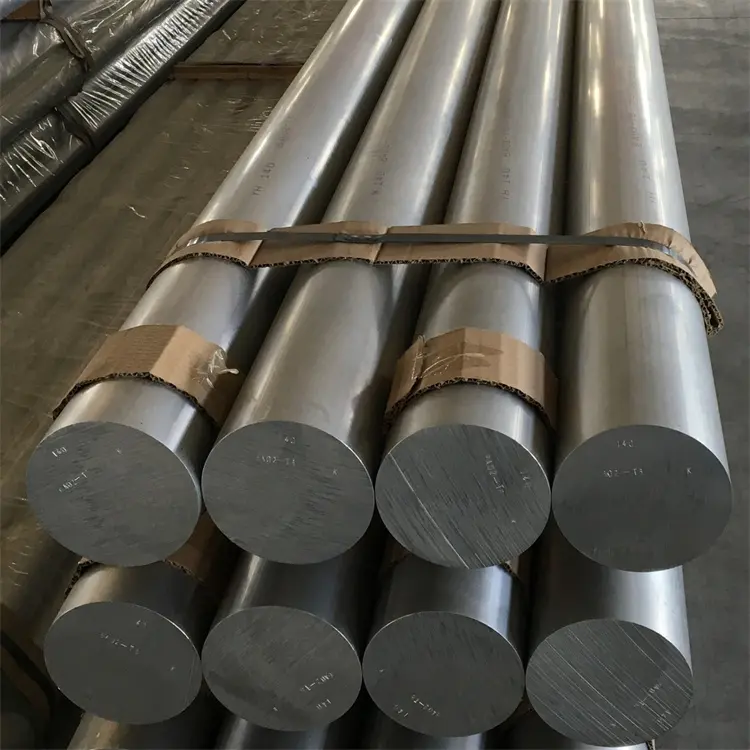
Standard alloys have long been the workhorses of engineering, reliably serving in countless applications. However, when facing extreme environments—corrosive chemicals, cryogenic temperatures, or intense mechanical stress—their limitations become glaringly apparent. It’s here that nickel steps out from its conventional role as a modest alloying element, redefining what structural materials can endure. By enabling a class of superalloys and specialized steels, nickel fundamentally alters failure mechanisms, delaying crack propagation and resisting environmental attack in ways that iron or chromium alone cannot match.
At the atomic level, nickel’s face-centered cubic crystal structure remains stable across a vast temperature range, providing a ductile matrix that absorbs energy without fracturing. This inherent toughness is amplified when nickel teams up with elements like chromium and molybdenum, forming protective oxide layers that heal themselves when damaged. Unlike standard stainless steels, high-nickel alloys shrug off pitting and crevice corrosion, even in hot chloride-rich solutions that would quickly cripple lesser materials. The result is a structural integrity that persists not just for years, but for decades under punishing conditions—without the need for costly coatings or cathodic protection.
Beyond corrosion resistance, nickel’s influence on phase stability unlocks performance at the extremes of heat and pressure. In gas turbines and deep-sea equipment, nickel-based alloys maintain their strength right up to their melting points, resisting creep deformation that would warp standard metals. This is not a marginal improvement; it’s a step change in reliability. Engineers now design with tighter safety margins, confident that the material won’t unexpectedly degrade. By moving beyond conventional alloys, we no longer just build structures—we ensure they endure, quietly reshaping the backbone of modern industry.
Precision Engineering for Unforgiving Conditions: Material Selection Insights
When designing components that must endure extreme environments, material choice becomes the linchpin between success and catastrophic failure. High-pressure oil wells, deep-sea equipment, and aerospace turbine blades all operate under relentless thermal cycling, corrosive media, and mechanical stress. Traditional grades of stainless steel may crumble in chloride-rich seawater, while standard polymers soften well below the flash points of modern drivetrains. This forces engineers to look beyond off-the-shelf catalogues and consider custom alloys, ceramic-matrix composites, or even functionally graded materials that can fight wear on the surface while absorbing shock in the core.
The real art is balancing competing demands without overengineering the part into a budget black hole. A nickel-based superalloy might shrug off 1000°C, but if the creep life is only half what the maintenance interval requires, you are back to square one. Testing regimes now blend accelerated lab wear tests with finite-element models to map how corrosion pits grow into stress risers over years of service. Even clever microstructure tweaks—like using directional solidification to align grain boundaries away from principal stress—can buy decades of extra life in a turbine disc. The insight is rarely about picking the “strongest” candidate; it is about finding the one that degrades gracefully and predictably.
Field feedback often overturns neat laboratory assumptions. A mining drill bushing that looked perfect on paper might gall from intermittent lubrication in dusty conditions, a failure mode that no immersion test replicates. Smart material selection now pulls from cross-industry experience: how marine coatings handle biofouling, how oil-tool steels cope with sulfide stress cracking, or how ceramic bearings survive in lunar regolith. By integrating this tribal knowledge with advanced simulation, engineers can craft solutions that thrive where ordinary materials quit.
From Aerospace to Deep Sea: Nickel Alloy Steel’s Expanding Frontier
Nickel alloy steel has long been the silent workhorse in aerospace engineering, where turbine blades and exhaust components demand unwavering strength under blistering temperatures. Its ability to resist creep and oxidation at over 1000°C makes it indispensable for jet engines that power commercial fleets and defense aircraft alike. Yet, the same metallurgical traits that keep planes safely aloft are now finding purpose in a dramatically different environment: the crushing, corrosive depths of the ocean.
Subsea oil and gas extraction pushes materials to their limits, with pressures exceeding 15,000 psi and sour, hydrogen-sulfide-rich fluids attacking conventional metals. Engineers have turned to specially formulated nickel alloy steels that combine high ductility with exceptional stress-corrosion cracking resistance. These alloys form the backbone of critical wellhead components, safety valves, and flowlines, ensuring operational integrity where failure is not an option.
Beyond energy, the frontier is expanding into desalination plants, marine fasteners, and even next-generation autonomous underwater vehicles. The migration of this technology from sky to sea underscores a broader trend: advanced metallurgy is erasing traditional domain boundaries, enabling breakthroughs across industries that were once considered worlds apart.
Corrosion Resistance Without Compromise: A Closer Look at Performance Metrics
When selecting materials for harsh environments, the term "corrosion resistance" often comes with hidden trade-offs. Some alloys protect against rust only to sacrifice tensile strength or thermal stability. We rejected that compromise. Our engineering team focused on a balanced suite of performance metrics—including pitting resistance equivalent (PRE) values, critical crevice temperature, and sustained load-bearing capacity under accelerated corrosion testing—to create a material that endures without losing its mechanical backbone.
Rather than relying on generic salt spray hours, we tracked localized attack patterns on stressed samples. Electrochemical impedance spectroscopy revealed how the protective passive layer regenerates after scratching. These data points aren't just lab curiosities; they translate directly to real-world resilience in chemical processing plants and offshore platforms where maintenance windows are narrow and failures are simply not an option.
Beyond the numbers, we validated performance through cyclic exposure protocols that mimic decades of service. The outcome is a material that laughs off chloride-rich atmospheres while maintaining dimensional stability and fatigue strength. No hidden weaknesses. No corrosive creep. Just reliable metrics that engineers can plug directly into their safety factors.
Future-Proofing Critical Infrastructure with Advanced Alloy Design
Advanced alloy design is reshaping how we approach the longevity of critical infrastructure. By customizing material microstructures at the atomic level—through precise control of phase formation, grain boundary engineering, and precipitate distributions—engineers can now produce alloys that resist corrosion, fatigue, and creep in ways traditional materials cannot. This means bridges, pipelines, and power plants built with these materials are less susceptible to environmental degradation, reducing maintenance cycles and extending service life well beyond legacy benchmarks.
What sets modern alloy development apart is the integration of computational modeling with high-throughput experimentation. Instead of relying on trial-and-error methods that spanned decades, researchers can simulate thousands of compositional variations in silico, identifying candidates with optimal strength-ductility trade-offs and resistance to specific threats like hydrogen embrittlement or high-temperature oxidation. These tools allow infrastructure planners to proactively design for future stressors—whether from climate shifts, increased operational loads, or exposure to new chemical environments—ensuring that today’s investments remain functional and safe for generations.
FAQ
Nickel alloy steel brings together strength, toughness, and resistance to harsh conditions. The nickel content refines the grain structure and enhances hardenability, so the material holds up under stress, resists fracture, and copes with demanding environments where ordinary steels would fail. This combination is what engineers count on for safety-critical components.
It performs exceptionally well because nickel forms a stable, protective oxide layer that slows down corrosion, especially in acidic or chloride-rich settings. In marine, chemical processing, or oil and gas applications, nickel alloy steel often outlasts standard grades, reducing maintenance and preventing unexpected failures caused by pitting or stress corrosion cracking.
Yes, it maintains mechanical integrity across a wide temperature range. At cryogenic levels, it stays tough without becoming brittle, making it ideal for LNG storage. At high temperatures, it resists creep and scaling, so it's used in power generation turbines, exhaust systems, and heat exchangers where thermal stability is non-negotiable.
Aerospace, energy, chemical processing, marine, and automotive industries depend on it heavily. For instance, landing gear components, reactor vessels, desalination plants, and deep-sea piping all use nickel alloy steel because it balances weight, durability, and resistance to aggressive media, often under strict regulatory standards.
Durability translates to longer service life and lower lifecycle costs. Nickel alloy steel components need less frequent replacement, even when subjected to cyclic loading, abrasion, or chemical attack. This reliability matters in infrastructure like bridges, drilling equipment, and pressure vessels where downtime is expensive and safety is paramount.
Nickel strengthens the steel matrix by promoting a fine-grained microstructure and enhancing dislocation movement control. This boosts tensile strength, impact toughness, and ductility simultaneously, which is rare in alloy design. It also improves weldability by reducing the risk of cracking in the heat-affected zone, making fabrication easier without sacrificing performance.
Conclusion
Nickel alloy steel stands as a cornerstone of modern engineering, delivering resilience where ordinary materials falter. By integrating nickel into the steel matrix, these alloys acquire a unique combination of toughness and corrosion resistance that proves indispensable in extreme environments. From the cryogenic vacuum of space to the crushing pressures of deep-sea trenches, nickel alloy steel maintains structural integrity without compromise. Its ability to resist pitting, crevice corrosion, and stress cracking extends service life dramatically, redefining what designers can expect in terms of longevity and safety. Precision material selection becomes a deliberate process where nickel content and complementary elements are balanced to meet specific demands, be it resisting acidic attack in chemical processing or withstanding thermal cycling in jet engines. This careful tailoring pushes the boundaries of performance, ensuring that critical components operate reliably where failure is not an option.
The transformative impact of nickel alloy steel extends across industries—aerospace relies on its high strength-to-weight ratio for turbine blades and airframe structures, while offshore platforms demand its immunity to saltwater corrosion. Beyond these established frontiers, emerging applications in hydrogen storage and next-generation nuclear reactors highlight its versatility. Advanced alloy design now incorporates computational modeling and microstructural engineering to future-proof infrastructure against evolving threats, such as hydrogen embrittlement and fluctuating operational loads. Performance metrics consistently show that nickel alloy steels outperform conventional grades, offering a durable high-performance solution that doesn't merely endure harsh conditions but thrives in them. Ultimately, the expanding frontier of these materials is not just about meeting today's challenges—it is about anticipating tomorrow's demands and delivering engineered reliability that outlasts expectation.
Contact Us
Contact Person: Zoe Liang
Email: [email protected]
Tel/WhatsApp: 86 189 2128 6299
Website: https://www.baowuchina.com