

Offshore Landing Craft Barge: Design, Operations, and Key Applications
2026-06-12
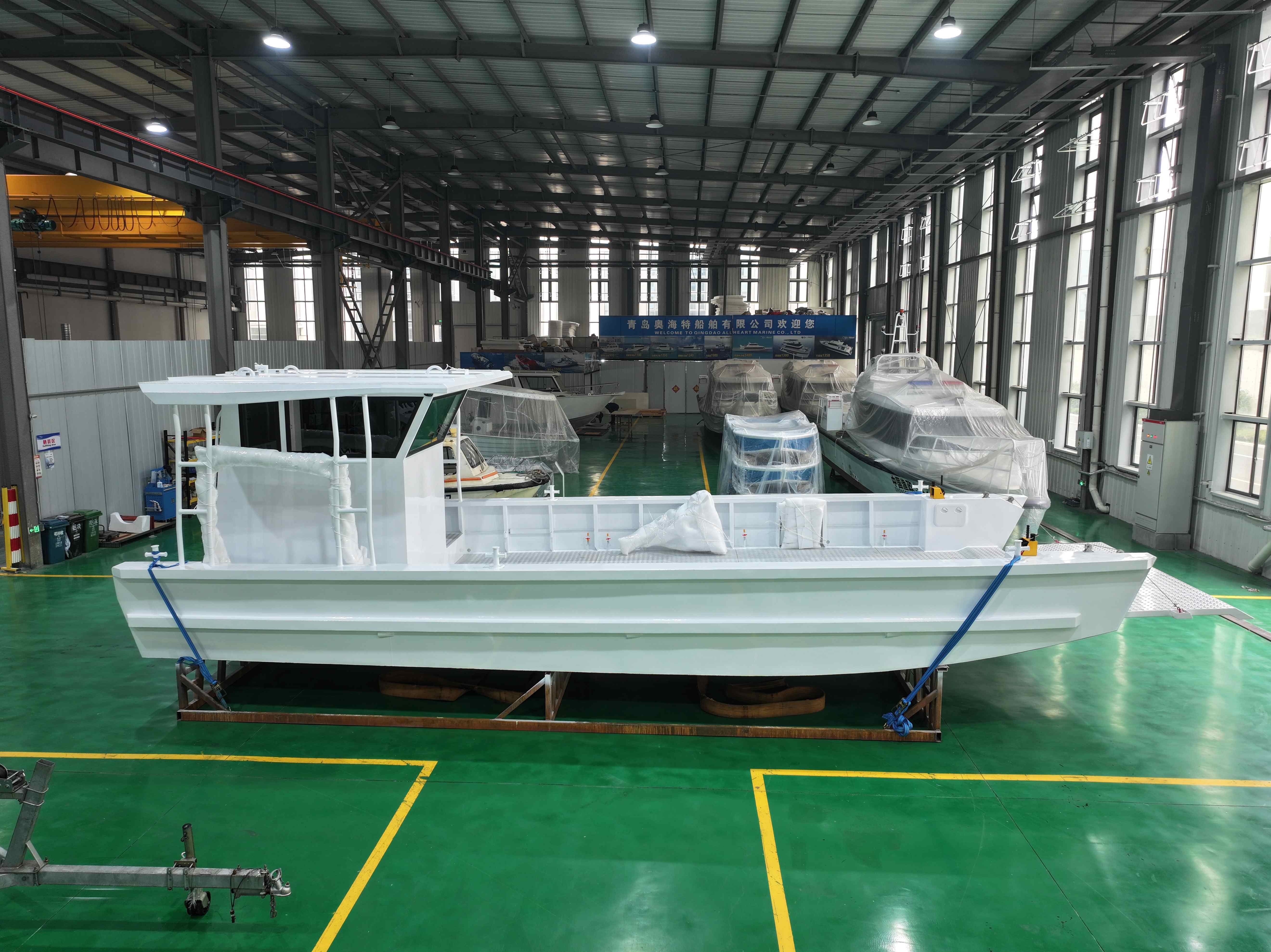
In the relentless offshore environment, getting heavy cargo safely from ship to shore demands more than just a tough vessel—it calls for precision engineering and decades of real-world experience. From oil and gas platforms to remote construction sites, the humble landing craft barge remains a cornerstone of marine logistics, yet its design and operational secrets are often overlooked. Enter Allheart, a name that has quietly set the bar for rugged, efficient barges that thrive where others struggle. This blog dives into the core of offshore landing craft barges—unpacking their design evolution, operational complexities, and the surprising range of applications that keep them in high demand. Whether you’re a seasoned operator or an industry newcomer, you’ll discover why these workhorses are far more than just floating steel.
How Hull Design Shapes a Barge's Offshore Performance
Offshore barges operate in environments where wave action, wind, and current combine to test every design choice. The hull shape fundamentally dictates how these forces are absorbed or deflected. A flat-bottomed hull, for instance, offers high initial stability in calm or shallow waters—crucial when loading or unloading heavy equipment near shore. But that same flat profile becomes a liability in open seas, as it can slam into waves rather than slice through them, delivering punishing vertical accelerations to both cargo and crew.
The bow and stern sections are where hull design gets truly mission-specific. A raked bow with a pronounced flare can lift the barge over oncoming waves instead of burying the nose, which reduces green water on deck and limits structural fatigue. Meanwhile, the stern shape influences how the barge tracks when under tow or dynamically positioned—too full a stern and yaw instability creeps in, wearing out towing gear and burning extra fuel. Subtle changes, like incorporating a slight V-shape forward or adding bilge keels, can dampen roll motions enough to keep sensitive operations viable in higher sea states.
Modern barge design isn't just about brute stability anymore; it’s about finding the right compromise for a specific work envelope. Computational fluid dynamics and model testing now allow naval architects to balance hydrodynamic efficiency with practical considerations like build cost and deck space. A hull optimized for a North Sea tow might feature a deep skeg and rounded bilges to reduce drift and resistance, whereas a Gulf of Mexico accommodation barge might trade some efficiency for a moon pool and superior roll damping. Ultimately, the hull becomes a tailored interface between a floating platform and the relentless marine environment—its shape determining not just performance, but the limits of what can be done offshore.
Propulsion Innovations: Moving Beyond Conventional Engines
For decades, space travel has leaned heavily on chemical rockets—powerful but fuel-hungry beasts that burn out fast and leave little room for deep-space maneuvering. The push to explore beyond our planetary backyard demands propulsion that doesn't just burn brighter, but lasts longer and operates with a fraction of the mass. That's where a quiet revolution is underway, shifting focus from brute force to sustained, efficient thrust.
Ion thrusters and Hall-effect drives are already rewriting the rules. Instead of combustion, they fling ions at high speed using electric fields, sipping fuel while building up velocity over months. Solar sails offer another path, catching light itself to glide through the cosmos without a drop of propellant. Then there's the audacious idea of nuclear thermal propulsion—using reactors to heat hydrogen—which could slash travel time to Mars in half.
None of this is sci-fi fantasy. Missions like NASA's Dawn and JAXA's Hayabusa2 have proven electric propulsion in action, and private companies are chasing lighter, more robust designs. The real trick isn't just inventing a better engine; it's integrating these systems into spacecraft that can survive the harshness of space for years while delivering real science. The age of chemical-only rocketry is fading—the future is a mix of brains and patience.
Deck Configurations That Maximize Operational Flexibility
Modern vessels demand more than just open space—they need decks that adapt on the fly. A thoughtful blend of modular tie-down points, recessed pockets, and quick-release mounting systems lets crews reconfigure layouts in minutes instead of hours. This isn’t about cramming more gear onboard; it’s about making every square foot earn its keep, whether you’re hauling containers one day and laying cable the next. The real magic happens when the deck itself becomes a chameleon, morphing from a helideck to a heavy-lift platform without requiring a shipyard visit.
Forget rigid, one-trick layouts. The smartest configs lean on hybrid zones—areas that blend fixed machinery with flexible boundaries. Think retractable bulwarks, flush hatches that double as work surfaces, and integrated power/data ports that pop up only when needed. It’s about designing out the downtime: when a deck officer can repurpose a section by simply sliding pre-wired modules into place, you’ve eliminated the usual trade-off between specialization and versatility. The payoff isn’t just faster turnarounds; it’s the ability to take on jobs that were previously out of reach, simply because the platform morphs to match the mission.
Mastering Dynamic Positioning for Precise Offshore Work
Getting dynamic positioning right offshore isn't just about keeping the vessel in one spot — it's about holding that spot with a precision that borders on obsessive. Every thruster pulse, every wind gust, every subtle shift in current gets met with an immediate, calculated counter. The systems we rely on today process a flood of sensor data faster than any human could, adjusting in real time so the rig or ship stays locked on target even when the sea does its best to push it off.
What often separates a smooth operation from a nerve-racking one is the operator's feel for the DP system's margins. Knowing when to trust the automation and when to take manual control, how to read the tension on a riser or the angle of a hawser without waiting for an alarm, that's the craft hidden behind the screens. It comes from hours on the bridge, watching how the vessel responds in different conditions — from glassy calm to a stiff beam wind — and building a mental library of what the numbers on the display actually mean for the job unfolding a thousand feet below.
The real mastery shows up in the quiet moments of a complex operation: holding steady over a wellhead with a current swirling from two directions, nudging a platform supply vessel into a weathervaning FPSO's offloading station, or keeping a dive support vessel perfectly stationary while technicians work with zero tolerance for drift. That level of control demands not just reliable hardware but a deep understanding of how power management, thruster allocation, and redundancy logic play together. When it all clicks, the vessel seems to defy physics, and the work below the surface proceeds without a hitch — exactly the outcome everyone signs up for.
Safety Essentials for Heavy Cargo Transfers at Sea
Transferring massive loads between vessels at sea demands more than just heavy-duty equipment—it calls for unbroken focus on stability, balance, and environmental factors. Even a small misstep in calculating the weight distribution can trigger a dangerous chain reaction, from gear failure to capsizing. Crews must continuously monitor the swell, wind speed, and current direction, adjusting lift timing to exploit the calmest moments in the sea state. Real-time communication between crane operators, deck hands, and bridge officers ensures every hoist aligns with the vessel's movement, reducing impulsive loads on lifting points and preventing cargo pendulum swings that strain even the toughest rigging.
One often-overlooked element is the interplay between lifting gear capacity and the dynamic loads at sea. Static ratings mean little when a load snags or a sudden roll amplifies the effective force on a wire. Experienced mariners factor in a generous dynamic amplification factor, routinely derating equipment by 30–50% below its certified limit just to create a safety buffer. Regular pre-lift inspections go beyond superficial checks: they involve magnetically examining shackle threads, verifying twist lock integrity on containers, and testing emergency release mechanisms under controlled conditions. Without this meticulous groundwork, even a well-coordinated lift can turn into a casualty in seconds.
The human element remains the linchpin of safe heavy cargo transfers. Fatigue, complacency, or gaps in non‑standard operation training are behind most near‑misses. Shifting from fixed‑pattern offshore lifts to unique, one‑time heavy‑lift operations requires a tailored toolbox talk that addresses the specific center of gravity, path obstructions, and abort criteria. Paired with silent signals for crane operators and a strict limit on concurrent deck activities, these simple measures sharpen peripheral awareness and slash the risk of miscommunication. In the end, safety at sea is less about the gear and more about the deliberate, step‑by‑step discipline of the people who use it.
Offshore Wind: Why Landing Craft Barges Are in Demand
In the push to expand offshore wind capacity, project developers are grappling with the logistical puzzle of moving massive turbine components from fabrication yards to installation sites. Landing craft barges have emerged as a practical solution, particularly for near-shore and transitional water projects where deep-draft vessels can’t operate. These barges, with their flat bottoms and bow ramps, can beach themselves directly on unprepared shorelines, allowing heavy loads like monopiles, tower sections, and blades to be rolled off without the need for permanent docks or heavy-lift cranes. This flexibility drastically reduces the time and infrastructure costs associated with marshalling activities, making the economics of smaller and medium-scale wind farms more viable.
The uptick in demand is also fueled by the growing scale of turbine technology. As blades stretch beyond 100 meters and nacelles reach weights of several hundred tons, conventional port handling equipment often falls short. Landing craft barges offer a stable, adaptable platform that can be loaded at fabrication facilities with limited quayside infrastructure and then towed directly to the offshore site. Their ability to navigate shallow channels and tidal zones means they can exploit local ports and inlets that would otherwise be off-limits to larger service vessels, decentralizing the supply chain and cutting down on transshipment steps that add both cost and risk to the project timeline.
Moreover, the current shortage of specialized wind turbine installation vessels has pushed contractors to rethink their marine logistics strategies. Landing craft barges are not a one-to-one replacement for these sophisticated jack-up ships, but they fill a critical gap in the feeder and support role. By shuttling components between staging points and installation vessels, they help decouple the supply of parts from the expensive day rates of installation crews, keeping the project on schedule even when weather windows are tight. As more countries target ambitious offshore wind goals without proportional investment in port upgrades, the humble landing craft barge is proving to be an unsung hero of the energy transition.
FAQ
The primary distinction lies in its built-in ramp and shallow draft, which allow it to beach directly on shorelines without needing a dock. This design enables vehicles and heavy equipment to roll on and off in areas where port infrastructure is minimal or nonexistent.
The bow ramp is engineered to withstand heavy loads and constant saltwater exposure. Its angled surface, often featuring non-slip coatings, ensures secure vehicle movement even when wet. The width and load capacity are calibrated to match typical military or construction vehicles, minimizing bottlenecks during offloading.
They play a critical role in nearshore wind farm installations, oil and gas platform support, disaster relief supply runs, and coastal infrastructure development. Their ability to land supplies directly on unprepared beaches makes them indispensable in remote or underdeveloped regions.
Dimensions of the hull, beam width, and the arrangement of watertight compartments all come into play. Naval architects balance buoyancy and deck space to maximize cargo weight while keeping the center of gravity low enough to handle wave-induced rolling during transit.
Many modern vessels incorporate basic dynamic positioning or anchor handling systems for precise station-keeping near offshore structures. However, for longer ocean transits, tugboats are still the norm due to fuel efficiency and the barge’s own limited self-propulsion capabilities.
Constant beaching causes abrasion on the underside, so hull plates often require thicker steel or sacrificial anodes to combat corrosion. Saltwater intrusion into ramp hinges and hydraulic systems is another persistent issue, demanding rigorous post-operation washdowns and scheduled lubrication.
Newer builds integrate cleaner engine technologies, such as Tier 4 emission standards, and features like closed-loop hydraulic systems to prevent fluid leaks. There is also a growing interest in hybrid powerplants that reduce fuel consumption during idle periods near sensitive ecosystems.
A small team is usually sufficient: a captain, an engineer, and one or two deckhands. The operation itself demands precise coordination between the wheelhouse and the ramp control station, with clear radio communication as the vessel approaches the shoreline to match tide and surf conditions.
Conclusion
The design of an offshore landing craft barge is a careful interplay between hull geometry, propulsion, deck layout, and positioning technology, all driven by the demanding realities of marine operations. A shallow-draft hull with a wide beam enhances stability and allows the vessel to beach directly on unprepared shores or work alongside wind turbine foundations, but it must also maintain seakeeping ability during open-water transits. Advances in propulsion, such as azimuth thrusters and hybrid-electric systems, have moved these barges beyond traditional tug-and-barge configurations, granting them independent maneuverability and fuel efficiency in confined offshore sites. The deck itself is often modular and reinforced, capable of switching between carrying excavators, rock armor, or wind turbine blades, with integrated sliding rails and twist-lock systems that slash turnaround times during heavy cargo transfers. Below the surface, dynamic positioning systems have become indispensable: by fusing GPS, motion sensors, and wind data, they hold the barge precisely on station even in currents, eliminating the need for anchors that could disturb seabed infrastructure. Together, these design elements create a platform that feels less like a passive container and more like a responsive tool for the offshore engineer.
Operationally, safety and specialization define how these barges are deployed. Heaving seas turn routine lifts into high-stakes maneuvers, so modern landing craft incorporate active heave-compensated cranes and visual guidance systems that give operators the confidence to place equipment within centimeters. These features are not add-ons but core design requirements, born from the experience of transferring heavy turbines onto monopiles in North Sea swells. The offshore wind sector, in particular, has fueled a surge in demand: monopile installation, blade replacements, and subsea cable landfalls all require a stable, beachable platform that can also reposition itself dynamically. What emerges is a vessel category that blurs the line between a landing craft and a specialized offshore support vessel. Its value lies not in any single innovation but in how well the hull, propulsion, deck, and positioning systems work together under the combined stresses of wind, wave, and deadline pressure. The barge that truly excels is the one that lets engineers and technicians operate with the same precision offshore that they would expect on land.
Contact Us
Contact Person: Benny Hu
Email: [email protected]
Tel/WhatsApp: +8618354225697
Website: https://www.allheartmarine.com/