

Press Brake Machine Factory Selection Guide for Metal Fabricators
2026-09-18
Every metal fabricator knows the frustration: you invest in a press brake, only to discover the machine’s tolerances drift after a few months, or the factory support vanishes when you need spare parts. The real differentiator isn’t the spec sheet—it’s the factory behind the machine. But how do you separate genuine manufacturing partners from marketing noise? This guide cuts through the confusion, highlighting what to look for in a press brake machine factory and how brands like HUNSONE are setting new benchmarks in reliability and support. Whether you’re expanding capacity or replacing outdated equipment, the following insights will help you make a choice that pays off for years.
Decoding Bend Accuracy Claims: What Specs Actually Matter
Bend accuracy sounds straightforward until you realize every sheet metal shop measures it differently. The real question isn't whether a machine can hit a number on a test coupon, but whether it can hold that number across a full day of mixed materials, varying thicknesses, and thermal drift. Specs like ±0.5° on a bend angle mean little if the control system doesn't compensate for springback or tooling deflection under load. What actually matters is repeatability under realistic conditions—not a single carefully staged demonstration.
Start by ignoring peak claims and look at the tolerance window over time. A press brake that drifts 0.2° after thirty minutes of cycling will scrap more parts than one that starts slightly off but stays stable. Pay attention to frame deflection specs, crowning system responsiveness, and how the controller handles material property variations. Also check whether the stated accuracy assumes a perfectly calibrated setup with new tooling, or if it holds after weeks of production wear. If the manufacturer can't provide data for multiple operators, different sheet batches, and temperature swings, the spec is just marketing.
Finally, tie accuracy to your actual part geometry. A tight bend angle tolerance is useless if the flange length varies because of backgauge repeatability issues. Ask for a test that mimics your most difficult part—not the thinnest, easiest bend in their brochure. The specs that matter are the ones that predict scrap rate and setup time in your shop, not the ones that win a spec sheet comparison.
Factory Floor Signals: Spotting True Customization Capability
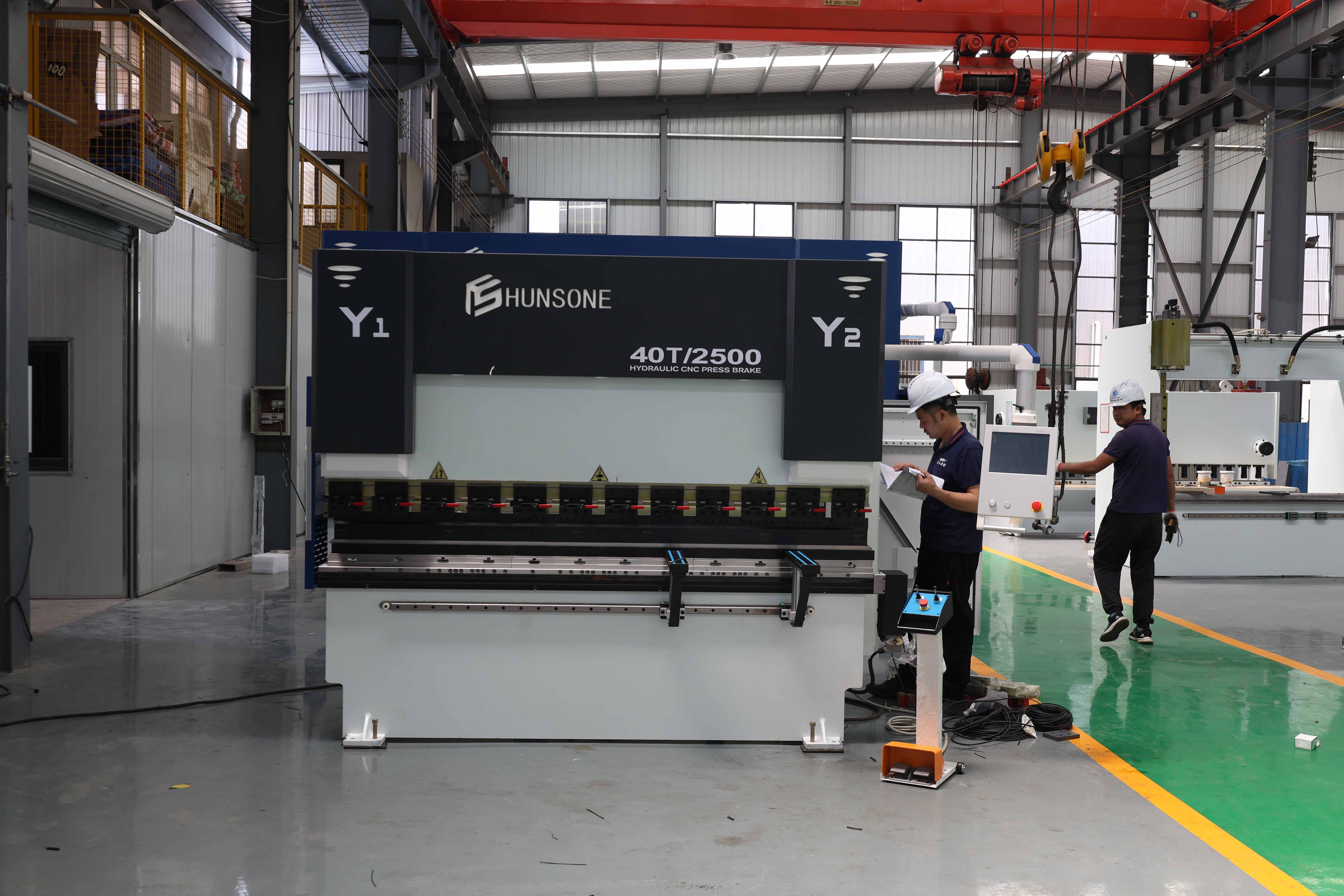
Walk any factory floor and you'll quickly see who genuinely embraces customization and who merely slaps a label on it. Real capability shows up in how the line handles changeovers. In a plant built for real flexibility, equipment isn't bolted into rigid sequences; operators can swap tooling, adjust parameters, and reroute work-in-progress without calling in an engineer. You'll notice visual cues like color-coded quick-change fixtures, modular workstations on wheels, and kanban boards that shift daily based on customer-specific orders rather than forecast-driven batches.
Pay attention to the conversations between supervisors and line workers. In a truly customized environment, you'll hear discussions about individual order requirements, not just daily output targets. Workers reference specific part numbers, customer names, or unique tolerances without pulling up a screen. They may pause a line for a few minutes to switch materials mid-shift, and no one panics. That calm adaptability stems from training that emphasizes problem-solving and cross-functional skills, not just repetition.
Finally, look at the physical evidence of work-in-process. A company that genuinely manages customization rarely has towering piles of identical semi-finished goods. Instead, you'll see small, labeled queues for different configurations, sometimes just a handful of units per variant. Traceability tags often carry handwritten customer initials or special instruction notes. This sort of clutter-free, order-driven flow doesn't happen by accident—it reflects a deliberate choice to keep batch sizes small and changeover routines disciplined. If you spot these signals, you're probably looking at a plant where customization is a core operating principle, not a marketing slogan.
Support After the Sale: Testing Their Service Promises
Plenty of companies sound fantastic when they're trying to win your business, but the real story unfolds after the invoice is paid. The most reliable way to judge their service promises is to create a few low-stakes scenarios. Ask a question about setup, report a minor glitch, or request clarification on a return policy. Pay attention to how quickly they respond, whether the answer feels specific to your situation, and if they follow up to make sure everything actually worked.
Don't just rely on the first interaction. One friendly chat or a quick email doesn't tell you much about consistency. Give it a week or two, then reach out again with a slightly more complex issue. Good support teams keep records of past conversations, so you shouldn't have to re-explain everything from scratch. Notice the tone too. Some companies hide behind scripted apologies and endless transfers, while genuinely helpful ones take ownership and treat your problem like their own.
Also look beyond direct contact. A healthy support ecosystem often includes clear documentation, an active community forum, or honest troubleshooting guides. If you find yourself stuck in a loop of automated replies and dead-end links, that's a strong signal the post-sale promise was mostly marketing. The best after-sale support doesn't feel like a battle; it feels like having a knowledgeable partner on standby long after the deal is closed.
Tooling Compatibility Traps to Avoid Before You Commit
Switching tools mid-project feels like swapping tires on a moving car. One of the quietest killers is a linter or formatter that's fine in isolation but starts fighting your existing test runner or CI pipeline. Before you lock in a decision, run a small spike where the new tool processes a real slice of your codebase and see what breaks downstream.
Another trap hides in version alignment. A package manager that insists on a different version of a shared dependency can silently rewrite lockfiles or hoist modules in ways that only surface weeks later as “works on my machine” bugs. Check how the tool interacts with your monorepo layout, especially if you rely on workspaces or patched packages.
Finally, don't underestimate editor and plugin friction. A tool that requires a specific language server version might work great for one developer but fail for another who's on a slightly older IDE. Ask your team to actually try the candidate tool for a full day on a throwaway branch — the number of small compatibility glitches reported in that window will tell you far more than any feature comparison chart.
Quality Control Red Flags on the Production Line
A sudden uptick in rework bins near the final assembly station usually points to something deeper than a few careless operators. Watch for parts being pulled from the line for “minor” adjustments that never get logged—those quiet fixes often hide a drifting fixture or worn tooling that will only get worse by the next shift.
Another red flag is when the same defect keeps surfacing in different batches but gets dismissed as a supplier issue without checking in-house handling. If you see inspectors spending more time re-measuring the same dimensions or overriding automated checks, that hesitation is a signal. It often means the tolerances have shifted enough to make borderline parts look acceptable on paper but fail in the field.
Pay attention to the pace of work around the gauge stations. If operators start skipping the second check because the first one “looks fine,” or if the control charts only get updated right before a quality audit, the line has already slipped out of statistical control. These small behavioral changes are the earliest warnings before scrap rates and customer complaints catch up.
Hidden Costs in Energy and Maintenance: A Buyer’s Checklist
When you first walk through a property, the numbers that catch your eye are usually the listing price and the mortgage payment. But the true cost of ownership often hides in the monthly utility bills and the slow creep of maintenance expenses. An older HVAC system, for instance, might run quietly during a showing but could be burning through 30% more energy than a modern unit. Ask for a year's worth of utility statements—not just the last month—to see how the home performs in both summer heat and winter cold.
Beyond the obvious filters and light bulbs, dig into the less glamorous items: the age and condition of the water heater, the type of insulation in the attic, and whether the windows are single-pane or double-glazed. A roof that looks fine from the curb might have only five years of life left, and replacing it is a five-figure surprise waiting to happen. Check the seller's disclosure for any past repairs, and consider hiring an energy auditor to run a blower-door test. That small upfront cost can reveal air leaks that translate directly into higher heating and cooling bills.
Finally, don't overlook the landscape and exterior systems. A sprinkler system with a leaky valve can waste hundreds of gallons a month, and a pool pump running on an outdated timer will quietly inflate your electric bill. Ask about the age of major appliances—refrigerator, washer, dryer, dishwasher—and whether any are still under warranty. Create a simple checklist: expected replacement years for the roof, HVAC, water heater, and appliances, plus average monthly energy costs based on actual usage. That way, you're not just buying a home; you're buying a clear picture of what it costs to keep it running comfortably for the next decade.
FAQ
Look beyond the spec sheet. A factory's willingness to discuss past projects, share real customer references, and walk you through their assembly and testing process often reveals more than a glossy brochure. Pay attention to whether they ask about your specific materials, thicknesses, and volume before quoting.
Request video of the machine under load with a test bend on your own material or a similar grade. Ask for the tolerance report from their latest calibration, and confirm which components—hydraulics, control system, back gauge—are sourced from established suppliers rather than generic unknowns.
Specialization often wins for consistency. A factory that builds mostly 100-ton to 300-ton machines will have refined the frame welding, crowning, and ram alignment for that range. Broad catalogs are useful, but a deep focus usually means fewer surprises in repeatability and service.
Expect a named technical contact, not a ticket portal. The factory should offer remote diagnostics via the controller, a realistic response time for part replacements, and training that covers not just the buttons but proper tooling setup and bend sequencing. Ask about spare parts stocked locally or shipped from their warehouse.
If your work involves unusual tonnage, long beds, tandem setups, or special back gauge fingers, customization matters more than brand name. A factory that modifies the frame height, adds custom tooling holders, or integrates your existing automation is signaling they can adapt as your shop grows.
Watch for vague answers about deflection compensation, unusually short delivery promises that seem too good, a lack of documentation on their crowning system, and difficulty getting a straight answer about which CNC controller they use. Also be wary if they avoid sharing details about their frame stress-relief process.
Location shapes freight cost, lead time for spare parts, and the ease of sending a technician for on-site calibration. A factory closer to your region or with a local service partner can turn a two-day downtime into a one-day fix. However, don't sacrifice build quality just for proximity—confirm their local support is genuinely technical.
Ask which CNC brand and version they install, whether the control supports offline programming and simulation, how often software updates are released, and if the factory has certified technicians for that control. A great machine with a poorly supported controller becomes a bottleneck on the shop floor.
Conclusion
When metal fabricators set out to choose a press brake factory, the first temptation is to trust glossy spec sheets. A smarter path starts with decoding bend accuracy claims: don't settle for repeatability numbers alone. Ask how the manufacturer measures angular tolerance under real working conditions, not just ideal lab settings. Walk the factory floor if you can. The layout, the way workers handle jigs and prototypes, and how they respond to non-standard requests tell you more about true customization capability than any sales pitch. Listen for specific examples: a factory that has built special beds for long parts or adapted control software for unusual materials is likely to give you a machine that fits your shop, not the other way around.
Equally important is what happens after the invoice clears. Test service promises before buying: request a mock service call, check their parts inventory, and ask about response times for a downed machine. Then scrutinize tooling compatibility. Many press brakes lock you into proprietary tooling that quietly drains your budget; insist on open clamping systems or adapters that accept common European or American tooling. On the production line, watch for quality control red flags—uneven weld beads, sloppy cable routing, or inconsistent paint thickness often hint at deeper assembly shortcuts. Finally, dig into hidden costs: measure idle power draw, oil change intervals, and the real price of replacement filters and seals. A factory that is transparent about these numbers is one you can trust for the long haul.
Contact Us
Contact Person: James Chen
Email: [email protected]
Tel/WhatsApp: 86 13770803946
Website: https://www.hunsone.com/