Private Label Abrasive Products to Launch Your Own Brand Line
2026-09-25
Private label abrasive products are the fastest way to put your own name on grinding wheels, sanding discs, and cutting tools. But most suppliers treat you like a side project. SHENZHEN SUN ABRASIVES doesn't. With low minimums, custom packaging, and production that actually matches your specs, they turn your brand line from idea to inventory without the usual headaches. If you've been waiting for the right partner to launch your own brand, this is where the waiting ends.
Match Abrasive Grit to the Jobs Your Buyers Already Quote
Many suppliers list abrasive types on a quote without tying grit size to the specific tasks the buyer already mentioned. If a quote includes weld removal, deburring, or surface prep, use that information to recommend a range. Coarse grits like 36 to 60 handle fast stock removal and heavy scale, while 80 to 120 work better for blending or pre-paint finishing.
Look at the base material and the final finish the buyer expects. Harder alloys often need a finer grit to avoid deep scratches, while softer metals or wood can take a coarser grit without damage. A buyer quoting stainless polishing versus aluminum oxide removal needs different starting points, even if both jobs sound similar at first.
Add a short grit recommendation directly in the quote notes instead of leaving the choice open. This cuts back-and-forth questions and shows the buyer you understand how their shop actually works, which helps close the order faster.
Pick a Supplier That Treats Your Test Batch Like a Real Order
A trial run isn't just a formality—it's the clearest signal you'll get about how a supplier handles your business long before any contract is signed. If your sample order gets vague timelines, slow responses, or a generic 'we'll get to it' attitude, that's not a small warning sign; it's the whole pattern you'll see later. The suppliers worth keeping are the ones who ask precise questions about tolerances, packaging, and delivery constraints before you've even finished explaining the project.
Look for concrete behaviors instead of promises. A serious partner assigns a specific contact person, sends photos of the batch in progress without being chased, and flags a material shortage immediately rather than waiting until the ship date. When a test batch is handled with this level of ownership, it means the supplier's internal process doesn't have a separate, lower-priority lane for small orders. That consistency is what protects your first full production run from becoming a costly gamble.
The easiest way to filter out unreliable options is to treat your test batch as a quiet audition. Send the same file, specs, and deadline you'd use for a real order, then watch the follow-up. If you receive proactive updates, honest feedback on manufacturability, and a sample that matches your spec sheet rather than an excuse, you've found a supplier that already treats your business like it matters.
Design Packaging That Doesn’t Fall Apart After One Truck Run
Shipping a box that arrives intact starts with materials that flex rather than crack. Corrugated board with a high edge crush test rating takes the vibration and stacking pressure inside a trailer far better than thin single-wall stock. Reinforced corners and full-overlap flaps keep the container's shape when the driver hits a rough stretch of highway.
Next, look at how the product moves inside. Loose fill or a single sheet of bubble wrap will not hold up after repeated drops. Cut foam inserts, molded pulp trays, or air pillows arranged in layers stop the item from shifting into the walls. For heavier goods, use straps or dividers that keep the load centered and reduce stress on the outer box.
Finally, run a real-world test before committing to a full production order. Pack a few samples, load them into a van or truck, and drive them over the same routes your deliveries will use. Open every box and check for crushed edges, split tape, or torn flaps. Adjust the packaging based on what actually breaks, not what looks good in a lab.
Price Against Replacement Value, Not the Cheapest Import on the Shelf
A $400 gearbox may look like a bargain until you're paying a technician overtime to pull it out of a production line at 2 a.m. The real comparison isn't between that unit and a $900 domestic model—it's between the $400 unit plus downtime, freight, lost output, and another replacement in eighteen months, versus the $900 unit that simply keeps running. When you price against replacement value, the math shifts fast.
Replacement value means the full cost of putting a new component in service when the old one dies: removal, installation, recalibration, scrap, and the hours your line sits idle. A cheap import rarely accounts for any of that. You're not buying a part; you're buying the gap between failures. If a motor lasts five years instead of two, you've avoided at least one unplanned outage, two emergency service calls, and a pile of expedited shipping charges.
So ignore the shelf price for a minute and ask what it costs to replace the thing when it inevitably quits. The cheapest import always wins on sticker; it loses on total cost almost every time. Buy against the replacement event, not the invoice.
Launch with a Tight SKU List Instead of a Wall of Options
Most brands assume more choices mean more sales, but launching with a sprawling product lineup often backfires. Customers freeze when staring at twenty near-identical variations, and your team burns through cash trying to stock, photograph, and market every single one. A tight SKU list forces you to focus on the few items that actually solve a clear problem, which makes your pitch sharper and your inventory manageable from day one.
Start by picking three to five core SKUs that cover distinct use cases or price points. Resist the urge to add colors, sizes, or bundles just because a supplier offers them. Each extra option should earn its place by serving a different customer segment or solving a different pain point—not just padding the catalog. When you launch lean, every product gets your full attention in copy, visuals, and customer support, which raises the perceived quality across the board.
The real payoff comes after launch. A small SKU count means you can quickly see which items resonate and which ones gather dust, then double down or pivot without sitting on dead stock. Customers also appreciate a straightforward choice—they'll thank you with higher conversion rates and fewer abandoned carts. Save the wall of options for later, once you've proven demand and earned the right to expand.
Ask for Field Samples Before You Commit to Custom Labeling
Before you sign off on a custom label order, ask the supplier to send physical field samples—not just digital mockups or photos. A printed label can look very different in your hand: the texture of the material, the way ink sits on the surface, and how the adhesive behaves after a few days on your actual product container all reveal things a screen cannot. This step often uncovers problems like colors that shift under warehouse lighting or a finish that smudges when handled with slightly damp hands.
Field samples also let you test the label under real conditions. Stick it on the bottle, jar, or box you will actually use, then run it through your normal routine—freeze it, warm it, wipe it, stack it. Does the edge lift? Does the print fade after a week in indirect sunlight? These are the details that matter once your product is on a shelf or in a customer's home. Many suppliers will ship a small batch of blank or pre-printed samples for a modest fee, and that cost is almost always cheaper than reprinting an entire run.
Make the request early and be specific about what you need. Ask for the exact substrate, adhesive, and finish you are considering, and try to get at least three or four pieces so you can test different surfaces. If the supplier hesitates or only offers a low-resolution PDF, treat that as a warning sign. A label partner who understands your need to verify before committing is usually one you can trust for the long haul.
FAQ
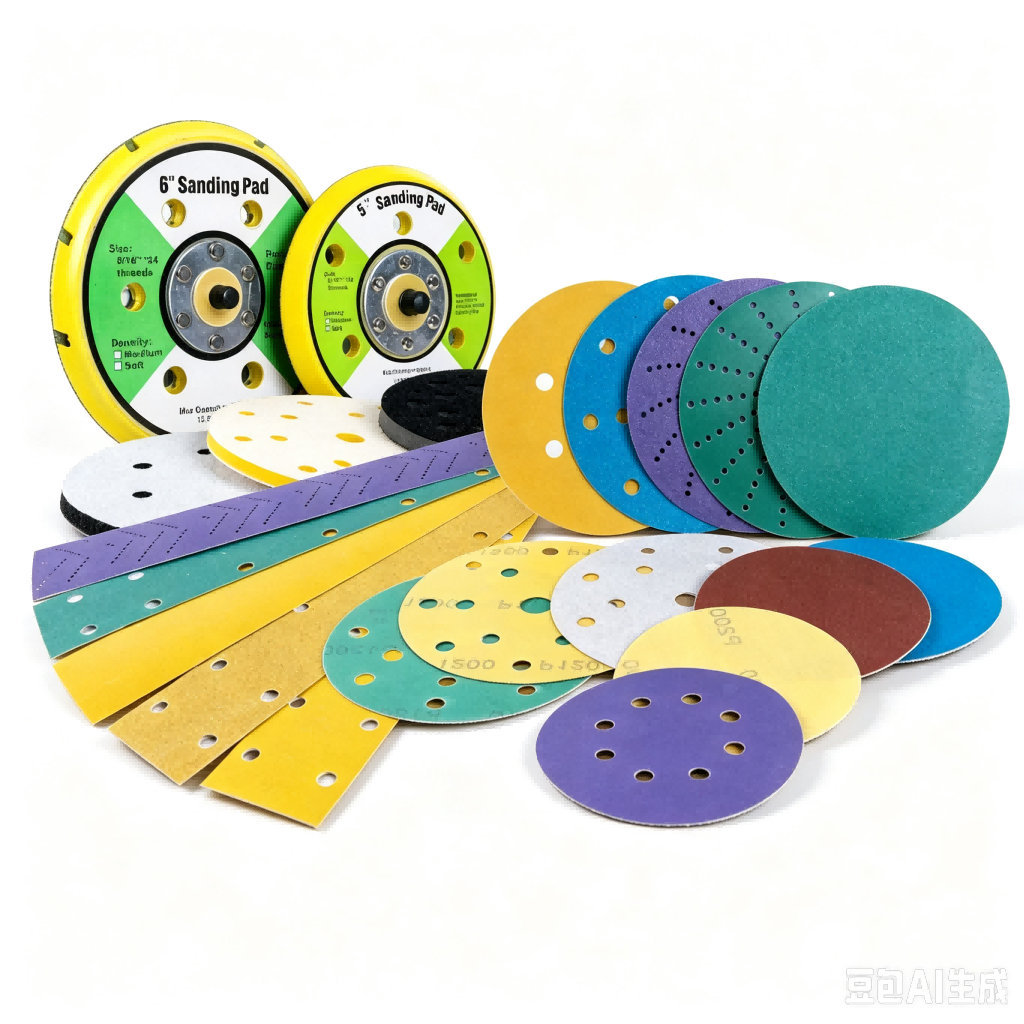
You can brand a wide range—sandpaper sheets, discs, belts, flap wheels, and surface conditioning pads. Backings vary from paper and cloth to film and fiber, and abrasive grains include aluminum oxide, silicon carbide, zirconia, and ceramic. This lets you tailor the line to metalworking, woodworking, or automotive refinishing.
Typically you choose a base product or family, specify your label design and packaging, and agree on quantities. The manufacturer handles production, quality testing, and sometimes warehousing. You supply the brand assets and market the line. Many suppliers also offer samples before committing to a full run.
It varies by product and supplier. For common items like 5-inch hook-and-loop discs or 9x11 sandpaper sheets, MOQs can be as low as 500–1,000 pieces. Custom formulations or unusual sizes may push that higher. Always ask if the supplier can split SKUs within a larger order to keep inventory manageable.
Yes. You can select grain type, grit range, backing weight, bonding resin, and coating density. If you need a specific cut rate or finish, work with the supplier on a trial run. Some manufacturers will match a competitor's product or develop a unique blend for wood or stainless steel.
After artwork approval and sample sign-off, production usually takes 4–8 weeks, depending on order size and customization. Shipping can add another 1–3 weeks. Plan for at least three months from initial conversation to stock on your shelf, and pad that timeline for label revisions or testing.
Reputable suppliers test for grain adhesion, backing tear strength, grit size consistency, and overall product dimensions. They should provide a spec sheet and batch traceability. Request a certificate of conformance or test report with each shipment. If you're entering regulated industries like aerospace, ask about AS9100 or ISO 9001 certifications.
It can be, especially if you differentiate by application or niche. For example, a line focused on auto body shops with ceramic discs or a woodturner's kit with specialty flap wheels can command better margins than generic options. Keep an eye on landed cost, packaging, and fulfillment—those eat into margin fast.
Don't over-order one SKU before testing market response. Avoid sticking with a single grit range that limits your audience. Make sure your label includes clear specs—grit, size, backing—because professionals scan for that. Also, build in time for rework: artwork files, barcodes, and safety icons often delay production more than the abrasives themselves.
Conclusion
Launching a private label abrasive line isn't about slapping your name on a random disc and hoping it sells. Start by matching abrasive grit to the exact jobs your buyers already quote, because a fabricator's finishing team cares about 36-grit stock removal versus 120-grit blending far more than your logo. Then find a supplier willing to treat your test batch like a real order—someone who sends samples, tracks every wheel, and flags issues before they reach your shelves. Packaging also deserves more thought than a generic box: if the carton collapses after one truck run, your margins disappear in repackaging and refunds, not to mention the unboxing impression that kills reorders.
Pricing against replacement value instead of the cheapest import means you frame the offer around downtime avoided and consistent cut rates, so a buyer comparing your flap disc to a no-name container load sees total cost rather than sticker price. Keep the launch tight—six to ten SKUs that cover most daily jobs are easier to stock, quote, and support than a wall of options that confuses distributors and ties up cash. Finally, before committing to custom labeling on thousands of units, ask for field samples you can hand to actual grinding operators. Their feedback on backing flex, grit uniformity, and edge wear will save you from a branded product that performs like a commodity.
Contact Us
Contact Person: Amanda Wang
Email: [email protected]
Tel/WhatsApp: +86-13602569854
Website: https://www.sunabrasives.com.cn