

Top 10 Commercial Ozone Generators That Deliver Powerful Odor Elimination
2026-09-18
Persistent odors in commercial spaces—gyms, hotels, nursing homes, restaurants—aren't just unpleasant; they can drive customers away. Standard air fresheners only mask the problem, but ozone generators actually destroy odor molecules at the source. With so many models claiming to be “industrial strength,” finding one that truly delivers can be overwhelming. That's why we've tested and ranked the top 10 commercial ozone generators, focusing on output, durability, and real-world odor elimination. Whether you're upgrading your facility's air quality or tackling a single stubborn room, this list—compiled with insights from LUFUTATECH's engineering team—will help you choose a unit that works as hard as you do.
What Ozone Actually Does to Odor Molecules
Ozone doesn’t mask odors the way air fresheners do. It hunts them down at the molecular level. When an ozone generator runs, it releases O3 into the air. That third oxygen atom is unstable and desperate to react. Odor molecules—think volatile organic compounds from smoke, cooking grease, or mildew—drift around as chains of carbon, hydrogen, and other elements. When ozone collides with one, the extra oxygen atom breaks off and attacks the molecular bonds. The long, smelly chains get snapped apart, reformed into simpler molecules like carbon dioxide and water vapor. The odor literally ceases to exist because the source molecule has been destroyed, not covered up.
This process works best in unoccupied spaces. While ozone is busy oxidizing odor molecules, it can also react with lung tissue and rubber seals if concentrations are too high. But in a sealed room with no people or pets, the reaction is relentless. It goes after the tiniest odor particles hiding in carpets, curtains, and wall cavities—places sprays and scrubbing can’t reach. Over a few hours, the air smells flat, like after a thunderstorm. That’s the signature of ozone doing its job: stripping the air of reactive compounds until only clean, neutral molecules remain.
One common misconception is that ozone permanently removes all odors. In reality, it works on gaseous molecules floating in the air and on exposed surfaces. Deep-seated sources—like urine soaked into a mattress core or grease baked into ductwork—may continue releasing new odor molecules after the ozone clears. That’s why ozone treatment often needs repeated sessions or combined with physical cleaning. But for airborne odors and surface-level contamination, the chemistry is straightforward: ozone doesn’t hide the stink, it breaks the molecule into pieces too small to smell.
Matching Ozone Output to Room Size Without Guesswork
Start by measuring the actual volume of the room, not just the floor area. Multiply length, width, and height in meters to get cubic meters. Ozone generators are rated in milligrams per hour, and the needed output depends on how much ozone must be dispersed into that air volume. A common mistake is trusting the manufacturer's “maximum coverage area” label, which often assumes empty rooms and low contamination levels.
For most home or office use, target roughly 5 to 10 milligrams of ozone per cubic meter of air. So a 30 cubic meter room would need a generator producing 150 to 300 mg/h. If the space has heavy fabrics, lingering odors, or visible mold, aim closer to the upper end. For routine freshening of a small bathroom, the lower end works fine without overdoing it.
Avoid guessing high just to be safe. Excess ozone can damage rubber seals, plastics, and houseplants, and it irritates lungs. Use a timer and ventilate the room for at least 30 minutes after treatment. In smaller spaces, a lower-output unit actually distributes ozone more evenly because it doesn't create a dense cloud that sinks quickly.
The Non-Negotiables of Ozone Safety in Commercial Settings
In commercial settings, ozone isn't a chemical you can treat as a background cleaner. Generators used for odor remediation, water treatment, or air purification can push concentrations far above safe breathing thresholds. By the time you notice that sharp, metallic smell, you're likely already past the 0.1 ppm exposure ceiling that most workplace safety standards set. That makes occupied rooms off-limits during shock treatments, followed by a measured airing-out period verified with a calibrated sensor rather than a rough time estimate.
Equipment upkeep functions as another hard boundary, not a suggestion. Ozone steadily degrades rubber gaskets, plastic fittings, and HVAC duct linings, so regular leak checks and generator inspections keep the gas contained. Written protocols for shutdown, evacuation, and post-exposure response need to be drilled into staff, because relying on memory or informal habits is how a manageable leak becomes a respiratory incident.
Why Build Quality Matters More Than Wattage in Commercial Units
In commercial settings, equipment often runs around the clock, and while a high wattage rating promises brute force, a flimsy internal build can lead to frequent breakdowns and repair bills that strangle operational efficiency. Solid construction—thicker metal housings, sturdy solder joints, and durable electronic components—keeps a machine working reliably under harsh conditions for years, which matters far more than a number on a spec sheet.
Many buyers fall into the trap of thinking more watts equals better performance, overlooking the fact that commercial units are really judged by maintenance costs and downtime. A slightly lower-powered machine with excellent build quality, proper thermal design, and sufficient component redundancy can run through peak cycles without a hiccup, whereas a high-wattage unit with sloppy craftsmanship might start showing loose connections or thermal shutdowns within months, ultimately driving up the total cost of ownership.
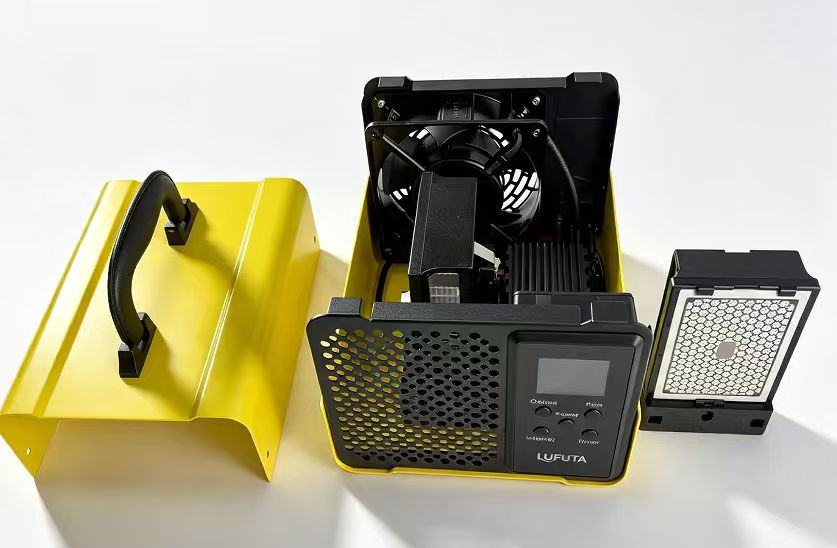
Smart commercial decisions should therefore focus on long-term reliability instead of short-term peak output. When evaluating a unit, open the chassis and check whether the wiring is tidy, the transformer is securely mounted, and the fans have quality bearings—these details predict survival under daily heavy loads far better than the wattage printed on the label.
From Flooded Basements to Gym Locker Rooms Where Ozone Works Best
Ozone earns its keep in places most cleaners dread. A flooded basement stops being a disaster zone once an ozone generator runs for a few hours—the musty, earthy smell trapped in drywall and concrete lifts, leaving behind air that feels almost neutral. The same logic applies to gym locker rooms, where sweat-soaked mats and damp towels breed stubborn odors that ordinary sprays only mask. Here, ozone doesn't just cover up the problem; it breaks down the volatile compounds causing the stink, reaching into lockers, drains, and even the stitching of benches.
What makes these spaces ideal for ozone treatment is their combination of moisture and limited ventilation. Basements after a flood hold water in porous materials, creating a breeding ground for mold and bacteria that release foul gases. Locker rooms, meanwhile, trap humidity and body oils in tight corners. Ozone thrives in exactly these conditions because it's a gas—it disperses into every crack, reacting with odor molecules on contact. Unlike liquid sanitizers that evaporate or get wiped away, ozone lingers long enough to do deep work, then reverts to plain oxygen without leaving residue.
Yet timing matters. Run ozone too briefly in a flooded basement, and the smell creeps back within days as remaining moisture reactivates mold spores. In a busy gym, shutting down a locker room for a full ozone cycle might feel inconvenient, but the payoff is a space that no longer carries yesterday's workout. The best results come when you dry the area first, then let ozone run uninterrupted—often overnight—so it can attack the source rather than just the surface. That shift from temporary freshening to actual odor elimination is what sets ozone apart in these hard-working rooms.
Extending the Life of Your Ozone Generator Through Simple Upkeep
Most ozone generators fail early not because of a major defect, but because small maintenance steps were skipped. The good news is that keeping your unit running for years rarely requires special tools or technical training. A little routine attention goes a long way, and it usually takes only a few minutes each month.
Start with the air intake and internal surfaces. Dust, pet hair, and airborne oils gradually coat the plates or corona cells, reducing output and forcing the machine to work harder. Unplug the unit, remove the cover if the manual allows it, and gently wipe accessible parts with a dry microfiber cloth. Avoid harsh cleaners or compressed air at close range, as these can damage delicate components. If you use the generator in a dusty workshop or near a kitchen, shorten the cleaning interval.
Finally, pay attention to the small signs of wear. Check power cords for fraying, keep the unit away from moisture and direct heat, and replace any pre-filters or check valves on the schedule suggested by the manufacturer. When you store the generator for a season, wrap it loosely in a breathable cover rather than plastic, which can trap humidity. These simple habits protect the electrodes and fan bearings, so your ozone generator continues to produce reliable output instead of becoming another short-lived appliance.
FAQ
Focus on ozone output measured in mg/h, not just room size claims. For persistent smells like smoke or grease, you'll want at least 5000 mg/h for spaces up to 5000 cubic feet. Also check for adjustable output, a timer, and durable metal housing since commercial environments are rough on equipment. Ceramic plates tend to last longer than cheaper quartz ones.
Ozone actually destroys odor molecules through oxidation, so it doesn't just mask smells. However, if the source of the odor remains, like old grease buildup or mold, the smell will return. For permanent results, clean the area first, then run the generator to neutralize any lingering particles in the air and on surfaces.
Most kitchens need between 30 and 90 minutes of treatment depending on the severity and room size. Heavy grease odors might require two shorter cycles with an airing-out period in between, rather than one long blast. Never run it while people are present, and wait at least 30 minutes after the cycle ends before re-entering.
Yes, ozone is a lung irritant, so the space must be empty during treatment. That includes pets and plants. After the generator shuts off, allow another 30 minutes to an hour for the ozone to dissipate before anyone enters. Also be aware that high ozone levels can degrade rubber, certain plastics, and fabrics over time, so don't overuse it.
You'll need a unit with at least 10,000 to 20,000 mg/h output for warehouses over 10,000 cubic feet. For a typical 20,000 cubic foot space, a 20,000 mg/h generator can work, but you may need to move it around or use multiple units for even coverage. Avoid under-sizing; it just wastes time and electricity.
Ozone generators actively attack smoke residue in the air and on surfaces, but they can't run while people are present. Carbon purifiers work continuously and safely, but they only filter the air passing through them and don't touch odors embedded in walls or carpets. For deep smoke damage, ozone is far more aggressive; for everyday maintenance, carbon is more practical.
Hotels, gyms, property managers, vehicle detailing shops, and restoration companies get the most value. Any business dealing with recurring strong odors like sweat, pet urine, cooking grease, or fire smoke will find ozone treatment faster and cheaper than repeated chemical cleaning. It's especially useful for turning over rental units or hotel rooms quickly.
Conclusion
Commercial ozone generators have earned a reputation for tackling stubborn smells that ordinary cleaning leaves behind, but their real-world performance depends on far more than a high O3 output number. Ozone works by oxidizing odor molecules on contact, breaking apart the volatile compounds responsible for musty, smoky, or sour air rather than simply masking them. That chemical reaction, however, only pays off when the unit is sized correctly to the space. A generator rated for 5,000 mg/h might be overkill in a small office and nearly useless in a 10,000-square-foot warehouse. Matching output to cubic footage—not just floor area—prevents both wasted runtime and incomplete treatment. Among the strongest commercial picks, you’ll find models with adjustable output dials and built-in timers, which let operators fine-tune cycles for everything from flood-damaged basements to gym locker rooms and hotel hallways.
Safety is the non-negotiable piece that separates professional-grade equipment from consumer toys. In occupied commercial settings, ozone exposure must be kept at zero; look for units with delay-start timers, motion sensors, or remote controls that let you vacate the area before the cycle begins. Build quality also matters more than raw wattage. Ceramic plates, stainless steel housings, and replaceable ozone modules hold up to daily use far better than cheap plastic fans and thin corona wires. Regular upkeep—wiping the plates, cleaning or replacing intake filters, and checking for cracked hoses—can add years to a machine’s life and keep output consistent. The best top 10 commercial ozone generators balance these factors: correct sizing, robust construction, sensible safety controls, and simple maintenance, not just the biggest ozone number on the box.
Contact Us
Contact Person: Paul Luo
Email: [email protected]
Tel/WhatsApp: 0086-19966314501
Website: https://www.lufutatech.com