

Top Programmable Power Supplies for Precision and Versatility
2026-05-13
Precision and adaptability define modern electronics workbenches. Whether you're fine-tuning sensitive circuits or stress-testing power-hungry prototypes, a programmable power supply can make or break your workflow. The best units combine ultra-low noise, fast transient response, and flexible interfaces—turning complex power sequencing into a few clicks. That’s where TPS steps in, setting the benchmark for engineers who refuse to compromise on accuracy or versatility. In this post, we dive into the top picks that elevate your test setup from ordinary to exceptional.
Understanding the Core Features of High-Precision Programmable Power Supplies
A high-precision programmable power supply isn't just about delivering voltage and current—it's about doing so with exceptional accuracy and stability under varying loads. The heart of such a device lies in its ability to maintain tight regulation, often within millivolts or microamps, even when the output is dynamically adjusted or environmental conditions drift. Advanced designs incorporate ultra-low-noise linear post-regulation and high-resolution DACs, allowing users to dial in exact parameters without worrying about ripple or transient spikes corrupting sensitive circuits. This level of control is crucial for tasks like semiconductor characterization, where minute supply fluctuations can mask device behavior or lead to misleading test data.
Another essential attribute is programmability coupled with flexible remote sensing and protection mechanisms. Modern units go beyond simple front-panel control, offering comprehensive digital interfaces such as LAN, USB, and even EtherCAT, so they can be seamlessly integrated into automated test stands. The ability to read back actual voltage at the load terminals—not just at the supply's output—via remote sensing eliminates the error introduced by lead resistance, which becomes significant at higher currents. Simultaneously, intelligent protection features like overvoltage, overcurrent, and programmable slew rates safeguard both the power supply and the attached device, preventing catastrophic failures during testing sequences that push components to their limits.
Finally, true precision differentiates itself through traceable calibration and long-term drift stability. High-end power supplies often include internal digitizers that let engineers monitor output characteristics in real time without additional instruments. They are built with temperature-compensated voltage references and low-thermal-EMF switching, ensuring that the set value remains consistent not only over minutes but across months of continuous operation. This reliability removes one more variable from the validation equation, giving engineers confidence that their measurement results stem from the device under test—not from a drifting power source.
Versatile Applications: Where Programmable Power Supplies Shine
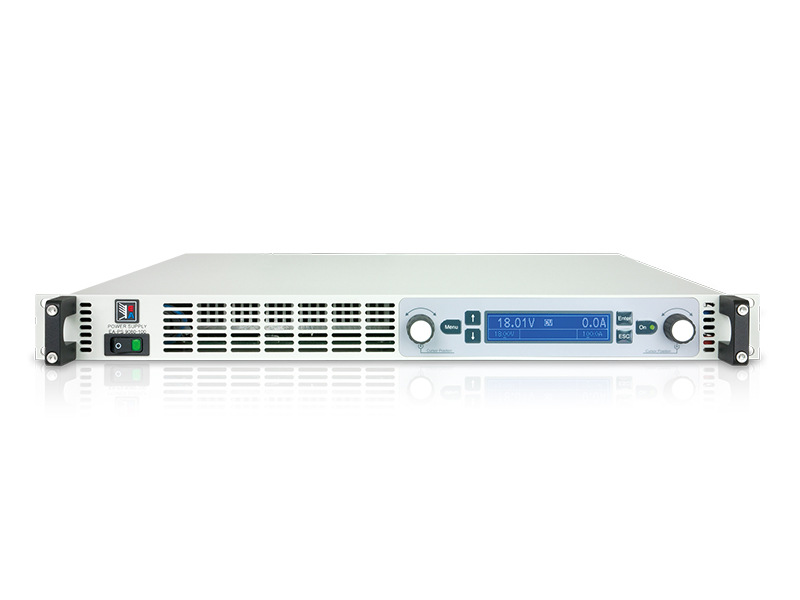
Programmable power supplies aren’t just lab curiosities—they’re quietly shaping the way modern electronics are tested, validated, and brought to life. Whether it’s a low-voltage IoT sensor that needs to run for years on a coin cell, or a high-power motor drive demanding precise ramp-up profiles, these supplies adapt without flinching. The ability to script voltage and current changes, simulate real-world line fluctuations, or emulate battery discharge curves turns a basic power source into a flexible simulation tool. Engineers often find themselves setting up complex sequences—like a quick brownout at 3 a.m., or a slow sag during a thermal cycle—and letting the supply handle the rest, freeing them to focus on what happens inside the device under test.
In manufacturing environments, the same versatility pays off in different ways. A single programmable unit can replace multiple fixed-output sources on a production line, cutting down on rack space and simplifying changeovers. Operators can load a new test profile in seconds, verify a batch of LED drivers at one voltage, then immediately run a different protocol for a medical device power board. This kind of agility means fewer manual adjustments, less chance of human error, and a tighter feedback loop between design iterations and final quality checks. Some teams even embed custom protection routines—such as detecting a sudden inrush spike and instantly folding back the output—before the unit under test ever leaves the fixture.
Beyond the bench and the factory floor, these supplies have found their way into harsh environmental chambers, automotive test rigs, and even educational labs where reproducibility matters. Students and researchers alike rely on the same programmability to recreate exact conditions week after week, turning a hunch into a repeatable experiment. From stress-testing EV components with patterns that mimic stop-and-go traffic to tweaking RF amplifier biasing on the fly, the common thread is control—granular, repeatable, and entirely scriptable. It’s this blend of wide applicability and precise command that makes a programmable power supply less like a simple instrument and more like a silent, tireless colleague on the team.
Key Specifications That Define Top-Tier Performance
Raw clock speeds and core counts once dominated performance discussions, but today’s top-tier hardware relies on architectural finesse. Modern chip designs prioritize per-core efficiency and intelligent workload distribution, allowing devices to deliver blistering speeds without excessive thermal throttling. It’s the seamless fusion of advanced fabrication processes and smart cache hierarchies that truly separates flagship silicon from the rest.
Memory and storage subsystems often dictate real-world responsiveness more than raw compute power. Ultra-fast LPDDR5X RAM paired with UFS 4.0 or NVMe storage ensures that data flows instantly, eliminating stutters during multitasking or large file transfers. The bandwidth and low latency here make the difference between a device that feels merely quick and one that operates with instantaneous, fluid precision.
Sustained performance is equally critical, and that’s where thermal engineering shines. Vapor chambers, multi-layer graphite sheets, and even liquid cooling solutions work silently to dissipate heat, preventing performance dips during extended gaming or professional workloads. Without such meticulous heat management, even the most powerful specs would crumble under prolonged stress.
Navigating the Selection Process for Your Lab or Production Line
Finding the right equipment for your lab or production line isn't just about ticking boxes on a spec sheet. It starts with a clear-eyed look at your current workflows—what's working, what's causing headaches, and where you see growth in the next few years. Involving the people who'll use the tools daily often uncovers unspoken needs, like ergonomic design or software compatibility, that can make or break long-term satisfaction.
Once you've defined your must-haves, the real work begins: separating marketing claims from measurable performance. Requesting hands-on demos with your own samples isn't just a nice-to-have—it's the only way to see how a system handles the nuances of your materials and processes. Don't be afraid to ask vendors the tough questions about service response times, upgrade paths, and hidden costs that might surface after installation.
Finally, remember that no decision lives in isolation. Consider how the new equipment will integrate with existing systems, whether it aligns with evolving regulatory requirements, and how easy it will be to train your team. A slightly higher upfront investment often pays for itself through smoother adoption and fewer workflow disruptions down the road.
Real-World Examples of Precision and Versatility in Action
In a bustling automotive factory, a robotic arm welds car chassis with pinpoint precision, yet when the model changes, the same equipment adapts to a completely different set of welds within minutes, demonstrating how true versatility eliminates downtime.
A master sushi chef uses a single, impeccably sharp knife to slice delicate fish and then swiftly julienne vegetables, showing that precision tools aren't limited to one task but excel across multiple applications.
A landscape photographer switches from capturing a starry night—requiring exact focus and long exposure—to a split-second shot of a bird in flight, relying on a camera system that adjusts instantly, proving that cutting-edge devices handle extremes with equal finesse.
Future-Proofing Your Setup with Advanced Programmable Power Solutions
Rigid power setups crumble when requirements shift overnight. Advanced programmable solutions throw out the old playbook by letting you reshape voltage curves, current limits, and transient responses straight from a dashboard. No hardware swaps, no downtime guessing games—just direct control that keeps pace with whatever you plug in next.
Think of it as firmware-driven adaptability baked right into the supply. Need to tighten ripple specs for sensitive testing tomorrow? Dial it in. Expanding racks and need synchronized sequencing? Group units and script the turn-on order. The power plant becomes a toolkit, not a bottleneck, eating complexity for breakfast while your competitors scramble for new gear.
This approach quietly extends service life by sidestepping obsolescence. Instead of stacking redundant bricks for each new project, you iterate through software. It’s a leaner investment that compounds as protocols evolve, sparing you from the landfill-and-replace cycle that plagues fixed-function hardware.
FAQ
A programmable power supply lets you control voltage, current, and often protection settings remotely or automatically—via a digital interface, analog signals, or built-in sequencing—rather than just manually turning knobs. This means you can integrate it into automated test systems, simulate real-world power fluctuations, or log data over time, which a basic bench supply can't do without hands-on tweaking.
Even tiny voltage deviations can corrupt sensitive measurements, damage components, or skew R&D data. Key specs are load regulation, line regulation, and the unit's programming/readback accuracy (like 0.03% + 5 mV). Don't just look at marketing numbers—check the noise and transient response too, because a 'precise' unit that overshoots during load changes can fry your prototype.
Go linear if your priority is ultra-low ripple and noise for analog circuits or sensor work—they're cleaner but bulkier and less efficient. Pick switch-mode if you need high power density, wide voltage/current ranges, and don't mind a bit more output noise; modern units are surprisingly quiet and give you that flexibility for mixed workloads.
It's real and incredibly useful. Advanced supplies let you model a battery's internal resistance, capacity, and discharge curve. You can program a voltage decline over time plus a series resistance to mimic aging. This is great for testing battery-powered devices without keeping hundreds of charge cycles—just don't expect a $300 unit to replicate a Tesla pack perfectly.
Arbitrary waveform generation and sequencing. If your supply can output a user-defined sequence of voltage steps, ramps, or even sine-like ripples, you can test power-supply rejection, simulate engine cranking pulses, or stress-test firmware without extra equipment. Combine that with fast transient recovery and you've got a tool that replaces a separate function generator plus amplifier in some cases.
Remote sense compensates for voltage drop across your cables by measuring the voltage right at the load. It's essential if you're drawing serious current through long leads, because your device might only see 4.8 V when the supply shows 5.0 V. It won't fix bad wiring, but for any precision work at a distance, it's a must-use; ignore it and your calibration data can be off by percent-level errors.
LAN (Ethernet/LXI) gives you speed, easy networking, and no special drivers—ideal if you're building a rack of equipment. USB is fine for single-unit bench control but can be flaky with long-term tests due to cable noise. GPIB is legacy but bulletproof if you already have a system. Start with LAN for future-proof versatility; just make sure the SCPI command set is well-documented so you're not fighting obscure firmware bugs.
Conclusion
The landscape of programmable power supplies has evolved dramatically, driven by demands for higher precision and broader versatility. At the core of any top-tier unit lies a blend of ultra-fine voltage and current regulation, low ripple and noise, and fast transient response—features that ensure delicate electronics receive clean, stable power regardless of load changes. These supplies shine across diverse applications, from semiconductor validation and automotive testing to medical device development, where even minor fluctuations can skew results. They adapt seamlessly to benchtop R&D, automated production lines, and remote monitoring setups, often with multi-channel outputs and programmable sequencing that simplify complex test protocols. The ability to simulate real-world power conditions—such as battery discharge curves or voltage sags—makes them indispensable for reliability engineering.
Performance hinges on specifications like resolution, accuracy, load regulation, and the speed of the control loop, but equally important are connectivity and software integration. Modern units offer USB, LAN, GPIB, and optional wireless control, allowing effortless integration into automated test environments. When selecting a supply, engineers balance power range, protection features, and future expandability against budget constraints, often prioritizing models with modular architectures that accommodate evolving test needs. Real-world success stories underscore this synergy—for instance, a precision supply enabling repeatable laser diode characterization, or a rugged model surviving factory-floor abuse while delivering laboratory-grade consistency. As technology advances, investing in programmable power solutions with firmware upgrade paths and compliance with emerging standards ensures a setup remains relevant for years, effectively future-proofing critical test infrastructure.
Contact Us
Contact Person: Lily
Email: [email protected]
Tel/WhatsApp: +49 (0) 2161 49526-0
Website: https://tps-elektronik.com/en/