

Top Rubber Elevator Belt Solutions for Reliable Material Handling
2026-11-20
Material handling systems depend on plenty of moving parts, but the rubber elevator belt quietly decides whether a line runs smoothly or stops for unplanned maintenance. Choosing poorly usually means premature wear, spillage, and tracking headaches; choosing well keeps bulk materials moving with far less intervention. This guide covers the top rubber elevator belt solutions that support reliable material handling, from cover compounds to carcass construction, and explains where each option earns its place. We also look at how YUFENG turns those requirements into belts built for real operating conditions.
Carcass Construction That Holds Up Under Constant Bucket Flexing
The real test of a carcass isn't how it looks after a few hundred cycles—it's whether the sidewalls and splice zones can shrug off the constant flexing that happens when a loader bucket dips, curls, and dumps. Most failures start small: a hairline crack at the tread edge, a subtle bulge near the bead, or a splice that slowly peels apart under heat. A carcass built for this kind of abuse doesn't rely on one heavy layer to brute-force its way through. Instead, the ply angles, rubber compounds, and steel cord spacing work together so stress spreads out instead of concentrating in one spot.
Heat is the silent killer here. Every time the sidewall flexes, internal friction pushes temperatures higher, and if the carcass can't shed that heat fast enough, the rubber starts to degrade from the inside out. That's why the difference between a tire that lasts 2,000 hours and one that dies at 800 often comes down to how the shoulder area is reinforced. A well-designed carcass uses a graduated stiffness approach—softer at the bead, firmer through the lower sidewall, and stiffest at the shoulder—so the flex doesn't create a hard hinge point that eventually tears.
On the job site, this translates to fewer surprise blowouts during tight turns on rough ground. Operators notice it when the machine feels stable even with a full bucket and the tires are taking lateral loads that would make a lesser carcass squirm. The best designs also leave room for retreading, because if the base structure holds up, the second life of the tire can nearly match the first. That's the whole point: build a carcass that outlasts the tread, not one that dies the moment the rubber wears thin.
Matching Cover Rubber to Wet, Abrasive, or Oily Material Streams
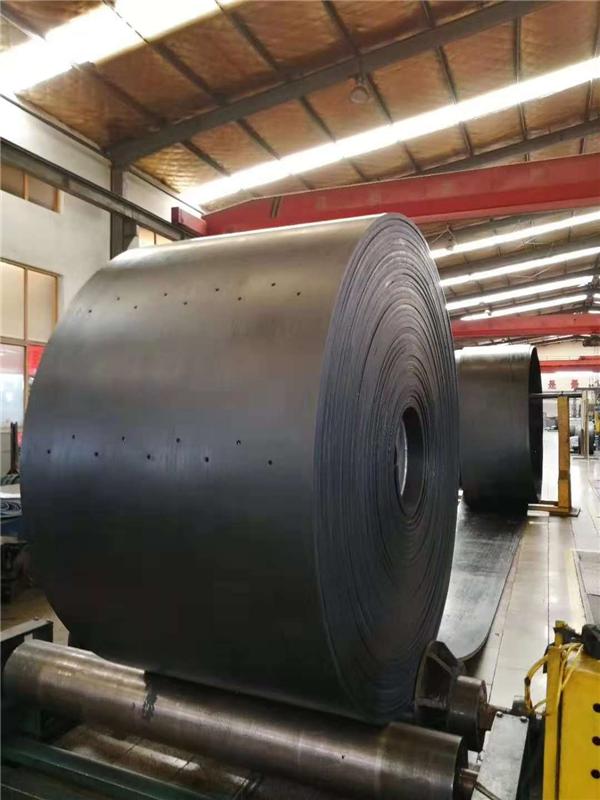
Water, grit, and grease each attack a conveyor belt in their own way, so cover rubber selection has to start with what actually rides on top of it. A wet stream carrying fine slurry can slip if the top cover is too hard, while an abrasive load of crushed rock will chew through a soft, high-friction compound in weeks. The practical approach is to treat the belt surface as a wear part with a specific failure mode: wet material demands enough surface grip to prevent rollback and enough cut resistance to survive sharp particles suspended in the water; dry abrasive material wants a thicker, tougher cover that sacrifices some flexibility for long-term mass retention.
Oily streams introduce a different failure path. Petroleum-based oils and many synthetic greases penetrate standard natural rubber compounds, causing softening, swelling, and eventual ply separation. Here the cover must be formulated with oil-resistant polymers, but that alone is not enough. The belt also needs a surface pattern or texture that keeps the oily material from riding in a continuous film. In many plants the fix is not just a chemical change in the rubber but a change in cover profile, such as a chevron or rough-top finish that breaks the lubricating layer and gives the load something to bite into.
Matching the cover to the stream rarely means choosing the most expensive option. It means identifying the dominant wear mechanism and buying only the properties that counter it. A wet, mildly abrasive application might run best on a medium-hard natural rubber with a shallow pattern, while a dry, sharp, high-impact feed might need a thick, high-tensile synthetic blend. Oily environments almost always push the choice toward nitrile or neoprene covers with a designed texture. The goal is a belt that wears evenly and predictably, not one that fails early from a condition the cover rubber was never intended to handle.
Fastener Placement That Stops Buckets From Ripping the Belt
Bolt holes drilled right along the bucket's leading edge create a perforation line. Once material works between the bucket and the belt, those holes stretch and link up into a tear. Moving the fasteners back from the leading edge, at least twice the bolt diameter away, removes the holes from the highest shear point and lets the belt flex without stressing the joint.
A staggered pattern matters just as much as setback. When fasteners line up in a single row across the belt, every hole shares the same tension line; one failed fastener then shifts the load sideways until the belt cracks between holes. Offsetting the holes breaks that path and keeps damage localized long enough to schedule a repair.
On thicker belts, a backing plate or large-diameter washer under the nut spreads the clamping force. Without it, the fastener head pulls through the carcass after repeated loading, usually at the back edge of the bucket. That slow pull-through often looks like a cut but starts at the hole, so reinforcing the back row gives the belt a much longer service interval.
Splice Choices That Reduce Downtime on Steep Elevator Legs
On steep legs, the splice takes a beating every time it wraps the head pulley, so the real decision is not just strength but how quickly a crew can swap it when a bucket starts dragging. A low-profile mechanical splice with a hinged plate often beats a vulcanized joint here because it can be opened, inspected, and replaced in the boot or head without pulling the entire belt. The trick is matching the plate to the pulley diameter; too rigid a splice on a small pulley will hinge open on every pass and chew through lagging before the belt shows wear.
Downtime also shrinks when the splice hardware is treated as a wear item rather than a permanent fix. Keeping a marked set of stainless fasteners, pre-cut hinge pins, and a torque wrench at the leg means one shift can change a damaged section instead of waiting on a specialty crew. On steep runs with high bucket spacing, staggering the splice pattern across the belt width helps distribute the pull and reduces the chance the joint folds into a bucket gap.
It also pays to think about how the splice behaves under tension at startup. A splice that seats flat when the belt is static may cup or lift once the leg is fully loaded, especially if the belt has a stiff fabric carcass. Running the elevator a few revolutions after installation and re-checking the fastener torque and plate alignment catches most issues before they become a midnight shutdown.
Tracking Adjustments for Belts That Wander Under Uneven Loads
Uneven loading rarely announces itself with a clean, consistent pull to one side. Instead, the belt drifts in short bursts, shifts only when a particular pallet or batch reaches the midpoint, then wanders back once the load evens out. The first step is to watch where the belt sits during the actual production run, not just while empty. Mark the frame rails at several points and note how far the belt moves during peak load variations. Often the problem is not a single misaligned pulley but a tension imbalance that only appears when the weight distribution changes.
Start your correction at the return side, where the belt has the least resistance. Make small adjustments to the snub rollers or take-up screws, no more than a quarter turn at a time, and let the belt complete several revolutions before judging the result. If the drift worsens under a full load but settles when empty, look closely at the troughing idlers near the loading zone. A slight raise on one side can help counter a load that consistently sits heavier on the opposite edge. The goal is not to force the belt into a perfect center line at all times, but to keep its wander within the space between the edge guides.
In cases where the load distribution changes shift to shift, mark the adjustment points with a paint pen and keep a short log of which settings work best for each product type. That way, you can return to a known position instead of starting from scratch every time. Also check for worn lagging on the drive pulley or a buildup of fines under the return idlers—both can cause a belt to behave differently as load increases. A wandering belt under uneven loading is usually a system response, not a single part failure, so treat the adjustment as a process rather than a one-time fix.
Retrofitting Older Elevator Legs With Modern Rubber Belt Profiles
Older elevator legs often run on flat or lightly textured belting that has been stretched, hardened, and polished by years of grain, feed, or aggregate movement. That smooth contact surface is a common source of slow discharge, belt wander, and occasional slippage on the head pulley. Switching to a modern rubber belt profile with a softer wear layer and a more aggressive grip pattern changes how the belt seats against the drive pulley and how the cups release material at the top. The real advantage is not just the tread itself but the way the new profile works with existing pulleys that may have become slightly crowned or uneven over time.
During a retrofit, the old belt and cup assembly is usually pulled as one piece so the existing bucket spacing can be measured before anything is cut. It helps to check the head and boot pulley faces for glaze, check the lagging if present, and inspect the take-up travel. Modern rubber profiles are often slightly thinner but have deeper textile or steel cord reinforcement, which means the belt can handle the same load without needing the same thickness as the worn original. Bucket bolts usually go back in the same holes, but a drop of thread sealant or locking compound prevents loosening if the new rubber compresses more than the old material.
After the conversion, many operators notice the leg runs quieter and the belt tracks closer to center with less correction at the boot. Material carry-back can drop because the stiffer profile lets cups empty closer to the discharge point instead of lingering through the head. The most practical change is in maintenance: take-up adjustments become less frequent, and the belt is less likely to chew into the casing or rub on internal braces. Over several seasons that translates into fewer shutdowns for tracking repairs and a better match between the belt surface and the type of product being moved.
FAQ
Rubber belts usually run quieter, absorb impact better, and need less lubrication than chain systems. They also tend to be more forgiving when occasional lumps or tramp material pass through, reducing shock loads on drives and shafts. For most dry bulk products up to roughly 150 degrees Celsius, a well-matched rubber belt will give lower installed cost and easier maintenance than steel or chain alternatives.
Start with the material's lump size and required throughput. The bucket needs to clear the largest lumps without packing, so width usually follows bucket size rather than the other way around. For abrasive products, slightly wider spacing with heavy-duty buckets can reduce spillage and give the belt more time to shed fines; tighter spacing raises capacity but increases wear at the bucket mounting points.
For cement and sand, look for abrasion-resistant covers with high tensile strength and good gouge resistance, often in the 60 to 70 Shore A durometer range. Grain is less aggressive but can be abrasive over time, so a moderate abrasion-resistant compound works well. If oils or fats are present, ask for an oil-resistant grade. Always match the cover to the dominant wear factor, not just the product name.
A visual walk-around every shift catches most tracking or spillage issues early. Detailed inspection of splices, bucket bolts, and edge wear should happen monthly, with belt tension checked at the same time. If the plant runs 24/7 or handles hot or abrasive material, shorten the detailed interval to every two or three weeks. Record take-up position changes to spot unusual stretch before it becomes a failure.
Misaligned pulleys, an out-of-level boot or head, and uneven loading are the big three. Check that the head and boot shafts are parallel and level before adjusting belt tension. Center loading into the elevator helps prevent one-side overloading. If the belt still walks, adjust the boot take-up in small increments and let the belt run for several minutes between changes; large sudden adjustments usually make it worse.
Yes, within limits. Standard heat-resistant compounds can handle continuous material temperatures around 120 to 150 degrees Celsius, while higher-rated compounds may manage short peaks near 180 degrees. Above that, rubber loses strength and splice life drops quickly. For very hot clinker or foundry sand, you generally need a steel-cord or metal belt design instead of a conventional rubber elevator belt.
Keep them in a cool, dry area away from direct sunlight, ozone sources like motors with brushes, and petroleum products. Store rolls upright on a wooden pallet or A-frame, not flat on the ground. If the belt has been stored more than a year, inspect the covers for cracking before fitting it. Rotate stock so older belts go into service first.
Conclusion
Rubber elevator belts rarely fail from one isolated cause; most breakdowns trace back to how well the belt handles repeated flexing around head and boot pulleys, and whether the cover compound matches what actually moves through the leg. A multi-ply carcass with dependable fastener holding strength keeps buckets from tearing loose when the belt cycles under load, while the right cover rubber prevents wet grain, sharp aggregate, or oily feed from wearing down the top surface long before the carcass gives out. Fastener placement matters just as much as fastener type, setting bolts or elevator bolts back from the bucket edge and adding reinforced backing plates reduces the stress that turns small nicks into long rips.
On steep elevator legs, unexpected downtime usually comes from splices that cannot survive the tight pulley wrap or from tracking drift caused by uneven loading. A finger splice or a low-profile vulcanized splice often keeps the joint intact far longer than a standard mechanical splice. Tracking adjustments, including squaring the boot pulley and checking leg alignment before adding guide rolls, correct the wandering that leads to edge wear and premature belt replacement. For older elevator legs, retrofitting with modern low-stretch rubber belt profiles and revised bucket spacing frequently restores capacity without replacing the entire conveyor. These changes work as a system, a stable, well-tracked belt with suitable covers, sound splices, and careful fastener placement moves material more reliably and with fewer costly stops.
Contact Us
Contact Person: Jayce
Email: [email protected]
Tel/WhatsApp: 8615318787602
Website: https://www.yuphengbelt.com/